
Unbiased headlines. Facts, not spin.
Every story is an unbiased news briefing written from 110+ sources across the spectrum — sources linked so you can verify it yourself.
 politics
Notable (5/10)
August 7, 2026 at 01:13 PM
politics
Notable (5/10)
August 7, 2026 at 01:13 PM
Federal Judge Dismisses Threat Charge Over Instagram Comment About Another Judge
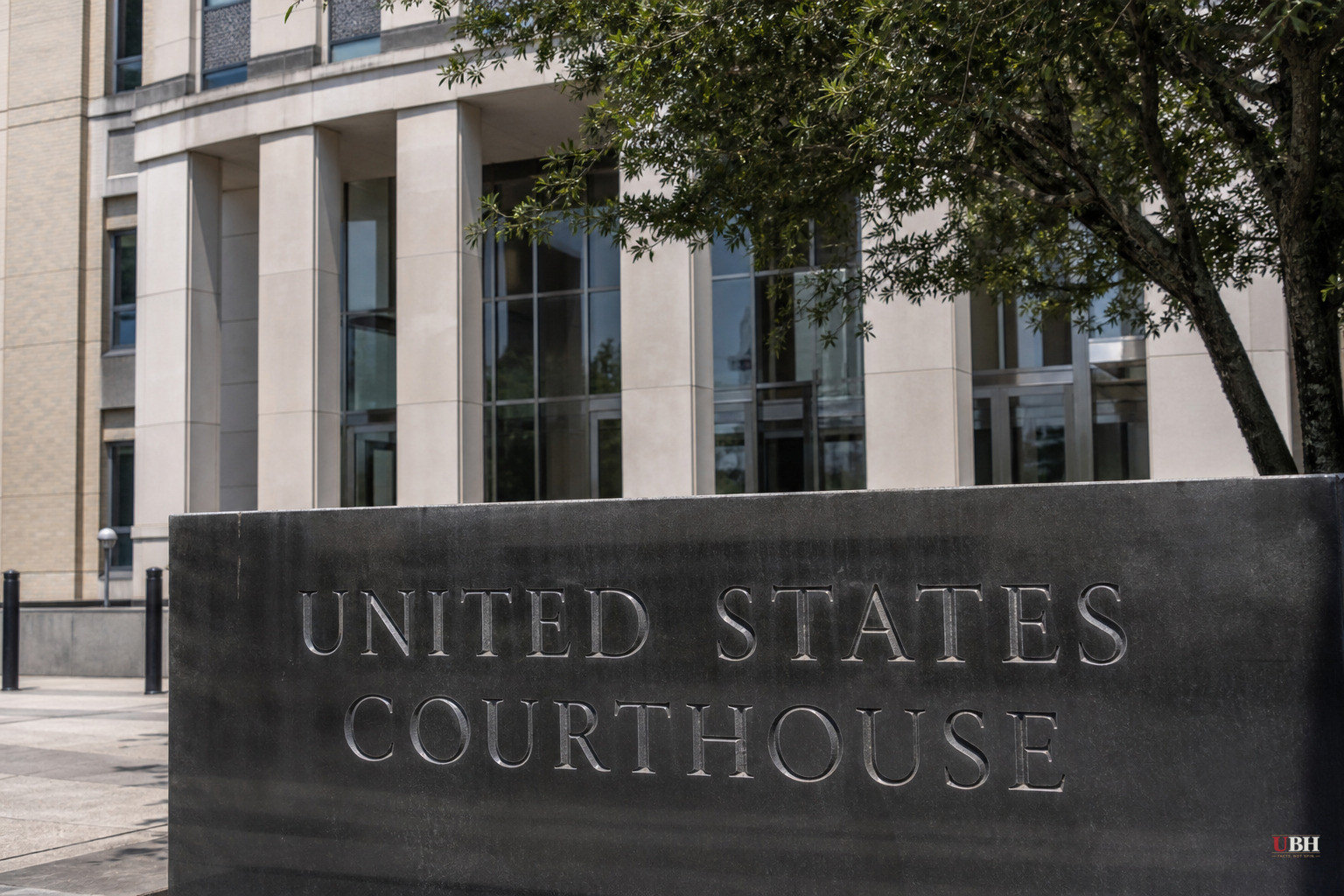
A federal judge in Florida has dismissed a criminal indictment against a man charged with threatening to kill U.S. District Judge John L. Badalamenti over an Instagram comment that read, "I wish someone would in alive him."
U.S. District Judge Carlos Mendoza of the Middle District of Florida ruled in the case, U.S. v. Joudeh, that the comment does not qualify as a "true threat" and is therefore protected by the First Amendment, according to court documents.
How this started
The case traces back to a June 21, 2025, New York Times article titled "A White Nationalist Wrote a Law School Paper Promoting Racist Views. It Won Him an Award." The piece examined a capstone paper written by a student in a University of Florida law seminar on originalism, taught by Judge Badalamenti as an adjunct professor.
According to the Times article, the student argued that the Constitution's phrase "We the People" was meant to apply only to white people, and called for stripping voting rights protections from nonwhite Americans and issuing shoot-to-kill orders against people crossing the border illegally. The student won a book award in the class, an honor the article said typically goes to the top student.
The article generated public backlash. On a social media post discussing the story, an Instagram user identified as "falasteen8090" left the comment at the center of the case: "I wish someone would in alive him."
Why prosecutors thought it was a crime
According to a search warrant affidavit, Judge Badalamenti contacted the U.S. Marshals Service on June 22, 2025, after learning about the comment. Investigators and the judge suspected that "in alive" was a typo for "unalive," internet slang commonly used to mean "kill," often to dodge content moderation filters on social platforms.
Based on that reading, federal prosecutors charged the defendant with one count of transmitting an interstate threat to injure or kill another person, a felony under 18 U.S.C. § 875(c). The indictment did not specify where or why the comment was posted, to whom it was communicated, or who the referenced "him" was, according to the court's opinion. That identification came from the separate search warrant affidavit.
Why the judge threw it out
Judge Mendoza's ruling didn't dispute the government's interpretation of "in alive" as a garbled version of "unalive." He accepted that reading as true for purposes of the ruling. His problem was with what the comment actually said once you translate it.
Even read as a wish for someone's death, Mendoza found no reasonable jury could call it a "true threat," the legal standard that strips speech of First Amendment protection. The comment contained no promise or indication that specific violence would befall someone, no condition, and no name confirmed within the statement itself. It was, in the court's assessment, a vague desire that someone was no longer alive, not a threat.
Mendoza's opinion pointed to precedent distinguishing threats from angry wishes. In one cited case, United States v. Stock, a Craigslist post that was found capable of constituting a true threat included specific, menacing detail: the poster wrote that he had "went home loaded in my truck and spend the past 3 hours looking for this douche with the expressed intent of crushing him," language a court found could show he was prepared to commit the act himself. Mendoza also cited an Eighth Circuit case involving an email wishing harm on a president, where context from a second email — including the statement "i would kill obama if i could" — supported treating the wish as a threat, and a Nebraska case where a Facebook post asking to borrow a gun and ammunition to join in a "mass shooting craze" was found to include specific details of what the poster wanted to do, how, and why. Mendoza found nothing comparable in the Instagram comment at issue.
The broader legal standard
Federal courts require threat statutes to be applied narrowly because broad application risks criminalizing ordinary, ugly political speech. Mendoza's opinion noted that courts have found that even a wish for someone to die does not by itself amount to a true threat, citing cases holding that "the mere wish that a person die from a slow and painful disease does not constitute a true threat" and that a statement someone "should or ought to" be killed, without any indication the speaker intended or would commit the act, does not amount to a threat either.
The legal question in this case wasn't whether threats against judges are a real danger. It was whether this specific comment met the constitutional definition of a true threat. Mendoza's ruling turned on the absence of any specifics: no name confirmed in the post itself, no method, no timeline, nothing distinguishing it from an angry, hyperbolic outburst of the kind that fills social media comment sections daily.
What happens next
The indictment in the case has been dismissed. The ruling leaves intact the existing legal standard that a threat, to be criminally punishable, generally needs to show more than a wish, however dark, for someone's death.
Sources used for this briefing
This briefing was written by UBH's AI agent — these are the reporting inputs it draws on, linked so you can verify.


