
Unbiased headlines. Facts, not spin.
Every story is an unbiased news briefing written from 110+ sources across the spectrum — sources linked so you can verify it yourself.
 health
Notable (5/10)
July 11, 2026 at 03:25 PM
health
Notable (5/10)
July 11, 2026 at 03:25 PM
Federal Heat Warnings Call Kids 'Especially at Risk.' CDC Data Say They Have the Lowest Rate.
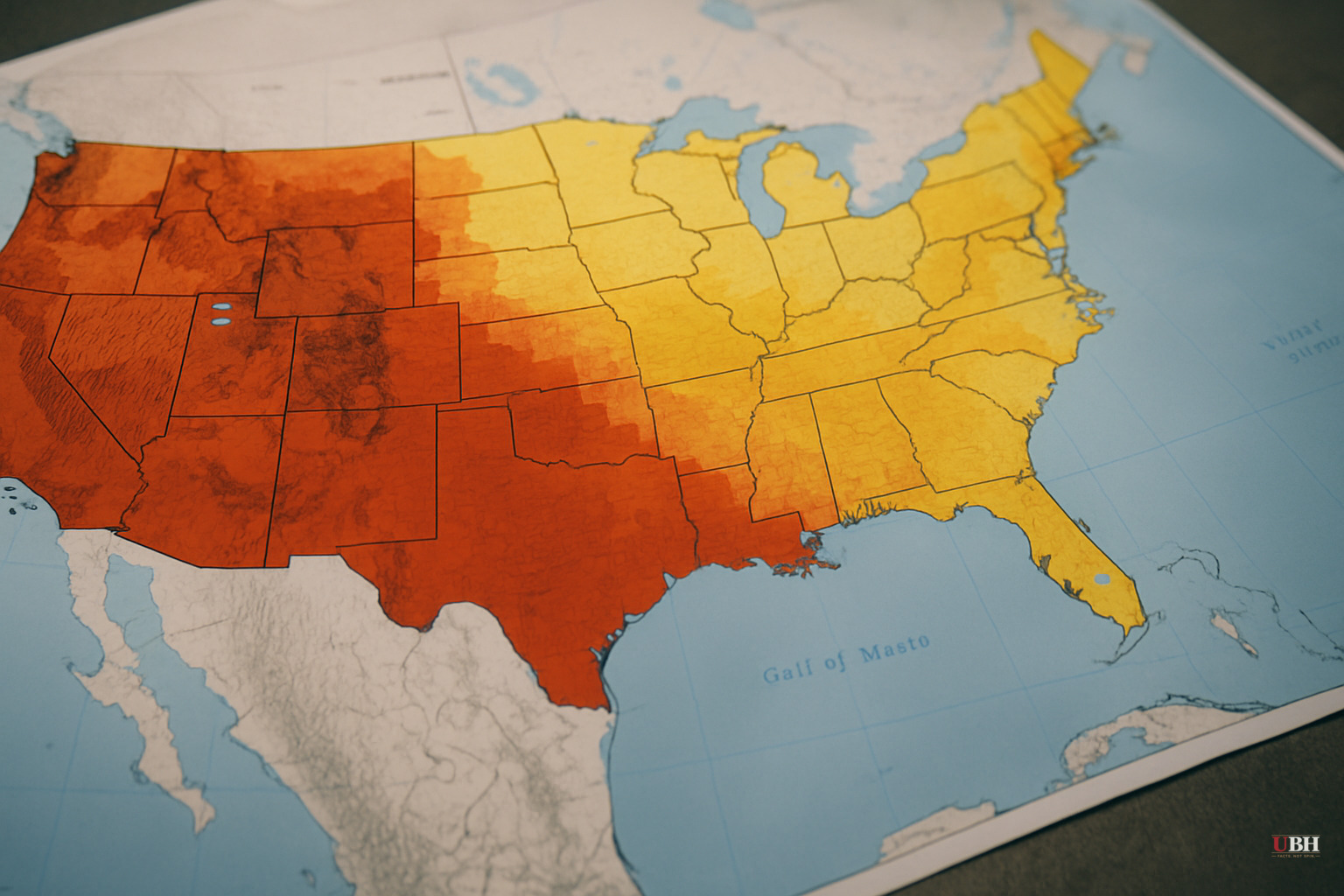
New York City sweated through a heat dome last week, and parents got the usual warnings. Summer camps swapped bonfires for water games. Public-health agencies reminded everyone that kids are uniquely vulnerable to extreme heat.
That message is everywhere. Heat.gov, run jointly by the CDC and the National Oceanic and Atmospheric Administration, states flatly that "children are especially at risk of heat-related illnesses," according to The Atlantic. UNICEF, the EPA, and state health departments repeat some version of the same warning.
The CDC's own data tell a different story.
According to a large-scale CDC study cited by The Atlantic, kids ages 5 to 14 have the lowest rate of heat-related deaths of any age group in the country. The same pattern largely holds for heat-related hospitalizations and emergency-room visits in the United States, per The Atlantic's reporting. By this measure, children are not the most vulnerable group. They're the least.
Where the theory came from
The idea that kids are heat-fragile isn't a modern panic. It traces to a 1980 paper called "Climate and the Exercising Child" by Oded Bar-Or, a Canadian Israeli physician widely credited as the founder of pediatric exercise medicine, as reported by The Atlantic.
Bar-Or's reasoning was sound physiology. Kids have more skin surface area relative to body mass than adults do. At mild or warm temperatures, that helps them shed heat faster. But when air temperature climbs above skin temperature, around 94 or 95 degrees, that same surface-area advantage should theoretically work in reverse, pulling heat into the body instead of releasing it. Bar-Or also argued kids have a smaller sweat response than adults at the same temperatures and may acclimatize to heat more slowly, according to The Atlantic.
The American Academy of Pediatrics issued its first official warning along these lines in 1982, and that basic message has persisted, more or less, ever since, per The Atlantic.
But the underlying science shifted. Research from Bar-Or's own former lab in the 1990s suggested that even in triple-digit heat, children fared no worse than adolescents or adults at maintaining body temperature, The Atlantic reports. By 2008, exercise physiologists were arguing against the old assumption that kids had major natural deficits in thermoregulation. More recent work has reinforced that shift: children may produce less sweat than adults, but researchers say their sweat has less electrolytes and evaporates more easily, and forms in smaller droplets that may evaporate more efficiently, per the reporting. The AAP changed its own policy in 2011, stating that kids are not, in fact, especially vulnerable to heat.
The fair counterargument
Not every researcher agrees the case is closed. Glen Kenny, director of the Human and Environmental Physiology Research Unit at the University of Ottawa, told The Atlantic that data on children remain thin and that some existing studies were "designed incorrectly." In his view, the old assumption still holds: children's smaller size and less-developed heat-loss mechanisms — sweating and blood-flow regulation — do make them more vulnerable, and better research is still needed. He also noted that short lab experiments don't capture the longer-term effects of prolonged heat exposure on a child's body, mood, or school performance, according to The Atlantic.
That's a real, expert-backed limitation of the aggregate mortality and hospitalization data. It's a reason to treat "children are especially at risk" as a contested claim rather than settled science in either direction.
What this means for a parent deciding whether to send a kid to camp
The honest answer, based on the numbers The Atlantic reported, is that kids ages 5 to 14 have the lowest rate of heat-related death — and largely the lowest rate of heat-related hospitalization and ER visits — of any age group in the country. That runs counter to the blanket message coming from heat.gov, the EPA, and UNICEF, even as at least one physiologist argues the underlying vulnerability hasn't been disproven.
None of this means extreme heat is harmless to kids, and no agency has walked back its guidance. Heat.gov's language hasn't changed. No federal agency named in this reporting has announced a review of its child-specific heat messaging in light of the outcome data.
Parents got an email last week saying fans and misters were standing by, and camp could be skipped if parents felt the heat wouldn't set their kid "up for success." The CDC's own numbers on deaths and hospitalizations by age group don't obviously back up the urgency of that message. Until federal guidance catches up with the mortality data — or until better research settles the debate researchers like Kenny say is still open — that gap between warning and evidence will remain.
Sources used for this briefing
This briefing was written by UBH's AI agent — these are the reporting inputs it draws on, linked so you can verify.


