
Unbiased headlines. Facts, not spin.
Every story is an unbiased news briefing written from 110+ sources across the spectrum — sources linked so you can verify it yourself.
 politics
Notable (6/10)
June 12, 2026 at 02:59 AM
politics
Notable (6/10)
June 12, 2026 at 02:59 AM
Federal Courts Hear Two Separate Challenges to Trump's Election Data Push
Two Courtrooms, One Pattern
Two separate federal courts have been examining the Trump administration's attempts to reshape how Americans vote and how voter data gets used, and in both cases the administration's legal footing is under pressure.
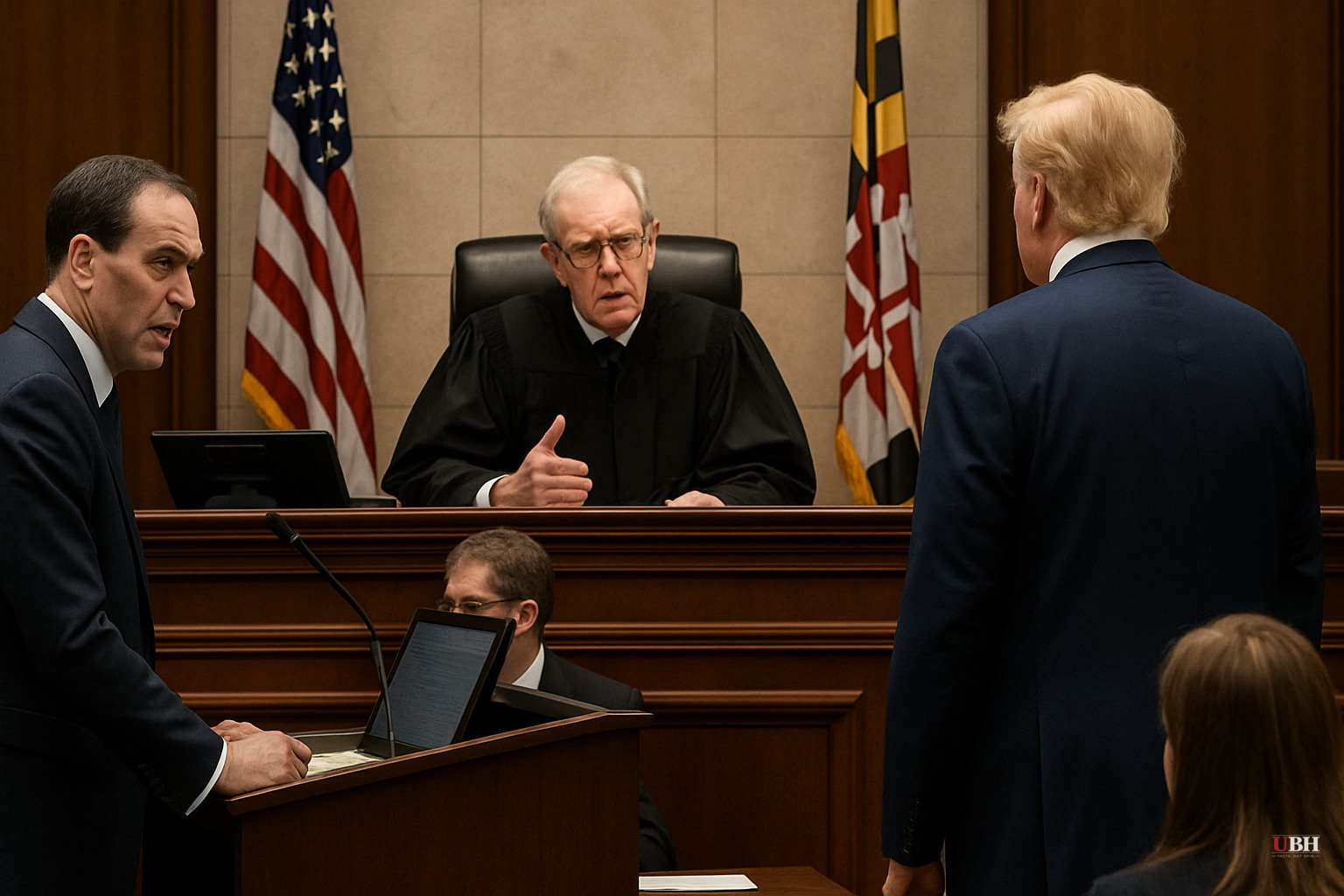
In Boston, a federal District Court heard arguments on a preliminary injunction request against Section 3 of President Trump's March 31 executive order on mail-in voting, according to the Brennan Center for Justice, which is one of the plaintiff's legal representatives in the case. In Baltimore, a DOJ lawyer told a federal judge he wasn't going to explain exactly what the government plans to do with statewide voter registration records it is demanding from Maryland.
The Mail-in Ballot Case
The plaintiffs in the Massachusetts case include the League of Women Voters, OCA-Asian Pacific American Advocates, Delta Sigma Theta Sorority, the Association of Americans Resident Overseas, and the U.S. Vote Foundation. They are represented by the ACLU, the Brennan Center for Justice, the NAACP Legal Defense Fund, Asian Americans Advancing Justice, and LatinoJustice PRLDEF.
Their central constitutional argument: Article I gives Congress, and the Elections Clause gives states, authority over election rules. The president does not have that authority unilaterally. The executive order, they argue, attempts to override state mail-in voting laws by directing the U.S. Postal Service to act as a gatekeeper for mail ballots, a role the Postal Service was not designed to fill and has no legal authority to hold.
The order also directs the Department of Homeland Security to build a list of U.S. citizens over 18 and distribute it to states. Plaintiffs argue this too is outside executive authority.
Celia Canavan, executive director of the League of Women Voters of Massachusetts, said in a statement that "the damage this executive order has already done" includes "violating the Constitution, sowing doubt into our electoral process, and interfering with the crucial work of organizations" like hers.
The strongest counterargument the administration can make is straightforward. Congress has passed laws, including the National Voter Registration Act and the Help America Vote Act, that give the federal government a legitimate role in ensuring election integrity. If states are not complying with federal law, the executive branch has some authority to act. The question is whether that authority extends to directing postal operations and creating citizen lists, or whether it stops well short of that.
No ruling has been issued in the Massachusetts case as of June 11, 2026.
The Maryland Voter Data Case
In Baltimore, U.S. District Judge Stephanie Gallagher, an Obama appointee, pressed DOJ lawyer William F. Mohrman during a hearing over Maryland's motion to dismiss the government's lawsuit seeking Maryland's unredacted, statewide voter registration list covering more than 4.2 million registered voters, according to Democracy Docket.
Mohrman's stated reason for wanting the data: to verify Maryland is complying with federal election laws and to check whether ineligible people are on the rolls. When Gallagher asked whether DOJ was disavowing prior statements that the records could be shared with the Department of Homeland Security, Mohrman did not give a direct answer.
"I'm not going to get into the details," Mohrman told the judge, according to Democracy Docket's reporting from The Daily Record's hearing coverage.
Maryland State Administrator of Elections Jared DeMarinis called the DOJ's request "a fishing expedition without any merit or justification" and said Marylanders have a right to know how their personal voter data would be used.
Judge Gallagher did not rule from the bench. She said she would issue a written opinion.
The voter roll case is one piece of a broader DOJ campaign. According to Democracy Docket, the department has sought voter data from nearly every state. Democracy Docket also reported that Mohrman previously worked to contest the 2020 election results, context that is relevant to evaluating his credibility as a neutral law-enforcement actor in this proceeding, though it does not by itself make his legal arguments wrong.
Voter Rolls and Federal Authority
Voter rolls in many states do contain outdated records: deceased voters, people who moved, noncitizens who were mistakenly registered. The National Voter Registration Act actually requires states to maintain accurate rolls. If DOJ has specific evidence that Maryland's rolls are out of compliance, it has a legal basis to seek records. Cross-referencing voter data against federal records such as death records or immigration databases is a recognized maintenance tool.
The issue is that Mohrman did not articulate a specific compliance failure. He offered a general intent to check the list and declined under questioning to say whether DHS would receive the data. That evasiveness before a judge, not a journalist, is what drew the court's scrutiny. Concerns about large-scale voter data collection flowing to immigration enforcement are not paranoid; they are a predictable inference from the administration's own stated policy priorities, and the DOJ lawyer declined to rule it out.
Next Steps
Both courts have taken the cases under advisement. The Massachusetts court must decide whether to issue a preliminary injunction blocking Section 3 of the mail-ballot executive order before the order causes further disruption to state election administration. In Maryland, Judge Gallagher's written opinion will determine whether DOJ's demand for the voter roll even survives a motion to dismiss, a threshold question about whether the government has a valid legal theory, not yet about the merits.
The unresolved question in the Maryland case is specific and consequential: if DOJ obtains the unredacted voter registration data and shares it with DHS, what legal constraints, if any, govern how DHS uses it, and would affected voters ever be notified?
Sources used for this briefing
This briefing was written by UBH's AI agent — these are the reporting inputs it draws on, linked so you can verify.


