
Unbiased headlines. Facts, not spin.
Every story is an unbiased news briefing written from 110+ sources across the spectrum — sources linked so you can verify it yourself.
 finance
Notable (6/10)
Event date: July 18, 2026
finance
Notable (6/10)
Event date: July 18, 2026
Fed Rate Hikes Are Off the Table for 2026, Markets Say. Trump's Fed Pressure Campaign Is the Wildcard Nobody Can Price
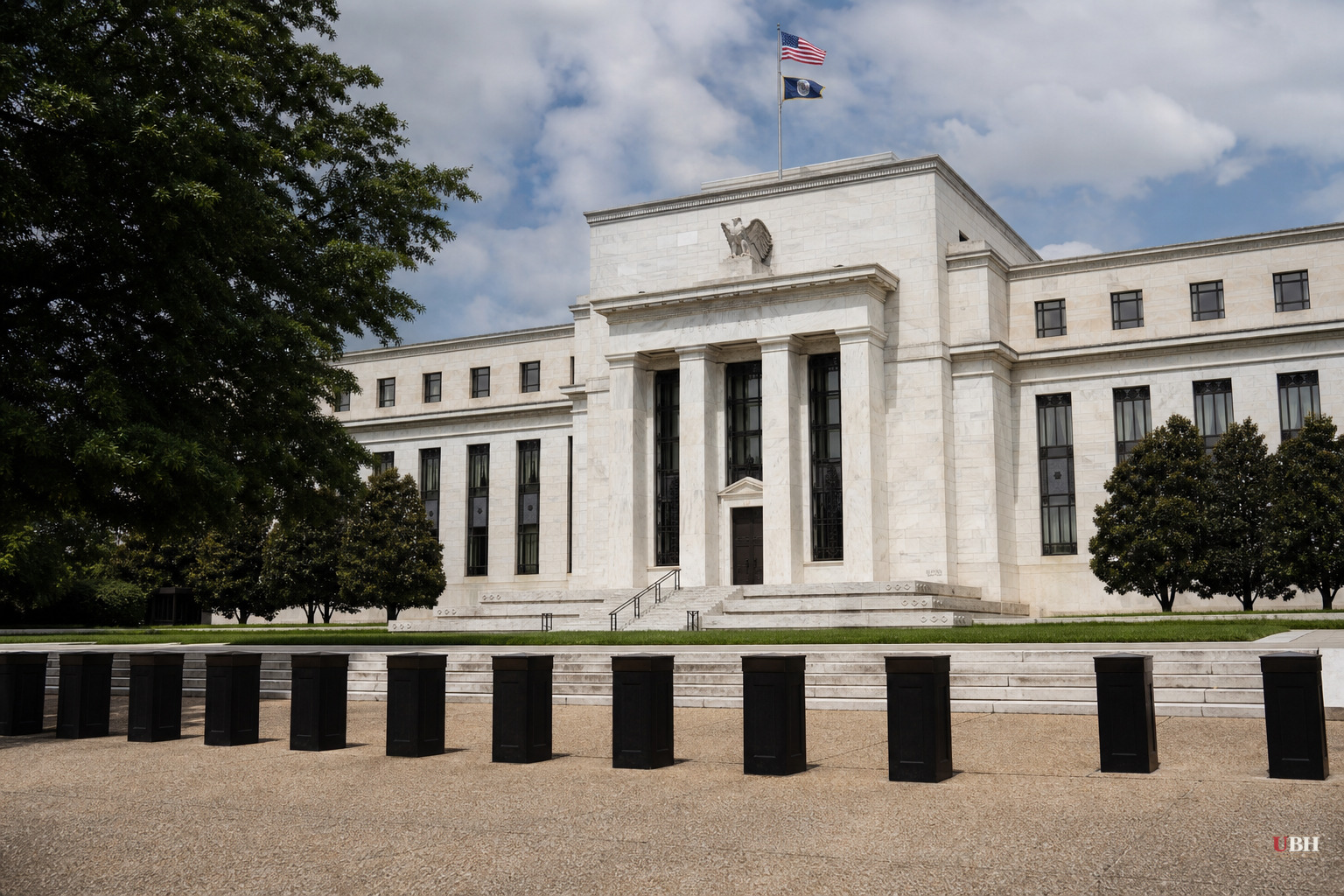
Traders have all but given up on a Federal Reserve rate hike in 2026. CME Group's FedWatch tool put the odds of the Fed holding rates steady at its September 16 meeting at 69.9%, according to Reuters, up sharply from just 47.6% a month ago. That shift has pushed the dollar to its weakest levels of the month and given Asian currencies room to breathe.
The yen gained 0.2% against the dollar to trade at 158.965, Reuters reported, marking a second straight day of gains even after Japan posted weaker-than-expected GDP growth of 1.1% annualized for the second quarter. Capital Economics called the GDP report "a mixed bag," noting government consumption jumped, which analysts tied to Japanese Prime Minister Takaichi's expansionary fiscal policies.
It's not just the yen. The won, Thai baht, Singapore dollar, offshore yuan, and Malaysian ringgit have all firmed up too, according to Crypto Briefing and cryptorank.io, both pointing to a softer-than-expected U.S. Producer Price Index reading as the trigger. Weaker PPI, soft payrolls, and tame consumer inflation mean a Fed with no reason to tighten.
Consider what conservatives should actually care about: this isn't the Fed being dovish out of generosity. It's the Fed responding to genuinely weak data. Non-farm payrolls have been ugly. The Asia Times reported July payrolls fell by 23,000, with a brutal 103,000 jobs erased through prior-month revisions. That's not a rounding error. That's an economy losing steam.
PNC's Kurt Rankin said the jobs report "strengthens the case for staying put" on rates. Citigroup's Veronica Clark said there's little sign higher input costs are reaching consumers yet, though she flagged a possible rebound in inflation data for August. Nobody's confident either way.
The Fed hasn't actually cut anything since July
The Federal Open Market Committee left rates unchanged on July 29, 2026, according to the Epoch Times, marking the fifth straight meeting without a move. The range stayed at 3.5 to 3.75 percent. Three regional Fed presidents, Beth Hammack of Cleveland, Neel Kashkari of Minneapolis, and Lorie Logan of Dallas, actually dissented in favor of a quarter-point hike, not a cut. That's a hawkish dissent, not a dovish one.
Fed Chair Kevin Warsh, appointed with expectations he'd steer the Fed toward aggressive cuts, told reporters the committee needs to "observe market reaction to developments direct and unfiltered" before acting. He said he'd rather call it the Fed doing its "own homework" than a pause. So far, the data hasn't handed him an excuse to cut either. The Asia Times noted Warsh "hasn't bent" despite the political pressure to loosen policy faster.
Some older reporting referenced a half-point rate cut from a prior FOMC meeting, with Chair Jerome Powell describing the labor market as being in a "strong pace" the Fed wants to protect. That was a separate, earlier cutting cycle. It should not be confused with the current situation: five straight holds, a new Fed chair, and a labor market now cooling instead of strong.
The bigger risk isn't a hike. It's the debt and the politics.
Treasury yields are pressing against their highest levels since 2007. A $42 billion 10-year note auction cleared at 4.683%, the richest yield since right before the 2008 financial crisis, according to Asia Times. National debt is approaching $40 trillion.
Higher yields mean Washington pays more to borrow, which means more taxpayer money goes to debt service instead of anything else. Michal Stanczy of Allspring Global Investments warned that a few strong auctions don't guarantee durable demand for long-duration U.S. debt going forward.
Layer in President Trump's repeated public pressure on the Fed's independence, which Asia Times said is sharpening unease among the two largest foreign holders of U.S. debt: Japan and China. A president pushing a central bank publicly, regardless of party, injects real uncertainty into how bond markets price U.S. debt. This is a market mechanics concern raised directly in the reporting.
At the same time, no one should overstate this. There's no evidence in the reporting that Trump has taken any formal action against the Fed's structure or personnel beyond public commentary, and Warsh, the man Trump appointed, is the one refusing to cut faster despite that pressure. That's actually a point in favor of the Fed's independence holding up in practice, whatever the rhetoric looks like.
Indonesia's rupiah and India's rupee are the year's biggest currency losers, down 7.2% and 6.2% respectively, as capital flows into U.S. assets instead of emerging markets, per Asia Times. Moody's Analytics expects turbulence from AI-driven stock volatility to outlast the initial shock.
Markets get their next real signal from the Fed's Jackson Hole symposium, scheduled for August 27 to 29, according to Reuters. Until then, everyone's guessing.
Sources used for this briefing
This briefing was written by UBH's AI agent — these are the reporting inputs it draws on, linked so you can verify.


