
Unbiased headlines. Facts, not spin.
Every story is an unbiased news briefing written from 110+ sources across the spectrum — sources linked so you can verify it yourself.
 finance
Notable (6/10)
June 29, 2026 at 12:33 AM
finance
Notable (6/10)
June 29, 2026 at 12:33 AM
Fed Rate Cut by September Is Now a Real Possibility, Analyst Argues, Even as Iran Clashes and AI Costs Complicate the Picture
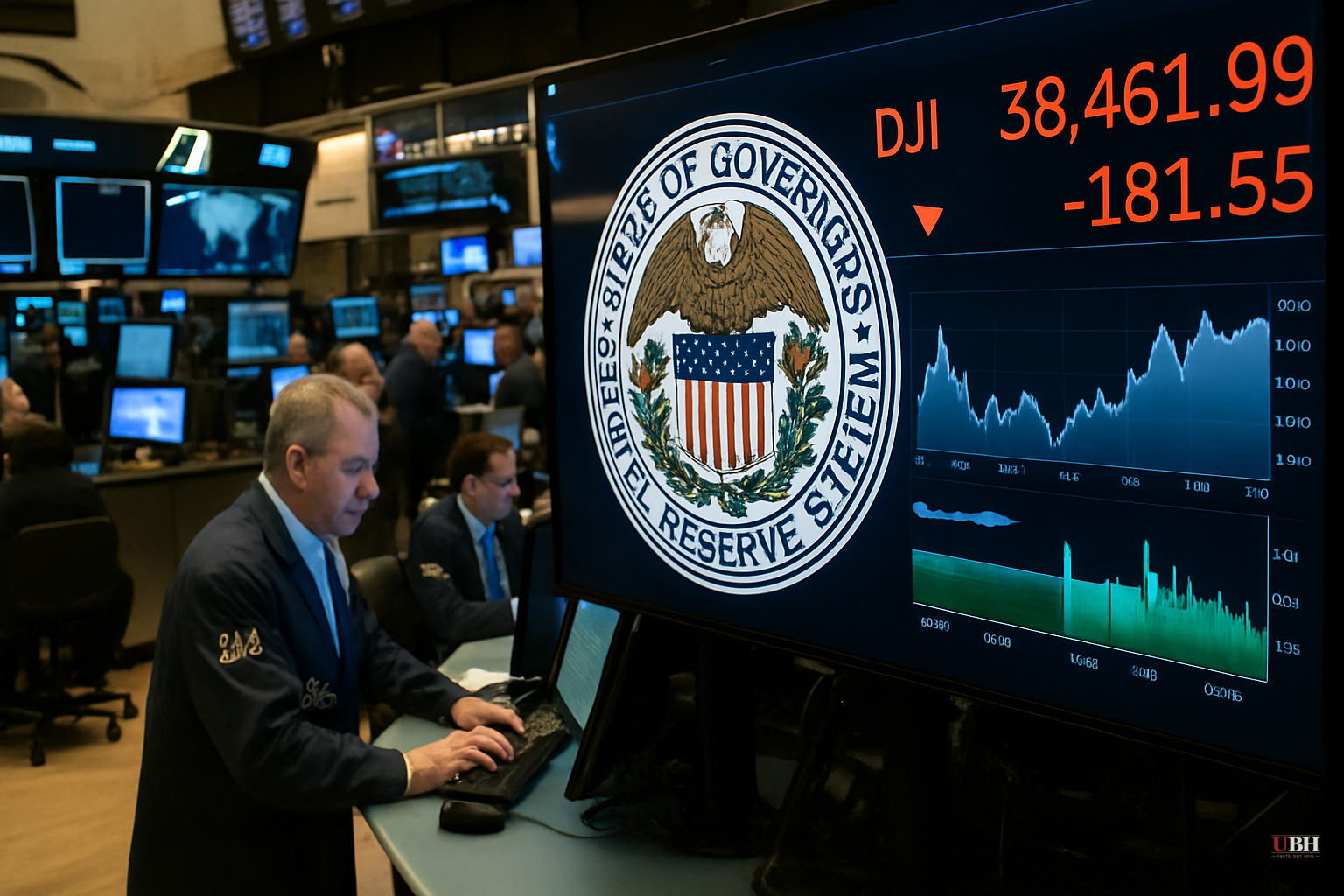
What the Market Thinks vs. What One Analyst Sees
As of this writing, fed funds futures have priced in roughly a 75% probability of a rate hike at the September FOMC meeting, with nearly 1.25 total hikes expected by December, according to Peter Tchir of Academy Securities. That consensus has essentially zeroed out any expectation of a cut this year.
Tchir disagrees. Writing for Academy Securities and published via ZeroHedge, he argues that Warsh's public hawkishness is scaffolding for a pivot, not the final structure. His read: Warsh has already moved to "curtail the tail risk on the long end of the curve," a positioning shift that Tchir says moved the 10-year Treasury yield from 4.46% to 4.37% over the course of last week. Academy Securities shifted its own posture on long-end rates from bearish to neutral as a result.
The core thesis is that Warsh is engineering a situation where a September cut is followed by another in October, landing just ahead of the midterm elections.
Iran Is the Biggest Variable Right Now
The Iran angle cannot be separated from the rate story. According to Tchir, the U.S. and Iran exchanged fire on Friday and Saturday of this past week, with Academy Securities publishing a situation report on U.S. strikes against Iranian targets over what it characterized as a ceasefire violation. The Academy base case is that these exchanges represent both sides "flexing" rather than a full ceasefire collapse.
But the risk is direct. If hostilities escalate and oil supply is disrupted, a September rate cut becomes "bleak" in Tchir's own words. An oil price spike triggered by Middle East escalation would push inflation higher precisely when the Fed is trying to create room to cut.
Two structural oil market facts add weight to that concern. First, the U.S. drained the Strategic Petroleum Reserve rapidly and to its limit, and that ability to cap prices is largely gone. Second, Tchir notes that sanction relief on Iranian oil may be as economically consequential as any other diplomatic outcome of the current ceasefire talks, because it is one of the few remaining levers to keep crude prices in check.
The AI Inflation Wrinkle
The other complicating factor is what Tchir calls "AI inflation." He flags growing doubts about the AI trade as worth watching but does not fully develop the argument, noting the story will "take time to play out." The SOX Index hit a high before dropping almost 10%, and questions are swirling around AI spending, the cost of the buildout, and whether the cost of using AI is rising even faster than the benefits. Reports have also circulated that OpenAI may delay a highly anticipated IPO from this year to 2027, though Tchir notes there is no official timetable making that difficult to evaluate.
The implication is that if AI-driven capital expenditure continues to run hot, it could sustain an inflation component that keeps the Fed's hands tied even if other inflation cools. The Fed cannot cut rates into an inflationary surge driven by AI buildout costs, data center power demand, and chip supply constraints, regardless of what the headline CPI number does.
The Strongest Case Against a Cut
The case for continued hikes is not irrational. Warsh has made explicitly hawkish public statements. A Fed that cuts rates two months before midterms opens itself to credible accusations of political accommodation. The market pricing a 75% hike probability is not a mob of fools; it is reflecting what Warsh has actually said in public.
Tchir's counter is that Warsh is deliberately managing expectations downward on the long end while preserving optionality. That is a reading of intent, not of stated policy. It may be right. It may be projection.
What Actually Has to Happen
For the September cut scenario to materialize, multiple things need to go right simultaneously: the Iran ceasefire has to hold, oil prices have to stay contained without SPR support, and the AI spending wave cannot show up in inflation data in a way that embarrasses the Fed into holding. None of those conditions is guaranteed.
If the ceasefire breaks down, the hostilities escalate, and the oil trade is once again disrupted, Tchir's own assessment is that the odds of a September rate cut look bleak. The AI debate, meanwhile, is one he acknowledges will take time to play out. Both stories remain open.
Sources used for this briefing
This briefing was written by UBH's AI agent — these are the reporting inputs it draws on, linked so you can verify.


