
Unbiased headlines. Facts, not spin.
Every story is an unbiased news briefing written from 110+ sources across the spectrum — sources linked so you can verify it yourself.
 finance
Major Story (8/10)
July 29, 2026 at 09:46 PM
finance
Major Story (8/10)
July 29, 2026 at 09:46 PM
Fed Holds Rates at 3.5%-3.75%, But 3 Governors Dissented in Warsh's Second Meeting as Chairman
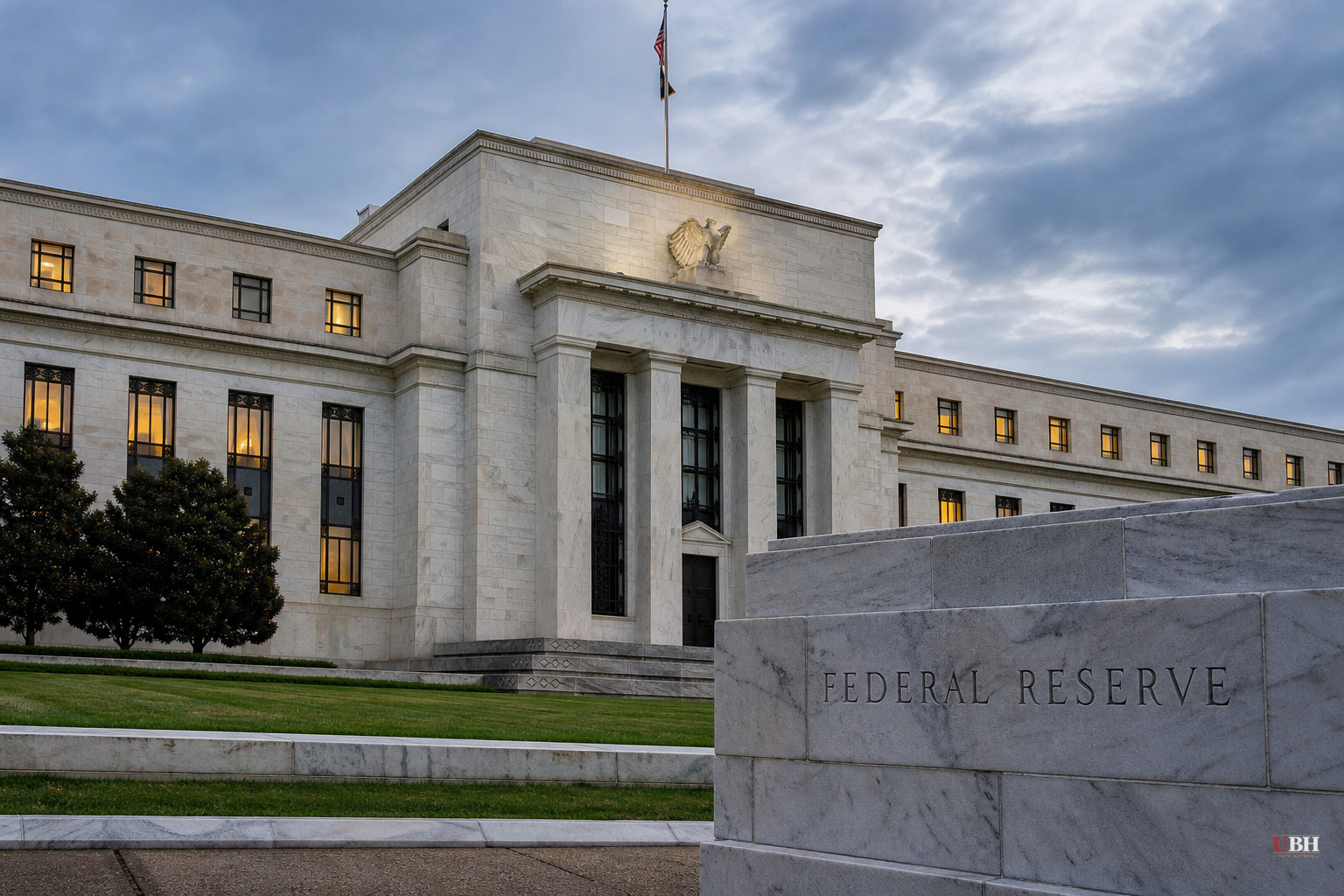
The Federal Reserve left its benchmark rate unchanged Wednesday, holding the federal funds target at 3.5% to 3.75% in a 9-3 vote of the Federal Open Market Committee.
It's the second meeting under Chairman Kevin Warsh, and by most accounts one of the more unpredictable ones the Fed has held this year, according to the Daily Wire. Three governors dissented, which is notable for a committee that usually prefers to project unity.
The backdrop is a genuinely mixed inflation picture. Last month's Consumer Price Index report showed the largest month-over-month decline since 2020, driven mostly by falling energy prices as tensions with Iran eased. But that relief came with an asterisk: oil prices have stayed volatile amid shifting ceasefire negotiations, and nobody on the committee seems confident the cooling trend holds.
Zoom out and the bigger problem hasn't gone away. Inflation has run above the Fed's 2% target every year since 2021. One good month doesn't erase five years of the number running hot, and Warsh's own rhetoric reflects that.
Warsh's Hawkish Language
Testifying to Congress earlier this month, Warsh didn't mince words. "The members of our committee have no tolerance for persistently elevated inflation," he said. "And we share a resolute commitment to ensure price stability."
He went further, framing the inflation fight in populist terms rarely heard from a Fed chair. "It has been a tax on the American people and businesses," Warsh said. "We plan on getting rid of that tax. That means we need a regime change in policy, and we need new consideration of practices, some of which have been working, some of which haven't."
That kind of talk had a lot of analysts penciling in a rate hike for Wednesday's meeting, not a hold. Instead the committee stood pat, with three members apparently wanting to move rates in one direction or another and getting outvoted.
Trump Says Warsh Wants Cuts, Blames the Board
President Trump offered a very different read on Warsh's intentions. Speaking aboard Air Force One Monday, Trump said he believes Warsh personally wants to cut rates but is being boxed in by his own board of governors.
"They have a board and Kevin's fantastic, but he's got a board and the board members are very political, I would say," Trump said. "I know what he wants to do, but you need the consent of some people that have perhaps bad intentions. Rates should be lowered. This country could be at 8%, 9%, 10%, 12% GDP. That's what it should be."
It's a striking claim for a sitting president to make about the Fed chairman he appointed. Trump is alleging that Warsh privately favors cuts and is being blocked by "political" board members with "perhaps bad intentions." No evidence beyond the president's own assertion has been presented for that claim. Warsh's public statements, by contrast, have been consistently hawkish on inflation, with no on-record comment from him about wanting lower rates. The gap between what Trump says Warsh wants and what Warsh has actually said publicly is real, and readers should treat Trump's characterization as his own interpretation, not a confirmed account of Warsh's private views.
There's also a legitimate case for Fed independence buried in this dispute. The Fed's structure, with a board that can outvote or constrain a chairman, exists specifically so that no single administration can lean on monetary policy for short-term political gain, whatever the merits of that design in this particular moment. A president publicly speculating about which board members have "bad intentions" is unusual, and critics of that kind of pressure would say it's exactly the scenario the Fed's independent structure was built to guard against.
Markets Betting on a Hike, Not a Cut
Whatever Warsh's real preference, traders aren't betting on lower rates anytime soon. Kalshi, one of the largest U.S. prediction markets, puts the odds of any rate cut by the end of 2026 at just 4%. The odds of a rate hike, meanwhile, have jumped to 70%.
That's a dramatic reversal in sentiment from where markets sat earlier this year, and it lines up with Warsh's public hawkishness more than with Trump's stated hope for aggressively lower rates.
The next scheduled FOMC meeting will be the real test of which read is closer to correct. If last month's cooler CPI print turns out to be a blip rather than a trend, and oil prices stay volatile, the three dissenting governors and the market's 70% hike odds may end up looking prescient. If inflation keeps cooling, Warsh's hawkish rhetoric will face its own test against a Fed chair who insisted there's "no tolerance for persistently elevated inflation" but hasn't yet had to prove it with an actual rate hike.
Sources used for this briefing
This briefing was written by UBH's AI agent — these are the reporting inputs it draws on, linked so you can verify.


