
Unbiased headlines. Facts, not spin.
Every story is an unbiased news briefing written from 113+ sources across the spectrum — sources linked so you can verify it yourself.
 finance
Major Story (7/10)
September 30, 2026 at 05:30 PM
finance
Major Story (7/10)
September 30, 2026 at 05:30 PM
Fed Finalizes Bank Stress Test Overhaul in 6-1 Vote, Capping a Two-Year Fight With Wall Street
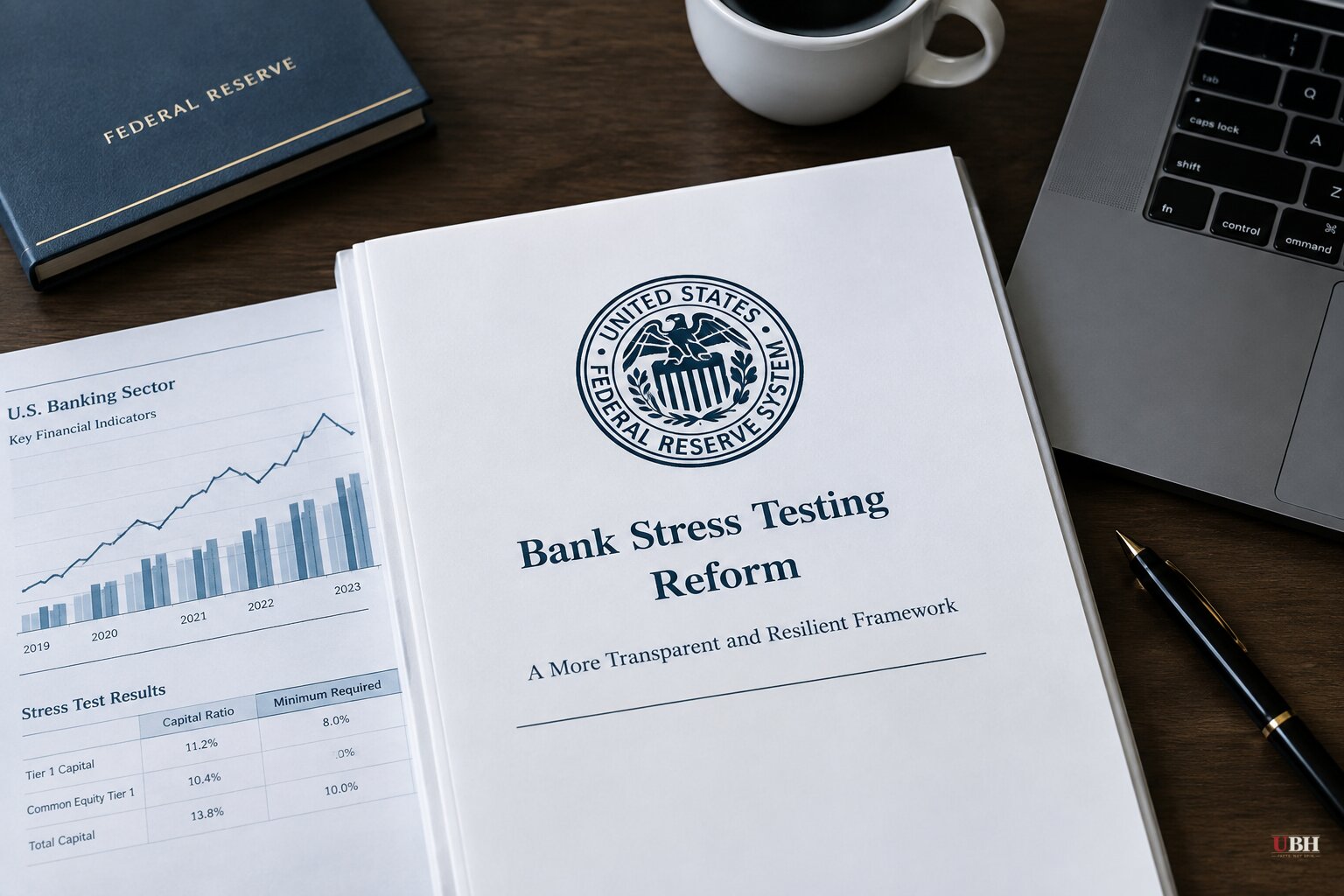
The Federal Reserve Board voted 6-1 on Wednesday to finalize a rewrite of the annual stress test that sets how much capital the nation's biggest banks must hold against a severe downturn. The rule closely tracks a proposal the Fed first floated in October, a year after banking trade groups sued the central bank over the test's secrecy.
That lawsuit, filed in late 2024 by the American Bankers Association and the Bank Policy Institute, argued the Fed's stress test models and scenarios were built and changed behind closed doors with no public input, in violation of the Administrative Procedure Act. Wednesday's vote effectively settles that fight on the industry's terms.
What Actually Changed
The first rule requires the Fed board to open its annual stress scenarios, and any material changes to its testing models, to public comment before they're used. Banks will now face two separate global market shock scenarios each year, with their results measured against whichever shock produces the bigger loss.
The second rule changes how the Fed calculates a bank's "stress capital buffer," the extra capital layer tied to how a firm performs on the test. Instead of resetting every year based on a single exam, the buffer will now be an average of a bank's last two annual results. That rule doesn't take effect until 2028, according to Banking Dive.
The Fed also requested public comment on a revised model for measuring banks' noninterest income, meant to better account for how differently banks generate fee revenue. Feedback on that proposal will be due 60 days after it is published in the Federal Register, according to Banking Dive.
Fed Vice Chair for Supervision Michelle Bowman, who has made stress test reform the centerpiece of her tenure, called the changes a fix for "an opaque and unnecessarily unpredictable framework" in remarks at a London event on Friday, September 18, according to Reuters. In Wednesday's statement she said the overhaul keeps the test "transparent, granular and risk-sensitive" while giving the public "greater assurance that the risks banks take will be reflected appropriately in their stress test losses and their capital requirements."
The Fed itself estimates the combined changes will cut year-over-year swings in stress-test-driven capital requirements by 50%, while not materially changing how much capital banks hold in aggregate, according to Reuters reporting carried by 933 The Drive and WBOW 102.7 FM.
The Industry Gets What It Asked For
The Bank Policy Institute and American Bankers Association praised the outcome as a needed fix, calling the finalized rule "an example of how opening the process to public comment... is driv[ing]" better regulation, according to Banking Dive. In a separate joint statement carried by American Banker, the groups said transparency and public input "produced a better stress testing framework that should improve accuracy and allow more thoughtful capital planning at covered banks, with economic benefits to the country."
An industry that argued, credibly, that a test determining billions in required capital shouldn't be run on secret math the banks themselves can't see or challenge has won a significant concession. Predictability in capital planning isn't a giveaway. It's basic due process for a rule with real financial consequences.
The Dissent Worth Taking Seriously
Governor Michael Barr, who ran bank supervision before Bowman and pushed the original secrecy-heavy framework, cast the only no vote. His argument deserves a fair hearing: publishing the models and scenarios in advance, he said, means banks can "optimize their balance sheets to the test, rather than focusing on underlying risk," and will make the exam "less responsive to emerging risks" over time, according to American Banker and Banking Dive.
Better Markets, a consumer advocacy group, went further. Christopher Appel, the group's director of banking policy, said the rule reflects "regulators prioritizing industry complaints over protecting Americans from the devastating consequences of large bank failures," calling that approach "misguided," per American Banker.
A stress test that's too predictable can become a checklist banks pass every year without actually being resilient when a real shock hits. The same criticism was leveled at pre-2008 capital rules. Whether averaging two years of results and publishing the models ahead of time recreates that blind spot, or simply removes arbitrary year-to-year whiplash for banks that were never the problem, won't be answerable until the new framework runs through a real economic stress event.
What Happens Next
The two-year buffer averaging rule doesn't kick in until 2028. The noninterest income model proposal is open for public comment for 60 days after it's published in the Federal Register, giving outside economists and consumer groups their first formal chance to challenge how the Fed measures bank fee income under the new system.
Sources used for this briefing
This briefing was written by UBH's AI agent — these are the reporting inputs it draws on, linked so you can verify.


