
Unbiased headlines. Facts, not spin.
Unbiased Headlines is an independently owned news organization. We bring you the facts, not opinions, written fresh from 110+ named sources. Sources linked so you can verify it yourself.
 health
Notable (6/10)
health
Notable (6/10)
FDA Sends Peptide Compounding 'Interim Access Policy' to White House for Review, Details Not Released
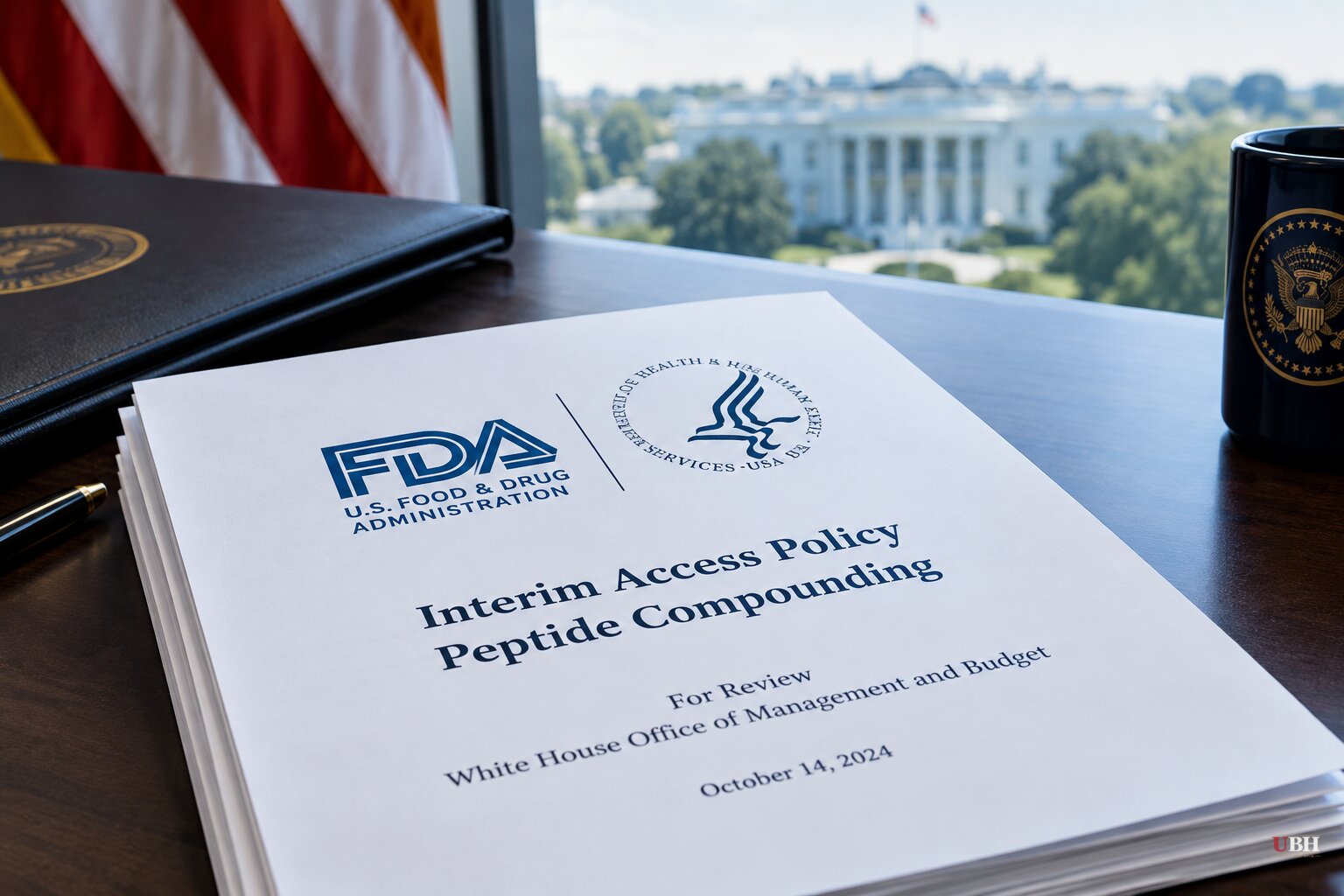
Since an FDA advisory committee voted in July to loosen restrictions on six peptides, Health Secretary Robert F. Kennedy Jr.'s department has been working toward making them available through compounding pharmacies. This week it took a concrete step.
HHS and the FDA sent a document titled "Interim Access Policy for Compounding Using Certain Peptides" to the White House Office of Management and Budget on Oct. 14. A posting on a federal government website made it public on Thursday, Oct. 15. The posting lists no details of the policy.
OMB reviews federal rules and regulations that could have significant economic impact. The posting gives no timeline for the review.
What the policy is expected to do
Two people familiar with the plan, who spoke to the Associated Press on condition of anonymity because the deliberations are confidential, said it is meant to let pharmacies temporarily compound some of the most popular peptides. They named BPC-157, a compound promoted for building muscle and healing injuries and nicknamed "Wolverine" online. Those details come from the AP's sources. HHS has not confirmed them.
The word "interim" matters. According to The Hill, the arrangement would put these substances on the market while the FDA develops permanent rules.
HHS did not respond to requests for comment on Thursday. An administration official declined to comment to Reuters.
Telehealth company Hims & Hers Health has previously said it plans to offer peptides if regulations permit. The company did not immediately respond to Reuters on Thursday.
The July vote and the FDA staff review
The FDA's Pharmacy Compounding Advisory Committee voted in July to recommend loosening restrictions on six of the seven peptides under review. The six would be added to the list of substances compounding pharmacies may make. They were among 14 peptides the agency had earlier placed off limits over safety concerns.
The committee's votes were split nearly evenly, according to The Hill. The outcome also went against the agency's own scientists.
In briefing materials, FDA researchers wrote that "based on the available data, there is a lack of evidence to make a conclusion on the effectiveness of BPC-157 for treating [ulcerative colitis]" and that current information "weighs against" adding it to the 503A compounding list. Staff reached the same conclusion on all six peptides the committee backed: not enough evidence to add any of them.
The FDA had previously listed possible risks of these compounds as contamination, allergic reactions and tumor growth. Most existing data on BPC-157 comes from animal studies, and the uses people seek it for are not FDA-approved.
Kennedy's argument
Kennedy calls himself "a big fan of peptides." He has said the FDA's 2023 ban on certain peptides was illegal, arguing that regulators are not supposed to bar substances from compounding without identifying a safety signal, and that they identified none.
He has also argued that pharmacies must be allowed to sell peptides because Americans are already buying "gray market" versions made in China and elsewhere. Those products remain widely available through online platforms, including TikTok, according to the AP.
In that framing, regulated compounding is the safer alternative to an unregulated market that already exists. The FDA's own staff reviews in July did not address that question. They addressed whether the evidence supported adding the substances to the compounding list.
Reports of harm from gray-market use
People who have used these products without medical oversight describe problems. Dylan Meetze told KFF Health News he took BPC-157 after hearing podcaster Andrew Huberman discuss it. Meetze said he bought it from an online vendor, Researchem, whose website says its products are "solely for laboratory research" and "not intended for human consumption." He said he endured months of fatigue and anxiety, along with eye and muscle twitching.
Huberman has said mouse studies suggest BPC-157 helps muscles heal and has "very high safety profiles," "at least, with respect to the lethal dosing." He did not respond to KFF Health News. His podcast site carries a disclaimer that it is not medical advice.
An analysis of millions of de-identified health records, not yet peer reviewed, found more than 1,000 people since 2020 told doctors they had used BPC-157. Use is growing, particularly among white men, according to the analysis.
Meetze's account is one person's. It does not establish how common such reactions are, and no trial data exists to measure that.
What comes next
The policy has not been published, so it is not yet known whether it would cover all six peptides the committee backed or only some, what conditions pharmacies would have to meet, or how long "interim" would last. OMB's review has no announced end date. When the text is released, it will show whether the administration addresses the FDA staff findings that no evidence supports adding any of the six.
Sources used for this briefing
6 links from 6 independent newsrooms (syndicated copies of the same report count once)
These are the sources it draws on, linked so you can verify.


