
Unbiased headlines. Facts, not spin.
Unbiased Headlines is an independently owned news organization. We bring you the facts, not opinions, written fresh from 110+ named sources. Sources linked so you can verify it yourself.
 health
Major Story (7/10)
Event date: October 29, 2026 ·
FDA Proposes Withdrawing Tavneos, Alleging Manipulated Trial Data. Amgen Says the Drug Works
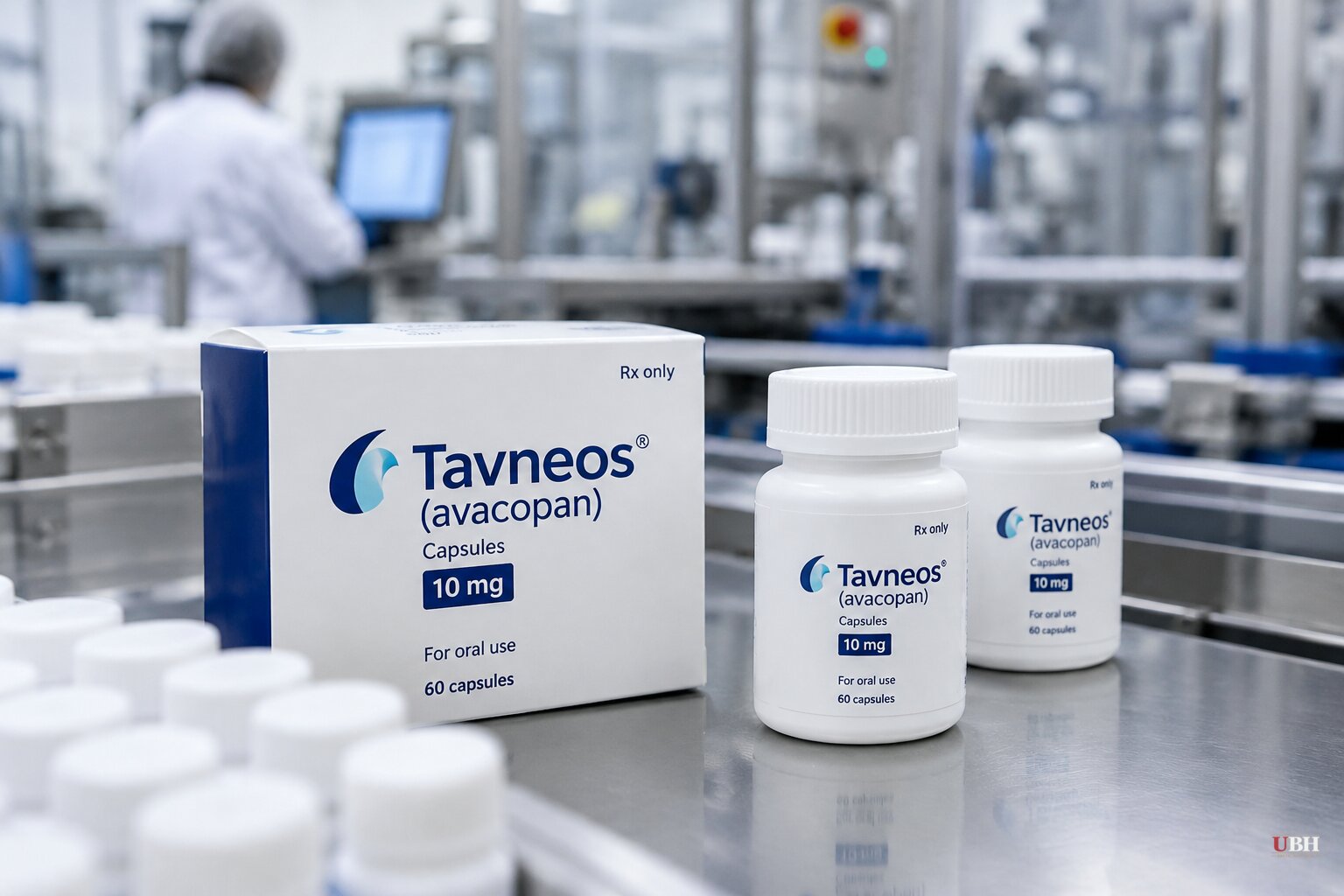
The FDA approved Tavneos on Oct. 7, 2021. Five years later, the agency wants to take it back.
In April, the FDA sent a letter proposing that the drug be withdrawn from the U.S. market. The letter cites reports of serious, sometimes fatal, liver injury. It also argues that Tavneos no longer has "substantial evidence" that it works.
The agency now believes that ChemoCentryx employees manipulated data in the pivotal trial submitted for approval. That belief is the FDA's. It comes from material that surfaced in a long-running investor lawsuit.
A narrow call in 2021
The approval was never a sure thing. In May 2021, the FDA released a briefing document on the experimental drug for ANCA-associated vasculitis, a rare autoimmune disease that attacks blood vessels and often damages the kidneys and lungs.
The study, run by California-based ChemoCentryx, showed slightly higher remission rates after one year. The FDA said the trial design was less than optimal, which made the results hard to interpret. One advisory committee member said the drug's effect "is just not well verified by this study."
Patients and some physicians saw something else. They saw a possible way to cut reliance on steroids, which work well but cause severe side effects.
The committee voted narrowly to recommend approval. The FDA followed.
The money
Amgen bought ChemoCentryx a year after approval. Tavneos costs $220,000 a year, according to Drugs.com. Sales reached nearly half a billion dollars in fiscal 2025.
That revenue came in while the investor lawsuit ground on. A court hearing was scheduled for Oct. 29 to consider a proposed $69 million settlement in that case.
Other regulators have already moved
This summer, the New England Journal of Medicine retracted the paper describing the clinical trial. Tavneos was taken off the market in the European Union. The United Kingdom has announced it will remove the product too.
The U.S. is the holdout, and Amgen is pushing to keep it that way.
Amgen's position
Amgen says that whatever the details of ChemoCentryx's data handling, the drug works as advertised and should stay available. In July it filed a 104-page document with the FDA stating that "the totality of the evidence supports the continued availability of TAVNEOS."
Some patients and academic experts also consider Tavneos an important treatment option. For people trying to stay off long-term steroids, losing it is not an abstract regulatory question.
The FDA's case is that approval rested on data it no longer trusts. Amgen's case is that the drug's value does not depend on that data alone. Those two positions are now headed for a direct test.
Pulling a drug is harder than approving it
The FDA moved fast once it had a reason to doubt the 2021 data. Reversing an approval is another matter. The agency has to make its case against a company with a large financial stake and a formal written defense on file.
The fight also shows a gap in the system. A trial the FDA itself called hard to interpret in 2021 went on to support a drug that sold close to $500 million in a single year. It took a shareholder lawsuit, not the agency's own review, to surface the evidence now driving the withdrawal effort.
A different FDA fight the same week
The FDA's gatekeeping role is also under pressure from the other direction. On Wednesday, Oct. 28, HHS released a draft policy that would direct the FDA not to act against compounding pharmacies that make six unapproved peptides: BPC-157, Epitalon, KPV, MOTS-c, Semax and TB-500. None has passed FDA review for safety or effectiveness.
The policy came from the Department of Health and Human Services under Secretary Robert F. Kennedy Jr., who calls himself a "big fan" of peptides and has said he used BPC-157 for a muscle injury. Six people familiar with the drafting told the Associated Press that most FDA scientific staff opposed it and had limited input beyond safety provisions.
An HHS spokesperson said the agency is "confronting the risks of black-market peptides." Under the draft, pharmacies would have to buy ingredients from FDA-registered factories, test purity and track side effects.
Peter Lurie, a former FDA official who now leads the Center for Science in the Public Interest, noted that the FDA lacks the legal power to enforce those requirements.
The case against FDA caution
Conservative commentator Stephen Moore argues in the Epoch Times that the FDA is too slow and too risk-averse. He says patients with deadly diseases should be free to try experimental treatments, and he points to a 19-year-old South Carolina woman who flies to London for glioblastoma immunotherapy not available in the U.S.
"I have no idea whether this particular cancer treatment really works," Moore writes, but he argues the patient, not regulators, should decide.
The Tavneos record is the other side of that ledger. It involves a drug that cleared the FDA's process and reached patients at $220,000 a year, and whose supporting data the agency now questions.
What comes next
The FDA has proposed withdrawal, and Amgen has filed its defense. The EU has acted, and the UK has said it will. What remains unresolved is whether the FDA will finalize the withdrawal of a drug that U.S. patients are still taking, and how it will weigh Amgen's 104-page argument against the data-integrity findings.
Sources used for this briefing
7 links from 7 independent newsrooms (syndicated copies of the same report count once)
These are the sources it draws on, linked so you can verify.


