
Unbiased headlines. Facts, not spin.
Unbiased Headlines is an independently owned news organization. We bring you the facts, not opinions, written fresh from 110+ named sources. Sources linked so you can verify it yourself.
 health
Notable (6/10)
UK Regulator Approves Casgevy Gene Therapy for Children Aged Five and Over
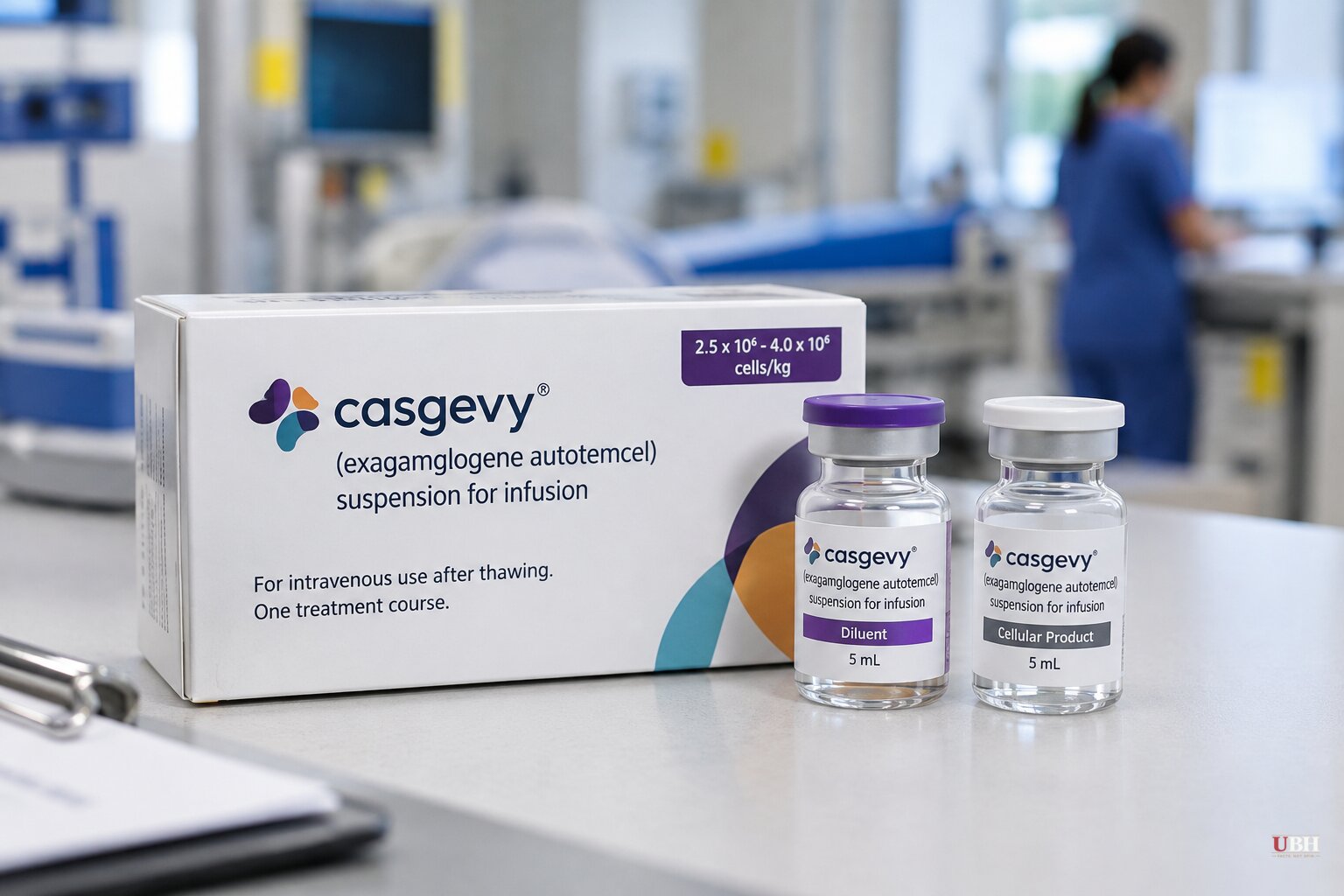
Britain's medicines regulator has lowered the minimum age for the CRISPR-based gene therapy Casgevy from 12 to five.
The Medicines and Healthcare products Regulatory Agency (MHRA) extended the marketing authorisation for Casgevy (exagamglogene autotemcel) on Oct. 29, 2026, and published its press release on Oct. 30. The therapy, made by Vertex Pharmaceuticals and CRISPR Therapeutics, covers children aged five and over with severe sickle cell disease or transfusion-dependent beta-thalassaemia.
What the MHRA said
"Severe sickle cell disease and β-thalassemia are serious, lifelong conditions that in some cases can be fatal," said Julian Beach, MHRA Executive Director Operations. He said the approval "is based on careful assessment of the available evidence on the treatment's safety, quality and effectiveness."
Beach added that the agency "will continue to closely monitor the safety and effectiveness of Casgevy."
The MHRA's release did not include trial figures for the younger age group.
How the treatment works
Both diseases come from errors in the genes for haemoglobin, the protein red blood cells use to carry oxygen. In severe sickle cell disease, that can mean attacks of very severe pain, life-threatening infections and anaemia. In beta-thalassaemia, it can mean severe anaemia, with patients often needing a transfusion every three to five weeks, plus injections and medicines for life.
Doctors collect a patient's own bone marrow stem cells and edit them in a laboratory. The cells are infused back after conditioning treatment, which prepares the bone marrow to accept them. The edit targets a regulatory region of the BCL11A gene, which normally switches off fetal haemoglobin production after birth. With that switch dampened, the body makes fetal haemoglobin again, which compensates for the defective adult version.
It is not an easy process. Patients may need to stay in hospital after the infusion while the cells settle into the marrow. The MHRA lists nausea, fatigue, fever and an increased risk of infection among the side effects.
Approval is not access
A licence lets doctors use a drug. It does not oblige the NHS to pay for it.
The adult-age history shows the gap. According to Tech Times, the MHRA first authorised Casgevy in November 2023 for patients 12 and over. NICE, the body that decides what the NHS funds, then declined to back it for sickle cell disease in March 2024. It reversed course after a commercial agreement on price, and the NHS began offering the therapy at the start of 2025. Manchester University NHS Foundation Trust gives February 2025 as the month NICE approved it for NHS use. Tech Times puts the first NHS availability at January 31, 2025.
As of Oct. 30, Tech Times reported, no NICE appraisal for the five-to-eleven group had been announced. NICE would have to complete one, and the existing NHS managed-access arrangement would have to be extended to younger patients, before most British families could get the treatment through the health service.
That is a taxpayer question as much as a medical one. Price was what held up the adult rollout, and the sources do not disclose what the NHS pays. Any extension to children will turn on the same kind of negotiation between Vertex and the health service.
One patient's experience
Aisha's case shows the human stakes. Aisha, from Cheadle, was the first person in the UK to go through Casgevy treatment on the NHS and is now 15. She was treated at Royal Manchester Children's Hospital, and the trust says she rang the bell to mark the end of her treatment.
Aisha has had sickle cell disease since birth. She was attending emergency departments as often as every two weeks for medication and blood transfusions. "I've not known life outside of being in hospital and it's prevented me from doing a lot," she said. She described her crises as feeling "almost like hammering and chiselling on your bones."
She was admitted for two months once her edited cells were ready. Her immunity was so low that only her mother was allowed to stay with her.
Her mother, Hamdat, who also has sickle cell disease, said she had to read medical journals just to understand what she was agreeing to. "I also understood the risks of not doing anything for my daughter," she said.
The trust says Casgevy is much safer than a bone marrow transplant because it uses the patient's own cells. Transplants can offer a potential cure for some people but are usually considered only when symptoms are severe and other treatments have failed.
Who is affected
About 15,000 people in the UK live with sickle cell disease, according to the Manchester trust. It mainly affects Black African and Black Caribbean communities. The condition can cause severe pain, strokes, organ damage and heart failure.
The MHRA says the treatment will be available to children who meet the eligibility criteria. It has not said how many children that covers.
Timing is unclear. NICE has not announced an appraisal for children aged five to eleven, and the earlier adult process took about 14 months from licence to the first NHS availability, according to Tech Times. Families of younger patients are waiting to see whether the younger cohort follows that timeline or a faster one.
Sources used for this briefing
6 links from 6 independent newsrooms (syndicated copies of the same report count once)
These are the sources it draws on, linked so you can verify.


