
Unbiased headlines. Facts, not spin.
Unbiased Headlines is an independently owned news organization. We bring you the facts, not opinions, written fresh from 110+ named sources. Sources linked so you can verify it yourself.
 health
Notable (5/10)
Port Sudan water supply meets under 40% of demand, and one mother spends her entire salary on it
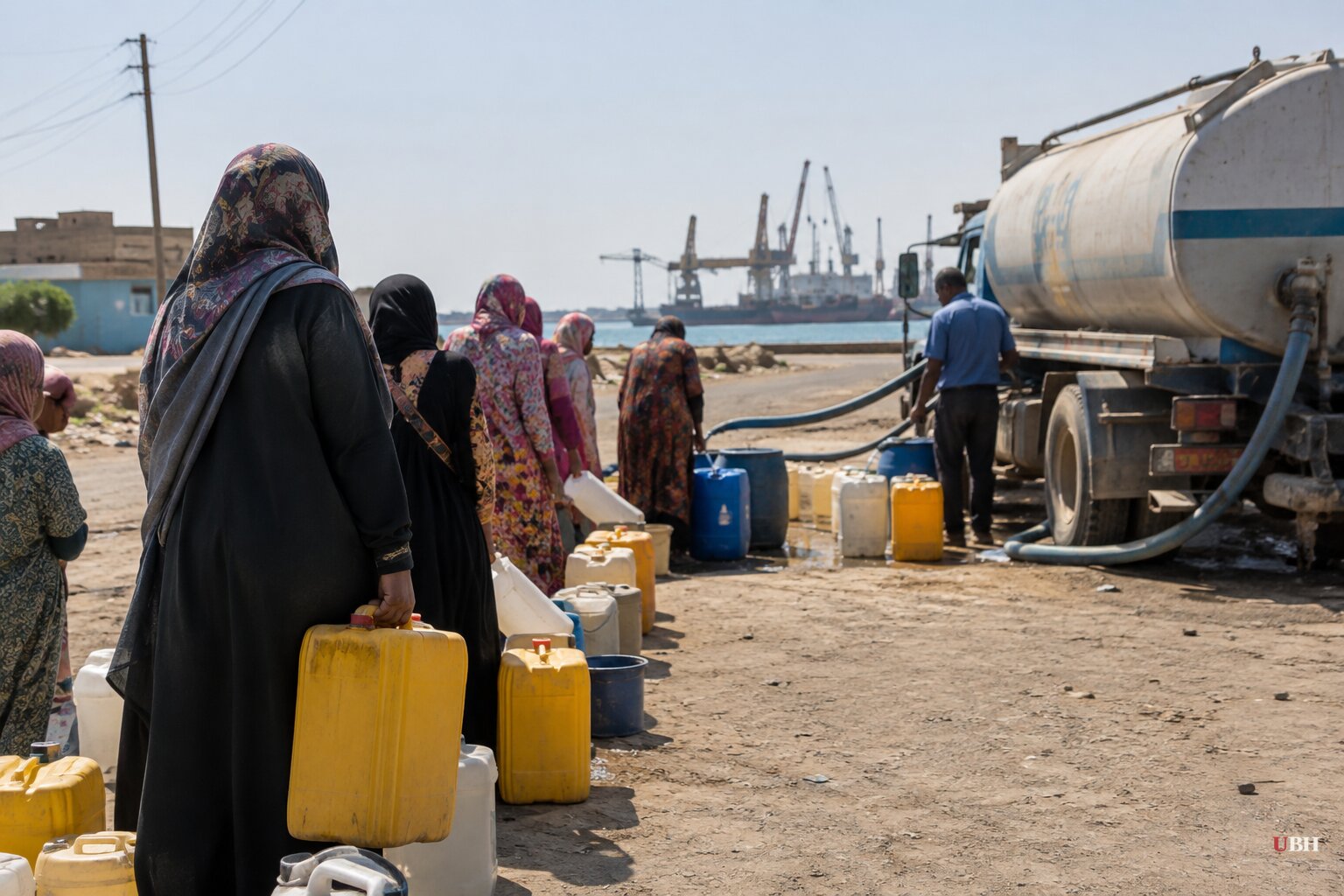
Amina Khalafallah spends 10,000 Sudanese pounds a day on water. At the parallel-market rate that is about $1, and it feeds herself and her four children.
Over a 30-day month that comes to 300,000 pounds, or roughly $30. That is her entire monthly salary from a cafeteria job at a private institution in Port Sudan.
Her home in the Deim Mayo neighbourhood has no connection to a piped network. She buys from street vendors who charge 1,000 pounds for 18 litres, which works out to about 180 litres a day for five people. Her husband works in another state and sends money when he can. She says she still often has to borrow.
A city built for fewer people
Port Sudan, on the Red Sea coast, has been relatively safe from the fighting that has devastated other parts of the country since April 2023. That safety drew displaced people, and the city's water system was already fragile.
The African Development Bank (AfDB) has reported that the city's water supply was meeting less than 40 percent of demand. The bank also calls access to safe water one of Sudan's most urgent needs, with millions of children at risk of waterborne disease.
The United Nations Development Programme (UNDP) estimates Port Sudan's population at 1 million. Its own repair work, which includes 15 boreholes drilled or repaired, 17 kilometres of pipe laid and solar-powered pumps installed, can supply nearly 230,000 people.
The dam that failed
The Arbaat Dam in the Red Sea Hills northwest of the city once supplied half of Port Sudan's daily water. In August 2024, heavy rain and flooding collapsed it. Villages downstream were destroyed, and pipelines and wells were damaged.
Since then, entire neighbourhoods have relied on water delivered by truck and cart.
What vendors now charge
Ahmed Osman, 30, has spent three years working at a water distribution station that supplies the vendors who serve households. When the war began in April 2023, he said, he charged vendors 4,000 pounds ($0.40) to fill a donkey-drawn cart holding at least 250 litres. He now charges 16,000 pounds.
A tanker carrying 50,000 litres costs 1.5 million pounds ($150), Osman said, up from about 450,000 before the war.
He blames rising operating costs, particularly the fuel needed to haul water to his station. Summer makes it worse. Prices climb and vendors become harder to find, according to Khalafallah, who sets money aside for water ahead of other household needs, even if that means going without some essentials.
UNDP says the war, now more than three years old, has pushed average Sudanese incomes back to levels last seen in the early 1990s. Wages are stuck while the price of a basic necessity has multiplied.
Disease risk
Dr. Emad Hafez, medical director of the emergency department at Port Sudan Teaching Hospital, warned that water disruptions raise the risk of cholera and other diarrheal diseases. The risk is highest in the rainy season and in overcrowded camps for displaced people.
Shortages also make it harder to maintain hygiene, run hospitals, prevent infections and care for patients, Hafez said.
The pattern extends beyond the coast. The aid group SAPA, which is fundraising for water projects in Sudan, says an El Niño-linked drought is affecting more than half the country. It cites figures showing that Sudan's water and sanitation response had received just 23 percent of the money it needs as of October 8. In Geneina, West Darfur, the group says 400 litres now cost about four times what they did a year ago.
Those are an advocacy group's figures, and the funding number in particular comes from an appeal for donations. The Danish Refugee Council has separately reported that damaged infrastructure caused severe water shortages across Khartoum state in 2025, raising cholera risk.
What is being done
In June, the AfDB and UNICEF launched a project meant to expand access to safe water for up to 750,000 people in Port Sudan. That is more than three times the number UNDP's repairs currently reach.
No completion date for the project has been given. Until it delivers, households like Khalafallah's will keep paying vendors by the container, and the next rainy season will test whether the city's hospitals can handle a cholera surge.
Sources used for this briefing
5 links from 5 independent newsrooms (syndicated copies of the same report count once)
These are the sources it draws on, linked so you can verify.


