
Unbiased headlines. Facts, not spin.
Unbiased Headlines is an independently owned news organization. We bring you the facts, not opinions, written fresh from 110+ named sources. Sources linked so you can verify it yourself.
 health
Notable (6/10)
Event date: October 23, 2026 ·
India caps trade margins on 137 cancer drugs at 30%, effective Nov. 9. Activists say the 2019 cap didn't hold
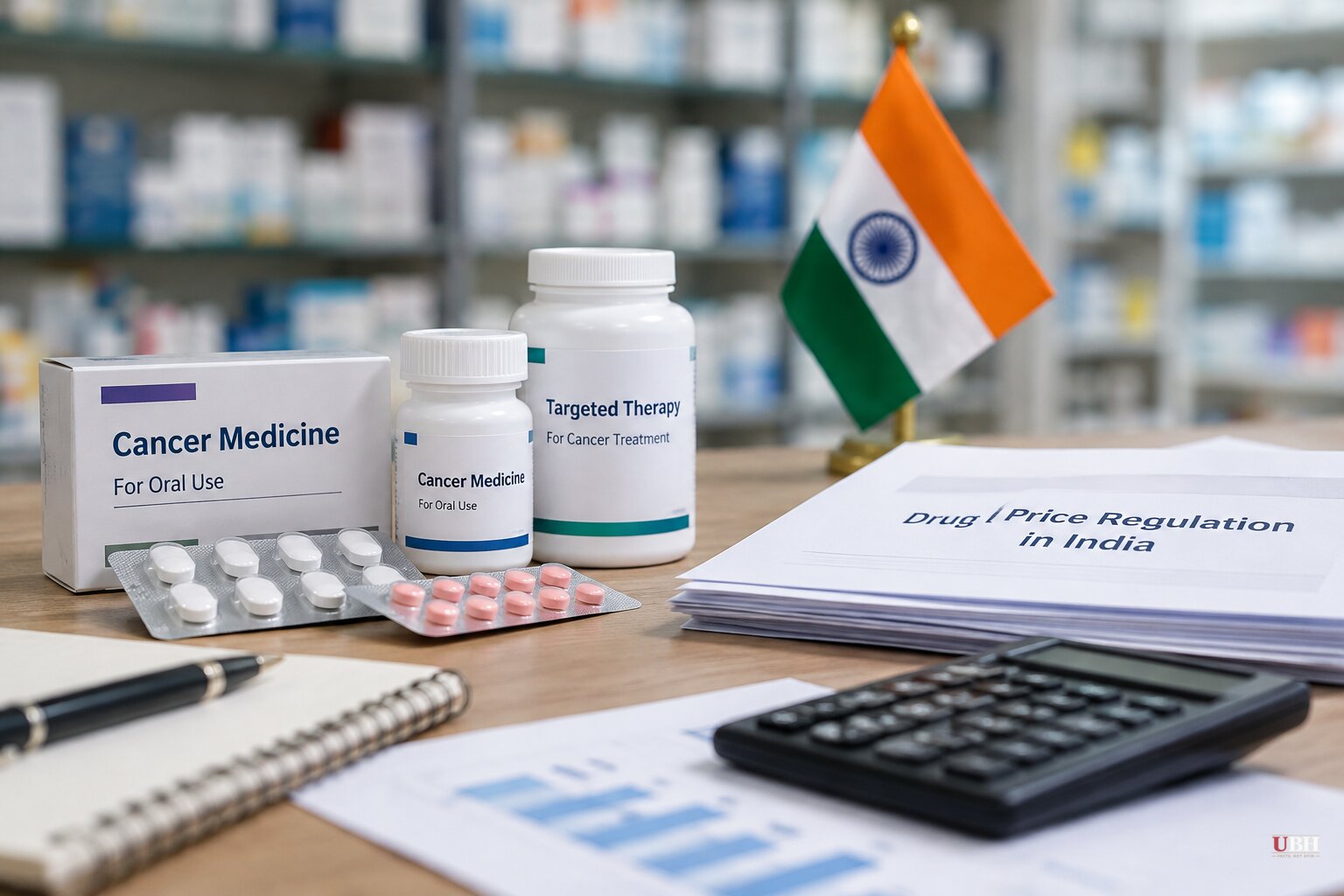
India's National Pharmaceutical Pricing Authority (NPPA) has capped trade margins on 137 anti-cancer drugs at 30% of the maximum retail price (MRP), excluding GST. The order takes effect Nov. 9, nine days from now.
The NPPA notified the cap in a Gazette order dated Oct. 17 under Paragraph 19 of the Drugs (Prices Control) Order, 2013. It expects MRPs to fall by up to 70%, depending on each drug's current margin.
What the order does
The cap covers the cut taken by everyone between manufacturer and patient: distributors, stockists, chemists and hospitals. It does NOT touch the price the manufacturer charges.
The list covers non-scheduled drugs, meaning drugs that have no government ceiling price. It includes immunotherapies and targeted therapies such as pembrolizumab, nivolumab, palbociclib, osimertinib, ribociclib, bevacizumab, atezolizumab, daratumumab, olaparib and enzalutamide. Branded and generic, imported and domestic products are all covered. Patented drugs are included unless specifically exempted under Paragraph 32 of the order.
Manufacturers had seven days from the Oct. 17 notification to report revised prices to the NPPA. From Nov. 9, chemists and hospitals must charge and display the new prices, and hospitals must also post them on their websites. State drug controllers will enforce the order. Companies must keep production and supply of the listed drugs at current levels.
The NPPA's minutes say the list "could be updated periodically."
The numbers behind it
The NPPA found an average mark-up of about 170% on non-scheduled anti-cancer drugs, according to the government's announcement, with some reaching 700% or more. Pharmarack market data cited in the proceedings put the domestic anti-cancer market at roughly 225 drugs and 500 formulations, with annual turnover of about ₹12,500 crore.
Per-dose prices of pemetrexed ranged from ₹546 to more than ₹72,000, and bevacizumab from about ₹6,900 to ₹1.18 lakh, according to the NPPA's findings.
Additional Solicitor General Aishwarya Bhati told the Supreme Court on Oct. 12 that patients are expected to save about ₹2,500 crore a year. That figure is a government projection, not realized savings.
How the Supreme Court got here
The cap followed pressure from a bench of Justices Vikram Nath and Sandeep Mehta, hearing petitions on regulating non-scheduled medicines. The bench raised a cancer drug supplied to retailers at ₹2,700 but carrying an MRP of ₹27,000. The court described such pricing as "broad daylight dacoity" and "carnage," and called mark-ups "extortion."
The health ministry set up an expert committee on Oct. 9 under the Directorate General of Health Services, with oncologists, hospital experts and officials. The government told the court the list would include "all drugs approved for the treatment of cancer, except those which are inexpensive." On Oct. 12 the court told the government to show urgency in regulating prices of life-saving drugs and devices. The case was listed for a further hearing on Oct. 27.
The 2019 precedent
This is not the first attempt. In February 2019 the NPPA capped trade margins at 30% on 42 anti-cancer drugs. That pilot cut MRPs of 526 brands by up to 90% and saved about ₹984 crore a year, according to figures in the government's case. Thirty-four of the 137 drugs now listed were on the 2019 list.
The All-India Drug Action Network, which works on access to affordable medicines, says the 2019 cap did not last. Its analysis of the NPPA's 2026 list found that most 2019-list drugs had breached a 43% mark-up, the level equivalent to a 30% trade margin, before the latest order. A margin is calculated on the final MRP, while a mark-up is calculated on the price to the stockist.
The group says pre-order mark-ups in 2026 were higher than before the 2019 order. It argues a one-time MRP cut is futile without permanent margin caps and consistent monitoring. Its example: a pemetrexed brand fell from ₹7,000 to ₹800 in 2019, and has now been cut from ₹1,095 to ₹297, a smaller percentage drop. The group also says many multinationals that cut deeply in 2019 have cut little or nothing this time.
Bills versus drug prices
Y K Gupta, president of AIIMS Kalyani and former dean of AIIMS Delhi, says the reform should be judged by what happens to patients' bills. He warns that hospitals, which rely on retail mark-ups, may recover the loss through higher charges for consultations, diagnostics or packages.
Nuvama estimates the hit at about 4% for Max Healthcare and 1% to 2% for other large chains, with hospital EBITDA falling 1% to 5%.
Gupta also flags two other risks. Associations of small manufacturers fear for jobs and supply in remote areas, so stock-outs of cheap older drugs need watching. And chemists need clear rules for existing stock carrying older, higher MRPs. He wants the NPPA to track actual patient bills, drug availability and hospital billing after implementation.
On manufacturers, Gupta's reading is that the order recalculates the permissible MRP, so manufacturers' earnings stay the same. The government says its stated aim is to protect legitimate manufacturer revenues and prevent artificial shortages.
What to watch
A price cap is only as good as its enforcement. The order leaves compliance to state drug controllers, and the NPPA's own minutes allow the list to be revised. On Nov. 9 the first test arrives: whether chemists and hospitals are actually charging the revised prices, and whether the NPPA monitors them afterward. The AIDAN's 2019 comparison suggests that second part is where the earlier cap came undone.
Sources used for this briefing
7 links from 7 independent newsrooms (syndicated copies of the same report count once)
These are the sources it draws on, linked so you can verify.


