
Unbiased headlines. Facts, not spin.
Unbiased Headlines is an independently owned news organization. We bring you the facts, not opinions, written fresh from 110+ named sources. Sources linked so you can verify it yourself.
 health
Major Story (7/10)
HHS Moves to Decertify Kentucky Organ Group Network for Hope; Sister Says Donor Showed Signs of Life During Retrieval
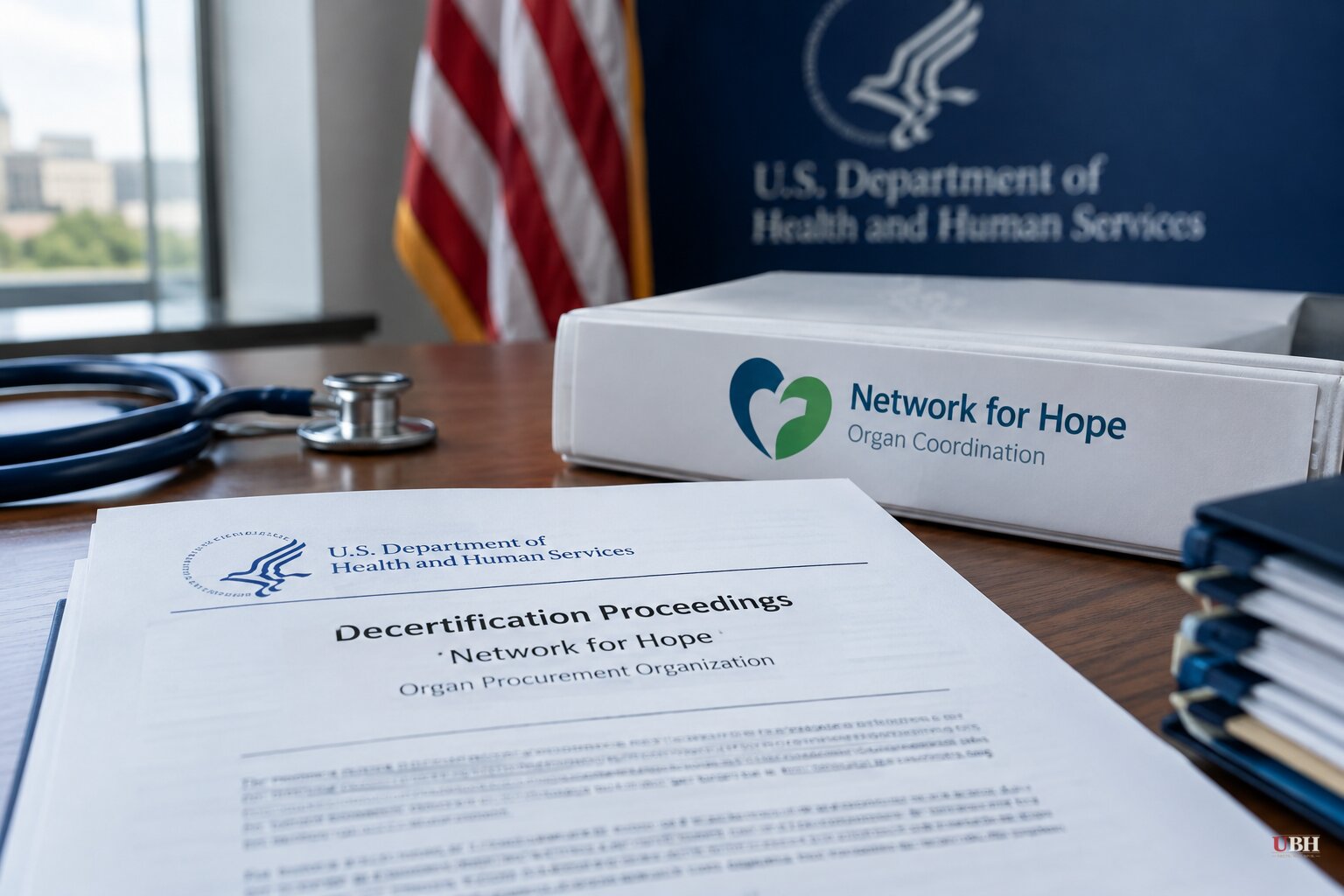
The federal government has started the process of pulling the certification of an organ procurement organization, and one Kentucky family says it knows why that matters.
The U.S. Department of Health and Human Services announced on Aug. 5, 2026 that it had begun decertifying Network for Hope. The organization coordinates organ donations in its region. HHS said the move followed federal reviews that identified concerning patient-safety practices in multiple cases involving potential organ donors.
One of those cases has become the public face of the issue.
The Hoover case
Anthony Thomas "TJ" Hoover II was taken for organ donation in Kentucky in October 2021 after a drug overdose. His sister, Donna Rhorer, has testified that he showed signs of life as preparations for organ retrieval moved forward.
Rhorer gave her account at the Kentucky Attorney General's office. She said the family had been told Hoover had no reflexes or brain activity and would not recover. They agreed to withdraw life support and honor his wishes to be an organ donor.
What she says happened next is the core of the matter.
"I was there, I saw what happened to my brother," Rhorer testified. "They prepared to recover his organs while he was still alive. During that honour walk his eyes were open, he was tracking me and they told me it was just reflex."
She went on: "And then during the heart cath, he was thrashing, crying and grabbing the doctor's hands to stop him. Even after those signs the organ procurement continued until the physician refused to proceed."
Rhorer also alleged that a coordinator contacted the organization's home office after the events she described.
What is alleged and what is established
Rhorer's testimony is her own account, given at the Kentucky Attorney General's office. By her telling, staff described the eye-tracking she saw as reflex. That is the competing explanation in her account: that what looked like awareness was involuntary movement. Her testimony says a physician ultimately refused to continue.
The decertification is a separate, documented federal action. HHS has said it began the process and tied it to patient-safety concerns across multiple cases. The public statements describe the practices as a pattern, not a single incident. HHS's announcement, as described, does not name the Hoover case as the basis for the action.
Decertification is a process, not a verdict that has been delivered. The final outcome for Network for Hope has not been announced.
Why oversight is the question
Organ donation depends on one assumption: that a patient is declared beyond recovery before anyone starts preparing to retrieve organs. Families sign off on that assumption in the worst hours of their lives. They cannot independently check it.
That puts the entire weight on the people and organizations running the process. A federal agency moving to strip an organization of its certification is about as serious as an administrative response gets. It signals that regulators saw problems in the practices themselves, not only in one family's recollection.
Taxpayers fund the federal oversight apparatus that certifies these groups. Those reviews are supposed to catch problems before a family has to testify about them years later. In Hoover's case, the events date to October 2021. The federal announcement came in August 2026, nearly five years later.
Rhorer's testimony is on the record at the Kentucky Attorney General's office. The open questions are what the Attorney General's office does with it, what the federal reviews found in each of the multiple cases HHS referenced, and whether Network for Hope contests the decertification. Those answers will decide whether the region's donation system gets a new coordinator and what changes for the families who sign donor consent.
Sources used for this briefing
1 link from 1 independent newsroom (syndicated copies of the same report count once)
These are the sources it draws on, linked so you can verify.


