
Unbiased headlines. Facts, not spin.
Unbiased Headlines is an independently owned news organization. We bring you the facts, not opinions, written fresh from 110+ named sources. Sources linked so you can verify it yourself.
 health
Notable (6/10)
Event date: November 13, 2026 ·
FDA Approves Imfinzi Plus Padcev for Cisplatin-Ineligible Bladder Cancer, Six Weeks Ahead of Deadline
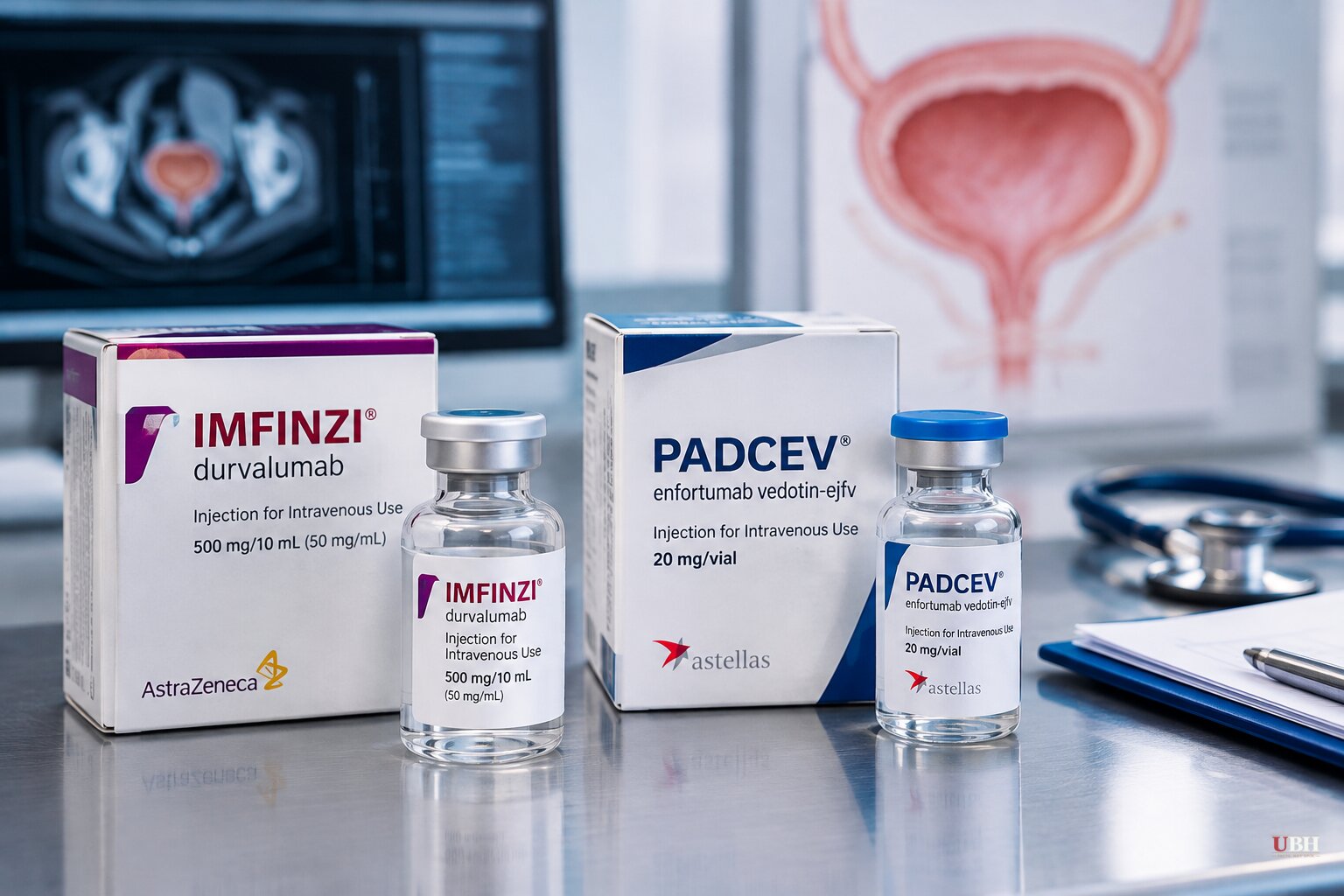
The Food and Drug Administration on Friday, Nov. 13, 2026, approved durvalumab (Imfinzi, AstraZeneca) with enfortumab vedotin-ejfv (Padcev, Astellas) for adults with muscle-invasive bladder cancer (MIBC) who are ineligible for or have refused cisplatin-based chemotherapy.
The regimen starts before surgery. Patients get durvalumab plus enfortumab vedotin ahead of radical cystectomy, the operation that removes the bladder. After surgery, they continue on durvalumab alone.
The agency granted the application priority review and approved it six weeks ahead of its goal date. The review ran under Project Orbis, the FDA's framework for simultaneous cancer-drug reviews with foreign regulators. Participating agencies were from Australia, Brazil, Canada, Israel, Singapore and the United Kingdom.
What the VOLGA trial showed
The approval rests on VOLGA (NCT04960709), a randomized, open-label phase 3 trial of 695 patients with MIBC who were candidates for cystectomy. Patients were randomized 1:1:1:
- Durvalumab plus enfortumab vedotin before surgery, then adjuvant durvalumab (233 patients)
- The same regimen plus tremelimumab (Imjudo) (233 patients)
- Cystectomy alone, with or without approved adjuvant therapy (229 patients)
The main measure was event-free survival (EFS), assessed by blinded independent central review. Median EFS was not reached in the durvalumab/enfortumab vedotin arm (95% CI: 33.2 to not reached). In the surgery-only arm it was 12.1 months (95% CI: 7.6 to 27.0). The hazard ratio was 0.51 (95% CI: 0.38 to 0.67; p < 0.0001), a 49% reduction in risk of an EFS event.
Overall survival also favored the combination, with a hazard ratio of 0.58 (95% CI: 0.40 to 0.83; p = 0.0027), a 42% reduction in risk of death. Median overall survival was not reached in either arm. The figures come from a prespecified interim analysis with a March 2, 2026 data cutoff and median EFS follow-up of 22.9 months.
The tremelimumab arm also showed a statistically significant EFS improvement. Its overall survival trend was favorable but not statistically significant at the interim analysis and will be reassessed later. That triplet is not part of this approval.
Full results are slated for presentation at an upcoming medical meeting.
The safety trade-off
The benefit came with more toxicity. Grade 3 or higher adverse events of any cause hit 71.1% of patients on the doublet, versus 50.2% of those who had surgery alone.
The FDA lists these adverse reactions and lab abnormalities, occurring in more than 20% of patients on the combination:
- Increased AST and ALT, and decreased hemoglobin
- Rash and pruritus
- Increased creatinine
- Urinary tract infection and fatigue
- Peripheral neuropathy
- Diarrhea, constipation and nausea
- Alopecia
The durvalumab label carries warnings for immune-mediated adverse reactions, infusion-related reactions, complications of allogeneic hematopoietic stem cell transplantation, and embryo-fetal toxicity.
The trial was open-label, meaning patients and doctors knew who received which treatment. The primary endpoint was judged by blinded independent reviewers, which is the safeguard the FDA relied on.
Dosing
For patients weighing 30 kg or more, the label calls for durvalumab 1,500 mg every three weeks with enfortumab vedotin 1.25 mg/kg on days 1 and 8 of each cycle, for three cycles before surgery. After surgery, patients take durvalumab 1,500 mg every four weeks for up to nine cycles.
Patients under 30 kg get durvalumab at 20 mg/kg on the same schedule. Enfortumab vedotin is given only in the pre-surgery phase.
Patient impact
The patient group here has had limited options. Cisplatin is the standard chemotherapy before cystectomy, but many patients cannot tolerate it because of kidney function, hearing loss, heart problems or other issues. Some simply decline it.
In VOLGA, the surgery-only comparison arm had a median EFS of 12.1 months. That figure shows how often the disease returns or progresses even after the bladder is removed.
The FDA's approval came ahead of schedule and drew on parallel review by six foreign regulators. For a cancer with few options for this group, that kind of speed is what the agency is supposed to deliver.
Overall survival remains unresolved. Neither arm has reached median survival, so the durability of the 42% reduction in death risk depends on longer follow-up. Full VOLGA data, and the reassessment of the tremelimumab arm's survival trend, are still to come. The FDA said full prescribing information for Imfinzi will be posted on Drugs@FDA.
Sources used for this briefing
7 links from 7 independent newsrooms (syndicated copies of the same report count once)
These are the sources it draws on, linked so you can verify.


