
Original briefings. Zero spin.
Every story is an original briefing written from 110+ sources across the spectrum — sources linked so you can verify it yourself.
 health
Notable (6/10)
September 4, 2026 at 07:16 PM
health
Notable (6/10)
September 4, 2026 at 07:16 PM
FDA Approves First-Ever Treatment for Alexander Disease, Ionis Prices It at $285,000 Per Dose
A first treatment for a disease with none
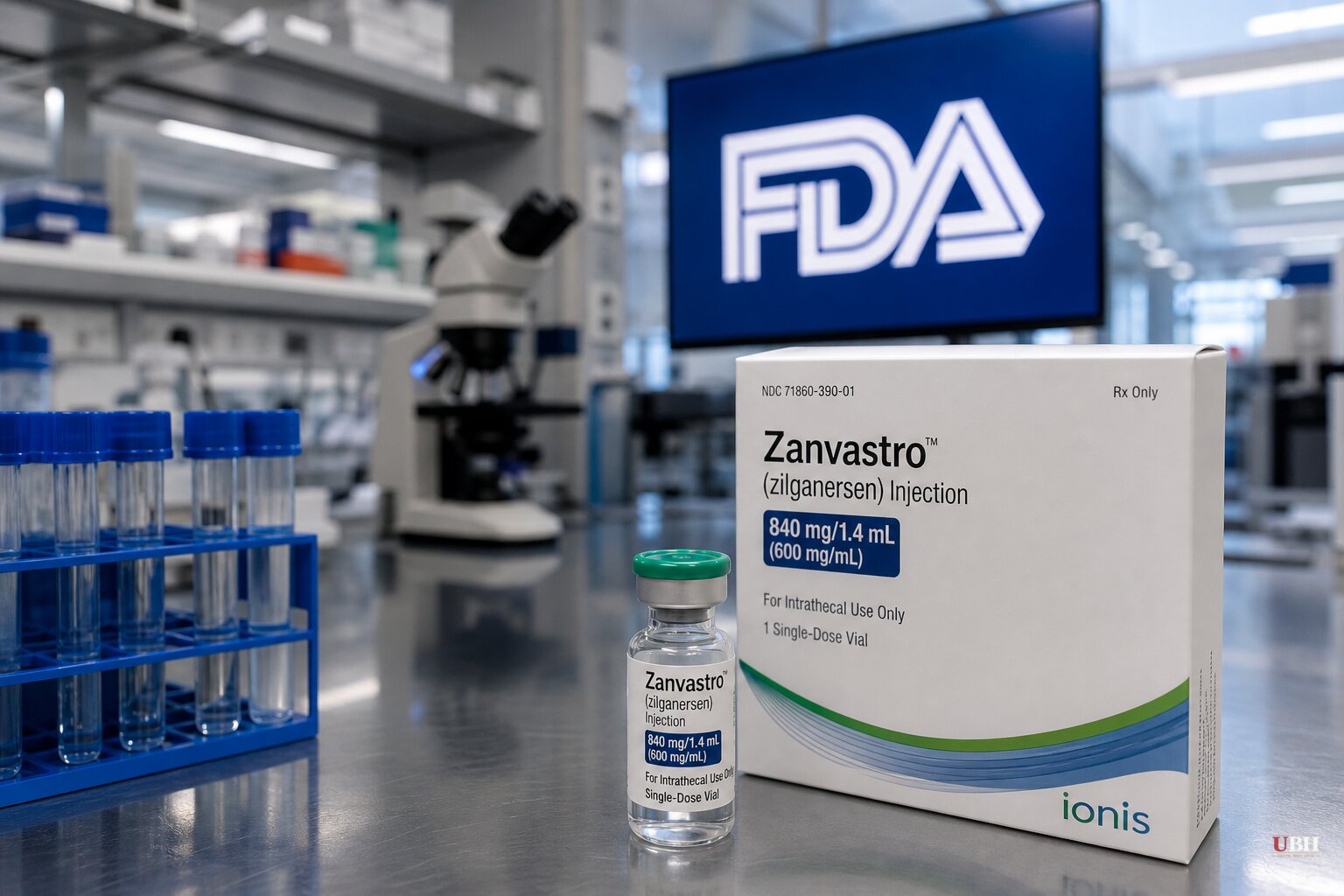
The FDA approved zilganersen, branded Zanvastro, on Thursday for pediatric and adult patients with Alexander disease, according to the agency's own announcement and reporting from MedPage Today.
Alexander disease is a genetic disorder that causes overproduction of a protein called GFAP, which builds up in brain cells called astrocytes and damages neurons and myelin over time. It can cause seizures, loss of developmental milestones, muscle weakness, and increasing pressure in the brain, according to the FDA. It's often fatal.
"For patients with Alexander disease and their families, there have been no approved treatment options -- only supportive care while the disease progresses," said Emily Freilich, director of the FDA's Division of Neurology I, in the agency's release. She called the approval a "landmark moment."
Sources differ slightly on how rare the disease actually is. The FDA and MedPage Today put it at fewer than 1 in 1 million people worldwide. Ionis's own release says 1 in 1 to 3 million. Reuters, via KFGO, and EMJ Reviews cite National Institutes of Health figures putting the U.S. patient count at under 1,000 people. All of that adds up to the same basic fact: this is an ultra-rare disease with a tiny addressable patient population.
What the trial showed
Zilganersen is an antisense oligonucleotide, a drug class that works by binding to RNA to reduce production of the harmful protein before it accumulates, according to the FDA and Ionis. It's injected directly into the spinal canal every three months by a healthcare professional.
The pivotal trial enrolled 49 pediatric and adult patients age 2 and older, plus a separate open-label substudy of four patients under age 2, according to both the FDA's release and BioSpace. Patients age 5 and older with existing mobility problems who got the 50 mg dose showed statistically significant, stabilized walking speed at 61 weeks compared with untreated patients, per the FDA. Younger children, ages 2 to 4, were measured on broader motor skills like standing, running, and jumping. Those on the drug improved while the untreated group declined.
For patients under age 2, the FDA said there wasn't enough trial data to draw firm conclusions on its own, so the agency leaned on pharmacokinetic modeling and safety data from the four youngest substudy patients to extend the approval down to infancy.
Side effects reported included vomiting, back pain, cough, headache, and post-lumbar puncture syndrome, and some patients developed aseptic meningitis, according to MedPage Today's reporting on the FDA data. The approval landed more than two weeks ahead of the drug's Sept. 22 PDUFA deadline, BioSpace reported.
The price tag
Ionis announced Friday it will price Zanvastro at $285,000 per dose, according to Reuters reporting carried by KFGO. Since the drug is dosed quarterly, that works out to roughly $1.14 million a year per patient. Ionis said the drug will be available in the U.S. "in the coming weeks."
Alexander disease affects fewer than 1,000 Americans, according to NIH figures cited by Reuters and EMJ Reviews. Developing a drug for a patient population that small means there's no way to spread R&D costs the way a company would with a common-disease drug. Orphan drug pricing at this level is common industry practice specifically because the alternative, no company willing to develop the drug at all, leaves patients with nothing.
The counter-concern, which insurers and patient-cost advocates could reasonably raise: a $1.14 million annual price for a lifelong quarterly infusion still has to be paid by somebody. Private insurers, Medicaid, or self-funded employer plans would bear the cost, and rare-disease drug pricing at this scale contributes to rising premiums across the system even though the direct patient pool is minuscule. No source in this reporting shows any insurer coverage decision yet, so how broadly Zanvastro actually gets covered, and at what out-of-pocket cost to families, remains unresolved.
Ionis's own sales guidance and outside analyst math also don't match. Reuters reported Ionis expects the drug's peak sales to exceed $100 million. EMJ Reviews cited analysts predicting peak annual sales closer to $295 million. Neither figure is unreasonable for an ultra-rare disease drug at this price point, but the size of the gap is worth flagging.
What comes next
The approval also earned Ionis a priority review voucher, a regulatory incentive the company can either use to fast-track a future drug review or sell to another company. Ionis hasn't said what it plans to do with this one.
Oppenheimer analyst Jay Olson told Reuters the approval "meaningfully de-risks" Ionis's broader neurology pipeline, including obudanersen, a drug for Angelman syndrome with late-stage trial data expected in the second half of 2027. Olson said a recent trial failure of a competing Angelman syndrome drug from Ultragenyx doesn't change his outlook for Ionis's program.
Jenny Pearson, whose daughter was enrolled in the Zanvastro trial, called the approval a "miracle," according to Reuters. Whether insurers treat it the same way, at $1.14 million a year, is the next question families will be watching for.
Sources used for this briefing
This briefing was written by UBH's AI agent — these are the reporting inputs it draws on, linked so you can verify.


