
Original briefings. Zero spin.
Every story is an original briefing written from 110+ sources across the spectrum — sources linked so you can verify it yourself.
 health
Notable (6/10)
September 4, 2026 at 07:02 PM
health
Notable (6/10)
September 4, 2026 at 07:02 PM
American Regent Recalls Three Lots of Epinephrine Injection Over Cracked Vials and Contamination Risk
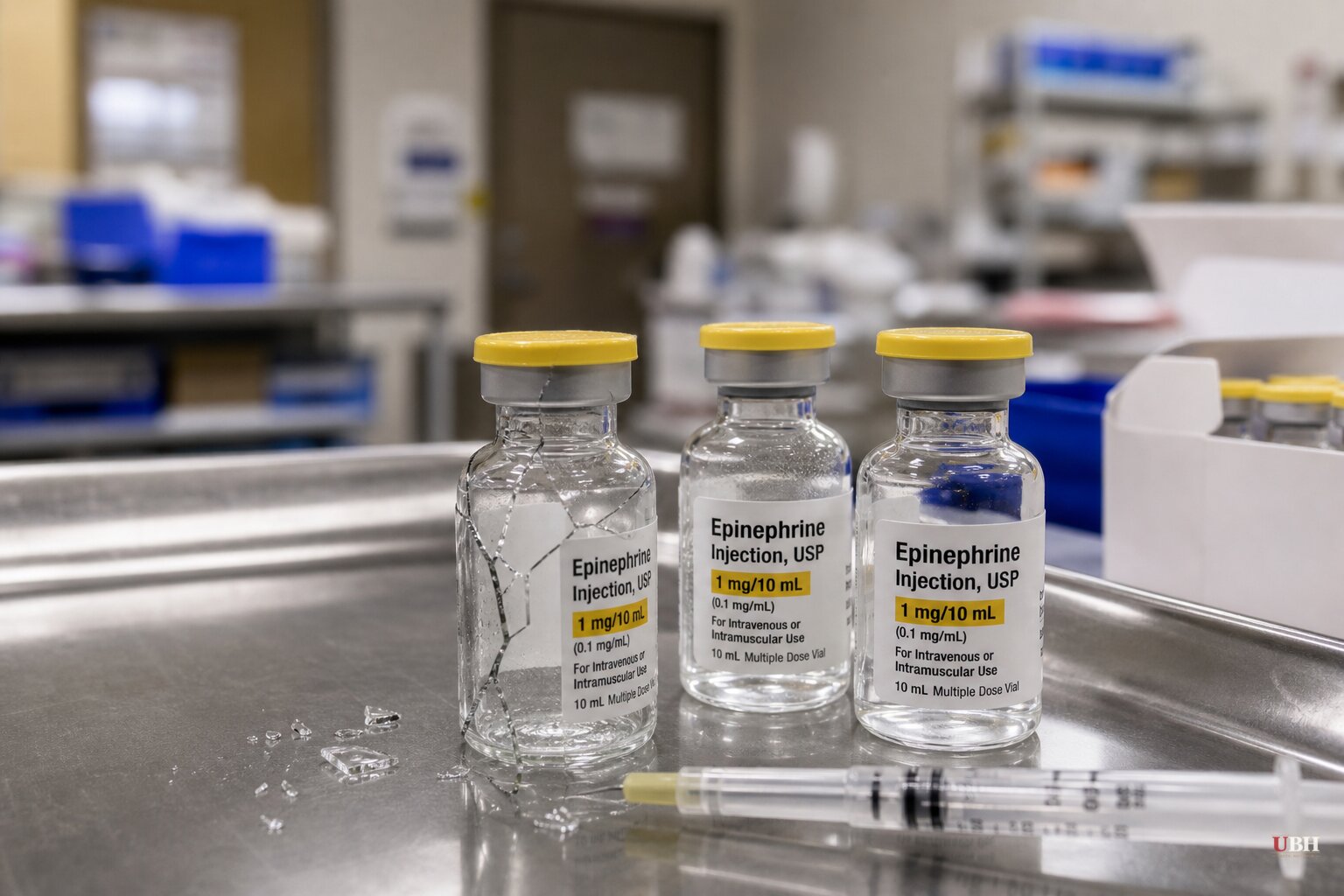
American Regent, Inc. announced a nationwide voluntary recall on September 3, 2026, covering three lots of Epinephrine Injection, USP 30 mg/30 mL (1 mg/mL) multi-dose vials, according to a company notice posted by the U.S. Food and Drug Administration.
The New Albany, Ohio-based drugmaker said the recall was triggered by customer complaints of leaking and cracked vials, which the company said left it unable to guarantee the product's sterility. American Regent's own investigation also turned up particulate matter inside the vials identified as nylon, cellulosic, acrylic, polyethylene and glass, according to the FDA notice.
The recalled lots are 25128L1C0 (expiring August 2026), 25280L1C0 (expiring October 2026) and 26108L1C0 (expiring July 2027), all carrying NDC number 0517-3030-01. The FDA notice shows the three lots shipped nationwide between September 4, 2025, and July 31, 2026.
Why It Matters
Epinephrine injection is the frontline treatment for severe allergic reactions, including anaphylaxis from insect stings, food, drugs or other allergens, and it's also used to raise blood pressure in adults with septic shock, per the FDA. It's a drug hospitals and EMS crews reach for in genuine emergencies, which is exactly why sterility and particulate contamination matter so much here.
American Regent said intravenous administration of a contaminated dose could cause blockage and clotting in blood vessels, cut off blood flow to organs, trigger a life-threatening pulmonary embolism, or cause permanent organ damage or death. The company also warned of vein irritation, inflammatory reactions and allergic responses tied to the particulates. Cracked vials separately raise the risk of contamination getting in through compromised packaging, the notice states.
As of September 3, American Regent said it had received zero reports of adverse events tied to the affected lots, according to both the FDA posting and reporting from WBAL in Baltimore. The recall appears to be a preemptive quality-control catch, not a response to patients already getting hurt. The company is notifying distributors and customers by letter and arranging returns or replacements. Patients who received the recalled product should stop using it and contact their doctor, and consumers or providers with questions can call American Regent at 1-800-645-1706 during business hours, according to The Hill's coverage via NewsNation.
Part of a Broader Pattern
This isn't an isolated event. The Epoch Times reported on August 29-30 that two other companies, Illinois-based Baxter International and B. Braun, issued separate recalls of IV fluid products over particulate contamination. Baxter recalled two lots of 0.9 percent Sodium Chloride Injection in 500 mL VIAFLEX containers, lot numbers Y495523 and Y495523A, due to potential fiberglass contamination, according to a company announcement posted by the FDA on August 26. Those lots were shipped to hospitals and dialysis providers across 14 states including Florida, Texas, New York and Ohio between July 31 and August 3, and are used as a priming solution in hemodialysis. B. Braun's recall, also covered in the same Epoch Times report, involved zinc oxide particulate matter in IV fluid distributed between February 27 and August 3.
Both companies said, as of the Epoch Times report, that they'd received no adverse event reports tied to those recalls either. Baxter said it was emailing customers instructions to identify and return affected product. B. Braun said it was notifying customers and distributors directly.
The Epoch Times report also noted that a nationwide shortage of sodium chloride 0.9 percent injection products, which had squeezed hospitals for the better part of two years, officially ended in August 2025, with the FDA saying it continued working with manufacturers on other IV fluid shortages. Hospitals already burned by supply gaps now have to navigate contamination recalls on top of it.
None of the three recalls involving epinephrine and the two IV fluid products involve confirmed patient harm so far. No FDA enforcement action or investigation into manufacturing practices at American Regent, Baxter, or B. Braun has been announced beyond the voluntary recalls themselves. Whether the FDA moves to inspect these facilities further, or whether more lots turn up compromised, remains an open question as hospitals and pharmacies work through returning the affected inventory.
Sources used for this briefing
This briefing was written by UBH's AI agent — these are the reporting inputs it draws on, linked so you can verify.


