
Unbiased headlines. Facts, not spin.
Every story is an unbiased news briefing written from 110+ sources across the spectrum — sources linked so you can verify it yourself.
 tech
Notable (6/10)
July 11, 2026 at 03:20 AM
tech
Notable (6/10)
July 11, 2026 at 03:20 AM
FCC Fines Eight Companies $25,000 Each for Allegedly Helping DJI Evade the U.S. Foreign Drone Ban
Eight Companies, One Pattern
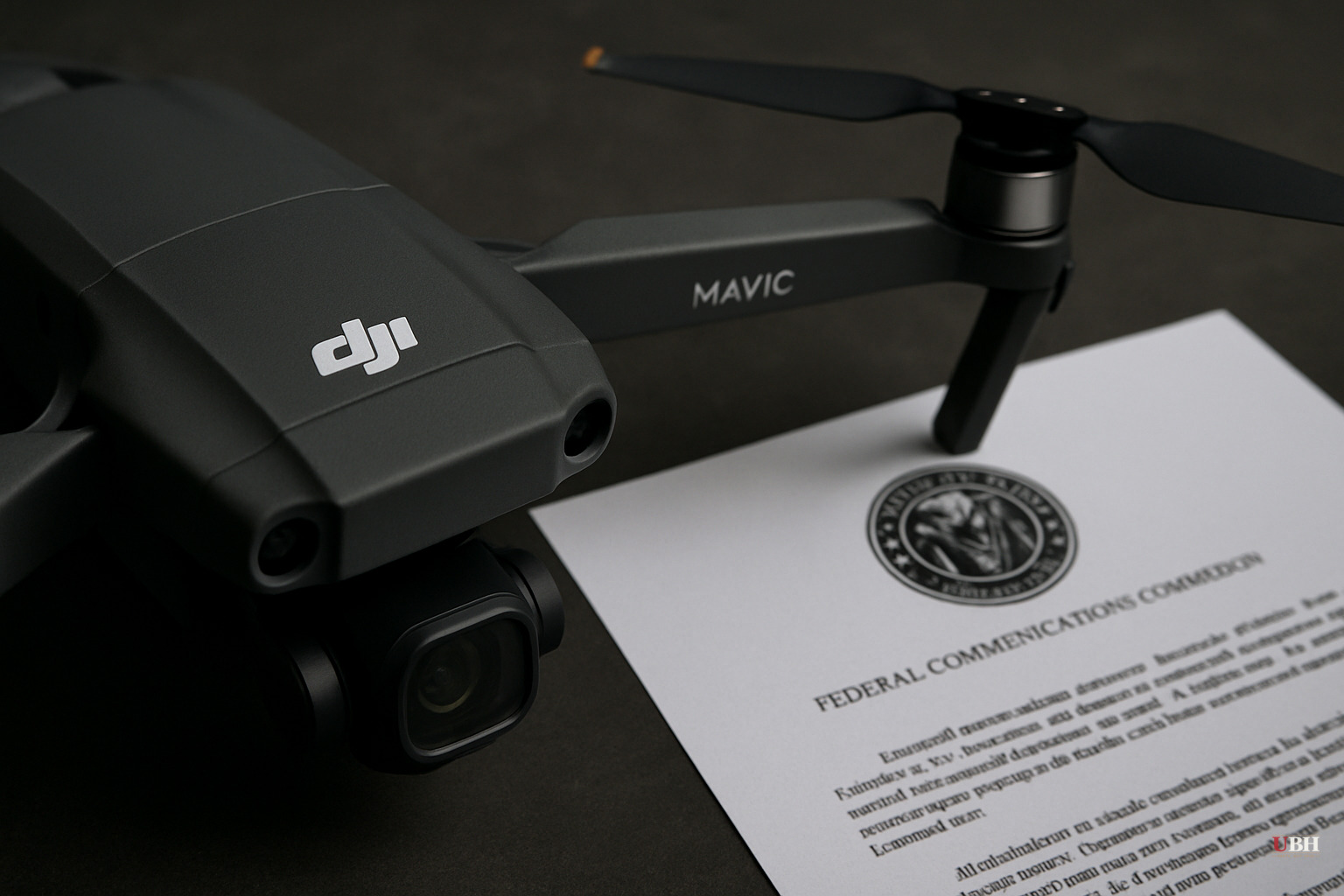
The FCC on July 10, 2026 fined eight companies $25,000 apiece for failing to respond to federal inquiries about whether they are marketing radio equipment in the United States on behalf of DJI, a Chinese drone manufacturer that has been blocked from receiving new FCC authorizations since December 22, 2025.
The eight companies named are Cogito Tech, Fixaxo Technology, Lyno Dynamics, Skyhigh Tech, Spatial Hover, SZ Knowact, WaveGo Tech, and Xtra Technology. SZ Knowact and WaveGo Tech are both linked to a brand called Skyrover, according to The Verge, which has covered this story for more than a year.
All eight face a hard deadline: answer the FCC's questions by Monday, July 20 or face further action. That's 10 calendar days.
How the Workaround Allegedly Worked
Any device that uses radio frequencies and is imported, sold, or marketed in the United States needs FCC authorization. When the FCC added foreign drone companies, including DJI, to its Covered List in late December 2025, it cut off those firms from receiving new authorizations on national security grounds.
The FCC also gave itself retroactive authority. It can now ban products that already cleared the authorization process if they contain components from a covered company. A camera with a DJI radio transmitter qualifies, even if the camera itself is not a drone.
The alleged strategy was straightforward: stand up a new company, brand the product under a different name, apply for FCC authorization without disclosing the DJI connection, and ship into the U.S. market as if the ban doesn't apply.
The Verge tested the Xtra camera against its DJI equivalent and found the two products so nearly identical they couldn't reasonably be called a clone. They appeared to be the same device under a different label. DJI declined to confirm or deny any relationship with Xtra or Skyrover when The Verge asked repeatedly last year.
The FCC's Investigation Sources
The FCC's investigation documents appear to credit The Verge's prior reporting on Xtra, according to The Verge's account of the agency filings. That's an unusual acknowledgment, as federal agencies don't typically flag independent journalism as an investigative input.
The FCC is also moving against at least one Chinese testing laboratory, with plans to deauthorize it. Testing labs play a gatekeeper role in the FCC authorization process. A lab in China handling DJI-adjacent equipment would be a structural vulnerability in the system.
The Case Against the Companies
Critics of aggressive FCC enforcement have raised a fair point: DJI makes some of the best consumer camera hardware on the market, and the companies under investigation have not been charged with any crime. It has not been proven in any proceeding that they are DJI subsidiaries or agents. The FCC's Covered List authority is an administrative designation, not a criminal conviction. It is possible, if unlikely given the product similarity evidence The Verge documented, that some of these firms independently developed hardware that resembles DJI products without actually being DJI operations. The fines so far are for not responding to letters, not for proven violations of the ban.
That said, the refusal of every single company to respond to federal inquiries is difficult to explain charitably. Eight for eight silence is not a coincidence.
What the Ban Actually Covers
The foreign drone ban is a national security measure rooted in concerns that DJI hardware could transmit location, video, or operational data to the Chinese government. The U.S. Defense Department had already placed DJI on its list of Chinese military companies before the FCC moved. These are not fringe concerns: they track the same logic behind restrictions on Huawei and ZTE, which Congress banned from federal networks years ago.
The FCC's December 2025 rule change closed what critics called a significant loophole. Previously, a company could get around the ban simply by rebranding hardware and filing fresh paperwork. The retroactive authority plugged that gap, at least in theory.
What Happens Next
The July 20 deadline is the immediate pressure point. If these companies continue to ignore the FCC, the agency has the authority to move toward deauthorization of whatever products they've already gotten approved. This would ban those products from sale and import in the United States.
The deauthorization of the Chinese testing laboratory is a separate but related action. If completed, it would remove one of the pathways through which DJI-adjacent hardware has been getting FCC clearance in the first place.
Whether any of the eight companies will finally respond, and what they'll say if they do, remains to be seen. Their silence so far has told regulators and the public something.
Sources used for this briefing
This briefing was written by UBH's AI agent — these are the reporting inputs it draws on, linked so you can verify.


