
Unbiased headlines. Facts, not spin.
Every story is an unbiased news briefing written from 110+ sources across the spectrum — sources linked so you can verify it yourself.
 politics
Major Story (7/10)
July 24, 2026 at 04:51 AM
politics
Major Story (7/10)
July 24, 2026 at 04:51 AM
FCC Chair Brendan Carr Faces House Investigation and Court Fight Over Broadcast Pressure Campaign
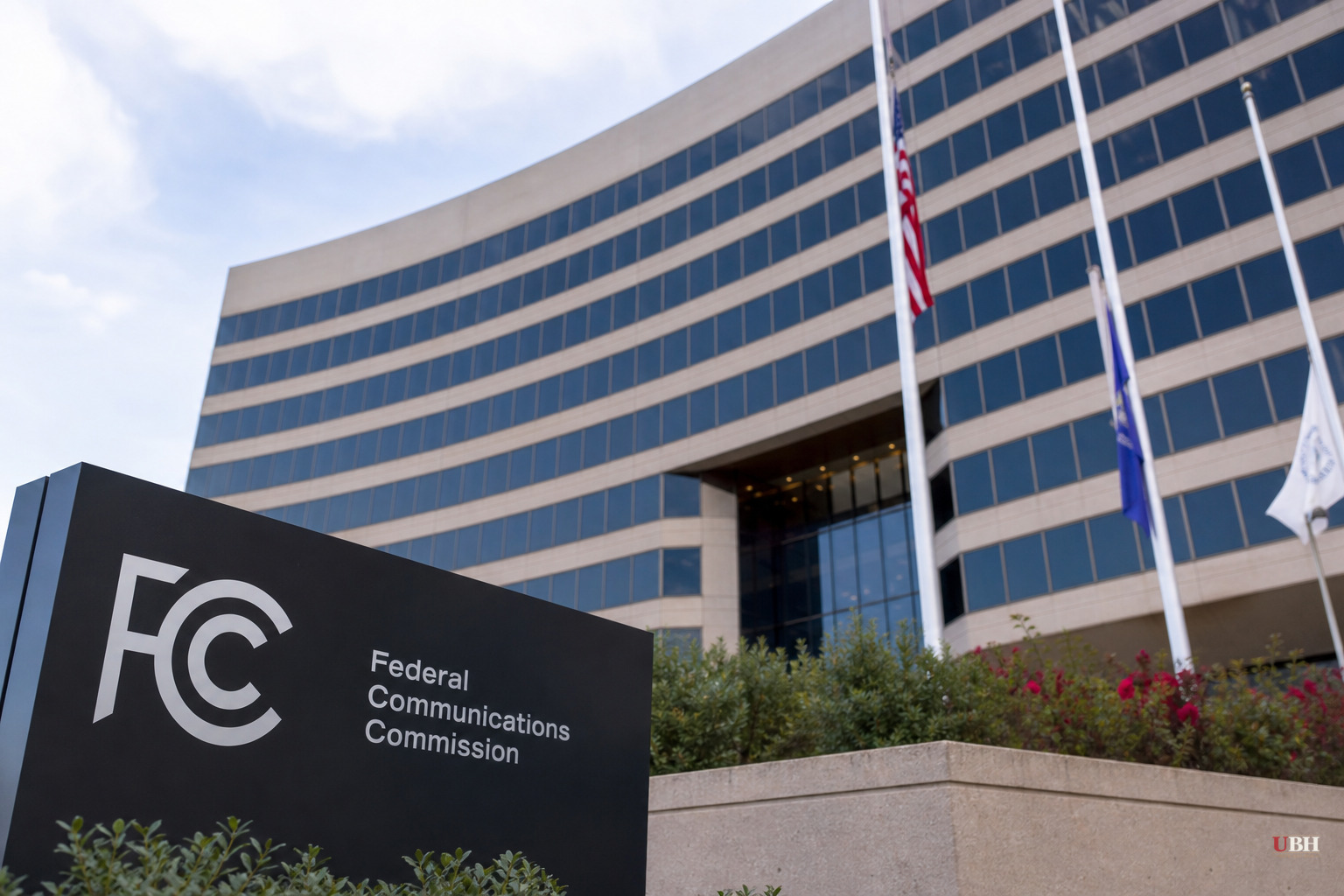
Federal Communications Commission Chairman Brendan Carr is facing scrutiny on two fronts: a new congressional investigation and a court petition asking judges to force his hand on agency policy.
House Energy and Commerce Committee Democrats, led by Ranking Member Frank Pallone Jr. of New Jersey, Communications Subcommittee Ranking Member Doris Matsui of California, and Oversight Subcommittee Ranking Member Yvette Clarke of New York, sent Carr a letter announcing their investigation. They accuse him of targeting broadcasters and news organizations perceived as covering the Trump administration unfavorably, and of wasting agency resources on what they call "bogus investigations." They've also asked the FCC's own Office of Inspector General to open a review.
The committee Democrats point to a list of specific actions: an FCC inquiry into CBS over routine editing practices, reinstated complaints against ABC and NBC that had previously been dismissed, an investigation into KCBS-AM in San Jose over its reporting of publicly available information, and Enforcement Bureau investigations into NPR and PBS. They also flagged Carr's frequent travel with President Trump to Mar-a-Lago as a conflict-of-interest concern given his targeting of outlets the president has publicly criticized or sued.
The Kimmel Episode
The most concrete flashpoint remains ABC's brief suspension of Jimmy Kimmel Live. According to the Committee to Protect Journalists, Carr suggested in a podcast interview that ABC's broadcast license should be at risk over Kimmel's on-air comments about the death of activist Charlie Kirk. ABC pulled Kimmel off the air for several days before reinstating him.
CPJ's Katherine Jacobsen said the FCC's regulatory powers "should not be used as a cudgel to punish voices that contradict the Trump administration's narrative." An independent regulator with license-renewal power over local stations creates real leverage over content, whether or not any formal enforcement action ever follows through.
Carr has not, as of this writing, revoked any broadcast license over programming content. The pressure came from public statements and the threat of review, not a completed enforcement action. That distinction matters. Threatening scrutiny is not the same as exercising it, and no formal finding of illegal content-based license revocation has been made against Carr in these sources.
The Paramount Settlement
CPJ also noted that Paramount Global, CBS's parent company, agreed to a $16 million settlement with Trump in July over his claim that CBS's "60 Minutes" deceptively edited an interview with then-Vice President Kamala Harris. That settlement came while the FCC was reviewing Paramount's merger with Skydance. The merger was approved several weeks later.
No court or regulator has ruled that the merger approval was conditioned on the settlement. But the sequence invites questions about potential leverage: a lawsuit settlement followed shortly by merger approval from the agency reviewing that same company.
The Legal Fight Over News Distortion Policy
Separately, a bipartisan group of former FCC commissioners and staffers filed a petition in November 2025 asking the agency to repeal its News Distortion Policy, the rule Carr invoked against ABC over Kimmel. This week, that same group asked the U.S. Court of Appeals for the District of Columbia Circuit to issue a writ of mandamus forcing the FCC to hold a vote on the repeal petition.
Under FCC procedure, only the chairman can bring a petition to a full commission vote. Carr has so far declined to do so while also opposing repeal. The petitioners argue this is exactly the kind of unaccountable use of chair authority that lets one person block scrutiny of his own actions. A mandamus order would force all three sitting commissioners on record, up or down, regardless of what Carr wants.
The Ownership Cap Fight
Carr has also scheduled an August 6 vote to eliminate the FCC's national broadcast ownership cap, which currently limits a single company from owning stations reaching more than 39 percent of U.S. television households, according to The Verge. Carr laid out his reasoning in a Breitbart op-ed: streaming and social media let national programmers reach "100 percent of the country" without touching public airwaves, so capping local broadcast owners at 39 percent puts them at a competitive disadvantage.
That's a genuine policy argument not obviously partisan on its face. Media consolidation rules written for a broadcast-only era arguably do need updating for a streaming world. Critics counter that lifting the cap right now, under a chairman simultaneously accused of pressuring broadcasters over content, would concentrate even more stations under owners with an incentive to avoid angering the FCC.
A Bipartisan Response in Congress
Not every response has split along party lines. Senate Commerce Committee Chair Ted Cruz, a Texas Republican, and Senator Ron Wyden, an Oregon Democrat, introduced the JAWBONE Act, which would let individuals sue for damages if a government official illegally coerces a platform, AI company, or broadcaster into removing their content, whether or not the company complies. The bill would also require new transparency around government communications with these companies. That two people this far apart on most issues co-sponsored it suggests the underlying concern about government pressure on speech platforms is not strictly a left or right complaint.
Carr has defended his actions as evenhanded enforcement of existing law and has not publicly responded in detail to the House Democrats' letter as of this writing. The FCC's Office of Inspector General has not announced whether it will open the review Pallone, Matsui, and Clarke requested. The D.C. Circuit has not ruled on the mandamus petition, and the August 6 ownership-cap vote has not yet occurred.
Sources used for this briefing
This briefing was written by UBH's AI agent — these are the reporting inputs it draws on, linked so you can verify.


