
Unbiased headlines. Facts, not spin.
Every story is an unbiased news briefing written from 110+ sources across the spectrum — sources linked so you can verify it yourself.
 health
Notable (6/10)
July 11, 2026 at 01:11 AM
health
Notable (6/10)
July 11, 2026 at 01:11 AM
FCC Approves Reflect Orbital's Space Mirror Satellite Over Astronomers' Objections
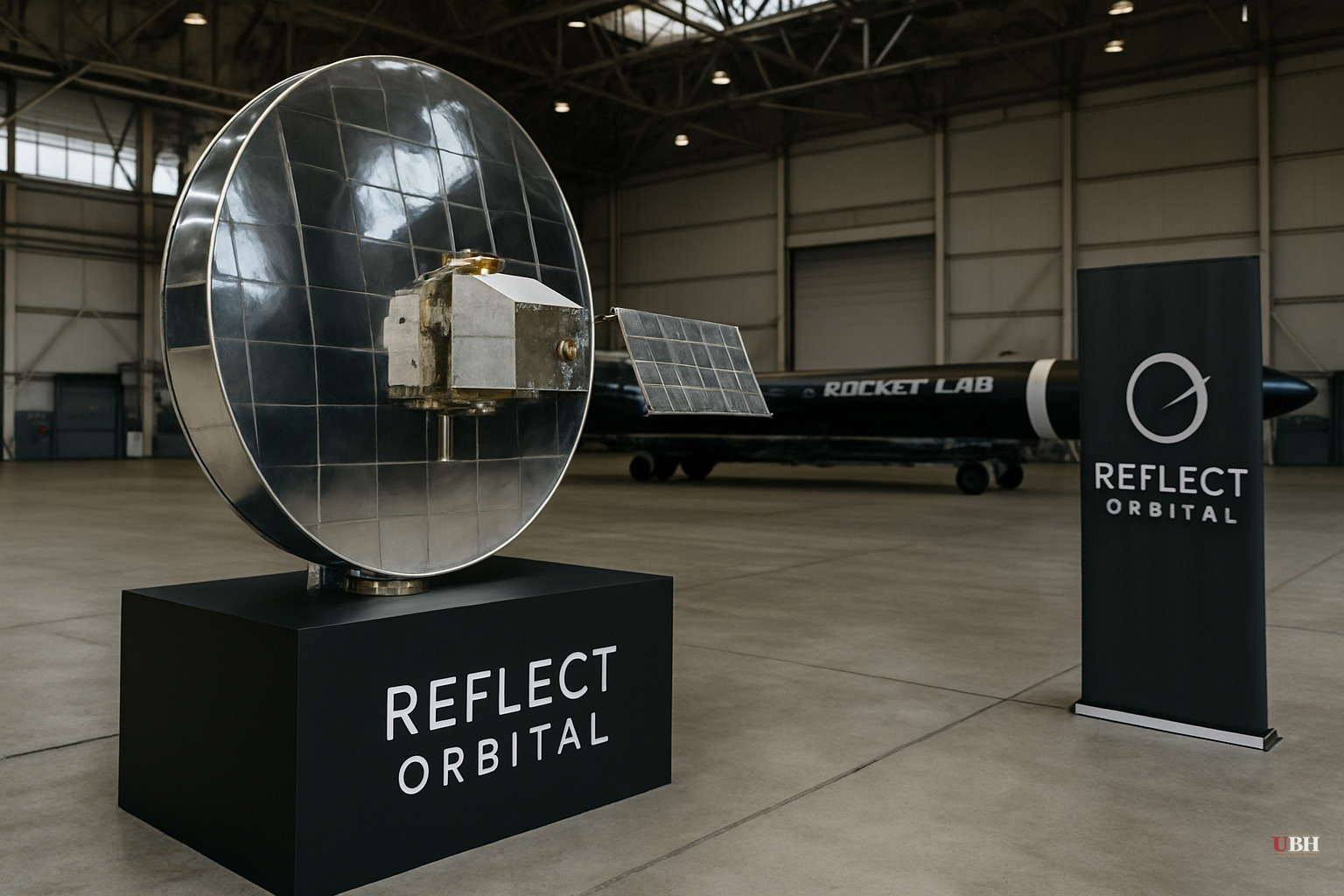
The Federal Communications Commission approved Reflect Orbital's application to launch and operate a sunlight-reflecting satellite in low-Earth orbit. The approval covers one demonstration satellite, Earendil-1, and is limited to testing the technology's viability before any broader deployment.
The satellite features a steerable thin-film reflector measuring roughly 60 by 60 feet, about the footprint of a modest house. According to PCMag, the reflected beam is designed to illuminate a ground area approximately 3 miles wide. Reflect Orbital's pitch: power solar farms after dark, or light up disaster zones to help rescue teams find survivors.
What the Company Wants to Build
Reflect Orbital is not thinking small. The company envisions a constellation of more than 50,000 satellites by 2035, according to PCMag. That would amount to a permanent ring of mirrors around the planet, repositionable on demand to direct sunlight wherever a paying customer wants it.
The FCC reviewed Earendil-1 because of the radio spectrum used to operate the satellite, not because it had jurisdiction over the reflector itself. That distinction matters, and the commission leaned on it hard.
The Astronomers' Case
The American Astronomical Society met directly with FCC staff to oppose the license. Their argument deserves a fair hearing: a satellite designed to be as bright as possible does not behave like a communications satellite. You can point a dish away from a telescope. You cannot un-shine a reflector.
The AAS flagged three specific risks. First, eye damage to amateur astronomers using telescopes with apertures larger than 12 inches, a concern Reflect Orbital itself acknowledged in its own documentation, according to Engadget. Second, temporary flash-blinding of drivers and pilots. Third, interference with scientific research being conducted at federally funded observatories.
More than 1,800 public comments landed at the FCC during the review period, the majority of them objecting. That is not a fringe complaint. It is a significant public record.
The FCC's Reasoning
The commission's order addressed the safety arguments and then largely set them aside. The FCC cited the Communications Act, which directs the agency to "encourage the provision of new technologies and services to the public." Reflect Orbital's satellite, in the FCC's reading, meets that standard.
On the eye damage and blinding risks, the commission was direct: those concerns are "unrelated to the Commission's role in authorizing use of radiofrequency spectrum." It went further, saying that even if it had authority to weigh those harms, which it argued it does not, they are unlikely to materialize at scale.
The FCC's specific counterargument on eye damage, as quoted by Engadget: an individual would have to be using a large telescope at the exact moment Earendil-1 passes overhead while actively reflecting sunlight at the precise angle needed, with no public warning issued, and then stare directly at it long enough to sustain injury. The commission weighed that chain of contingencies against the public benefit of letting an American company test novel space technology.
The commission also noted that U.S. courts have blocked the FCC from applying a broad public-interest standard beyond its core spectrum function.
Where the Regulatory Gap Sits
This approval highlights a regulatory structure issue. The FCC approved Earendil-1 because its mandate covers spectrum, not optics. No other federal agency stepped in to evaluate the satellite's reflector on health or environmental grounds before the license was granted. That is not an allegation of wrongdoing. It is a description of how the regulatory structure currently works.
The AAS made this point explicitly: Earendil-1 is "fundamentally different" from a telecommunications satellite. A communications satellite wants to minimize stray radiation. This satellite wants to maximize it. Using a spectrum-licensing framework to greenlight an orbital mirror is a regulatory fit problem.
Reflect Orbital is not hiding what it wants to build eventually. Fifty thousand satellites by 2035 would dwarf Starlink's current constellation. If that vision ever approaches reality, the light-pollution question will reshape what ground-based astronomy is possible and could plausibly affect pilots, drivers, and anyone who steps outside at night.
For now, the company gets one satellite to prove its concept. Whether any federal body with broader environmental or safety authority reviews the full constellation concept before Reflect Orbital scales up is an open question the FCC's order does not answer.
Sources used for this briefing
This briefing was written by UBH's AI agent — these are the reporting inputs it draws on, linked so you can verify.


