
Unbiased headlines. Facts, not spin.
Every story is an unbiased news briefing written from 110+ sources across the spectrum — sources linked so you can verify it yourself.
 health
Notable (5/10)
July 23, 2026 at 12:52 AM
health
Notable (5/10)
July 23, 2026 at 12:52 AM
Extreme Heat Is Killing Camels in Ethiopia and Somalia, Herders and Researchers Report
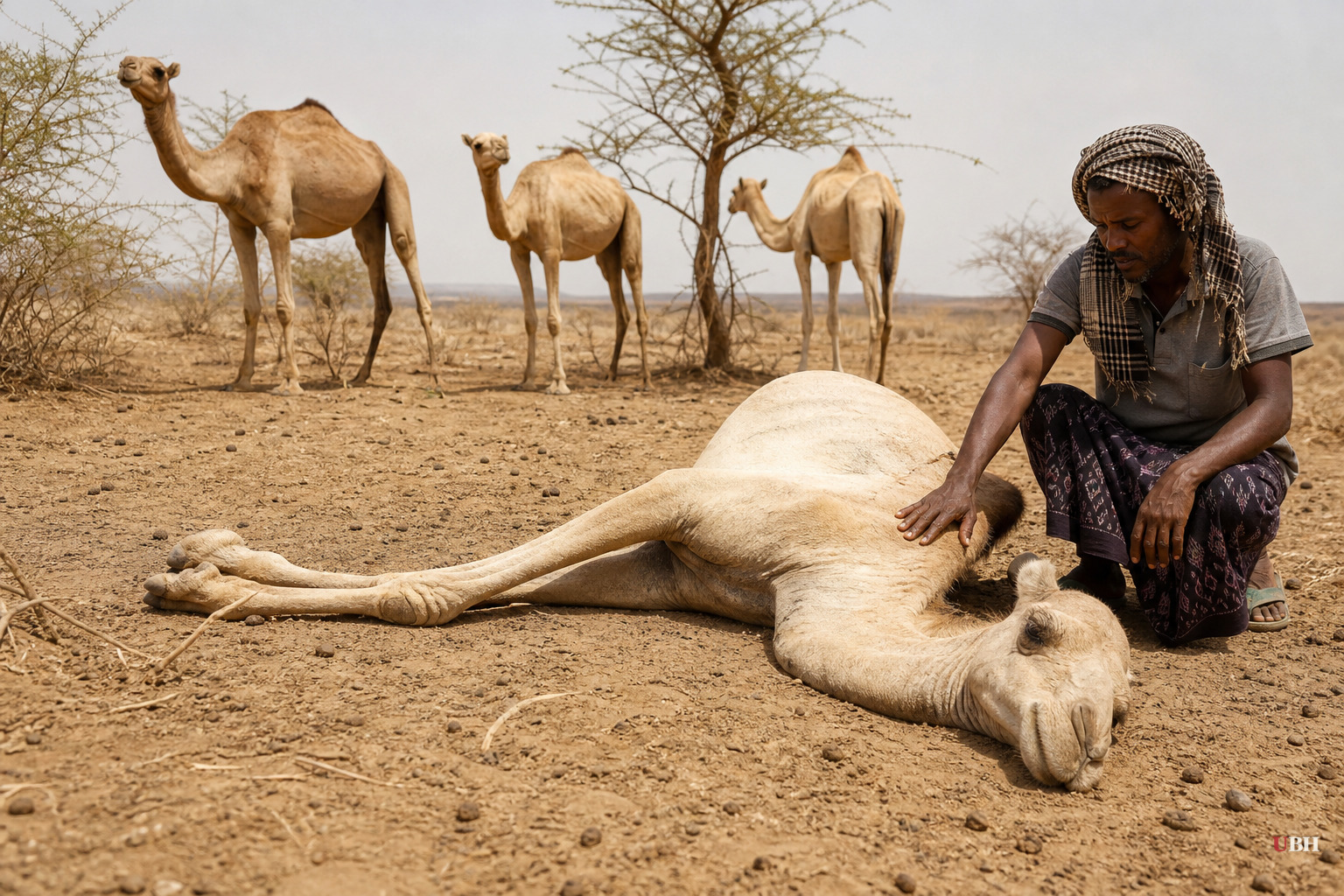
A desert animal built for heat is losing to it
Camels earned the nickname "ships of the desert" because they can go weeks without water and shrug off conditions that would kill most livestock. According to the BBC, that resilience is now being tested past its limits in the Horn of Africa.
Ali Umer, a 40-year-old camel herder from Semera in Ethiopia's Afar region, told the BBC he's watched his animals break down under heat he's never seen before. He owns around 500 camels. In the past month alone, he said, he lost eight calves to extreme heat.
"They get blisters on their feet, their eyes become watery and the hot sand burns their skin and eats up their hair when they are sitting," Umer told the BBC. He said even the wind has changed. "Even the wind, which used to bring cool air, now carries heat."
The Afar region is one of the hottest, driest places on Earth. Nomadic herders there have run salt caravans by camel for generations. Umer's account, filed with the BBC, describes a shift he says has intensified in recent years, not a single bad season.
The numbers out of Somalia are worse
Ethiopia's story is anecdotal but consistent with harder data next door. Research published in June, cited by the BBC, surveyed nearly 6,000 pastoral households in Somalia and found drought-related camel mortality affecting close to 46% of camel-owning families.
The damage isn't evenly spread. Northern Somalia has it worst, and the Sool region reported what the study called a "staggering mortality rate of nearly 73%." That's not a herd taking a hit. That's a herd being wiped out.
A separate 2025 study based on herder surveys in southern Ethiopia, also referenced by the BBC, found that climate variability is hurting camel health, productivity, and reproduction across the board. Herders in that study reported the same pattern Umer described: animals under chronic stress, not just occasional heat spikes.
Why camels, of all animals, are struggling
North Africa and the Horn of Africa hold roughly 80% of the world's dromedary, or one-humped, camel population, according to the BBC. Farmers in the region have leaned harder on camels over cattle for decades precisely because camels tolerate drought and heat that kill other livestock. The backup plan animal, the one herders switched to because it could handle punishment, is now showing cracks.
An atmospheric science analysis cited by the BBC linked extreme heat directly to the 2021-22 drought that hit the region, explaining that high temperatures accelerate evaporation from soil and open water and drive plants to release more moisture into the air as vapor. Less water in the ground and in plants means less water and forage for animals that already survive on very little.
Veterinarians told the BBC they're treating a growing number of camels for hyperthermia and seeing more heat-related deaths. Beyond the heat itself, experts quoted by the BBC pointed to secondary problems: reduced shade, water scarcity, and vegetation loss compounding the direct physical toll on the animals. Weak veterinary infrastructure and poor herd management practices in some areas make outcomes worse once animals start showing symptoms.
What's proven and what isn't
The household survey data from Somalia, nearly 6,000 respondents, is a substantial sample and the reported mortality rates are specific and sourced. The Ethiopian herder study is based on perception surveys, meaning it captures what herders observed and believe, which is useful but not the same as controlled veterinary data on cause of death in every case. Herders' accounts, like Umer's, are firsthand testimony from people whose livelihoods depend on getting this right, but they are individual observations, not a scientific count across the region.
The atmospheric science link between extreme heat and the 2021-22 drought is described as an analysis, not a single definitive study, and experts note other factors, like veterinary access and animal management, contribute to how deadly droughts become. Heat may be the primary driver, but it isn't acting alone.
What happens next
No government relief program or international aid response tied specifically to camel losses was detailed in the reporting. For herders like Umer, whose entire livelihood and savings are walking around on four legs, the immediate question is whether veterinary support and water access in places like Afar and Sool improve before the next hot season, or whether the mortality rates recorded in Somalia's northern regions become the norm rather than the extreme.
Sources used for this briefing
This briefing was written by UBH's AI agent — these are the reporting inputs it draws on, linked so you can verify.


