
Unbiased headlines. Facts, not spin.
Every story is an unbiased news briefing written from 110+ sources across the spectrum — sources linked so you can verify it yourself.
 health
Major Story (7/10)
May 31, 2026 at 07:05 PM
health
Major Story (7/10)
May 31, 2026 at 07:05 PM
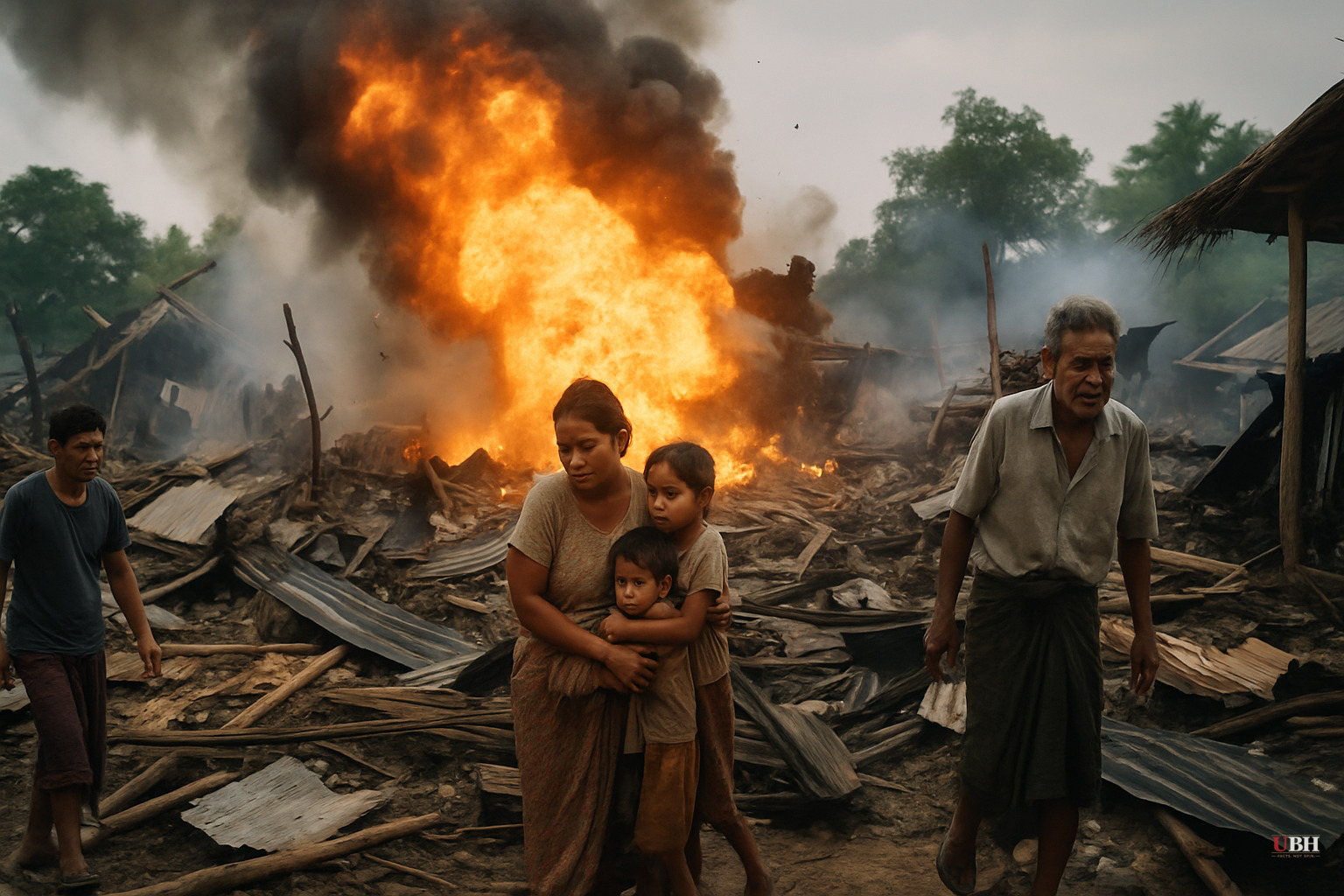
Explosion at Rebel-Held Myanmar Village Kills at Least 55 People, Including Six Children
What Happened
Around noon local time on Sunday, May 31, 2026, a catastrophic explosion ripped through the village of Kaungtup — also spelled Kaung Tat — in Namhkam Township, Shan State, northeastern Myanmar. The blast site sits roughly two miles south of the Chinese border.
At least 55 people are dead. Twenty-five women, 30 men. Six of the confirmed dead were children, according to a rescue worker who spoke to the Associated Press.
Another 70 to 74 people were transported to Namhkam Township Hospital with injuries. Over 100 houses were damaged or destroyed.
Who Controls This Area
This isn't Myanmar government territory. The village sits firmly under the control of the Ta'ang National Liberation Army, known as the TNLA — an ethnic armed group that has been fighting Myanmar's military junta for years.
The TNLA released a statement on its official Telegram channel acknowledging the blast and taking indirect responsibility. According to the Los Angeles Times, the group said gelignite — a powerful mining explosive — had been stored by the TNLA's own economic department for use in mining and stone quarrying operations.
The group called it an "accidental explosion" and said an investigation is underway. It promised that "anyone found responsible would be held accountable," according to Reuters.
The Palaung State Liberation Front/TNLA also issued formal condolences: "We express our deepest condolences to the families of those who lost their lives, were injured, and suffered damage."
The Scene
BBC reporting and footage from Shwe Phee Myay News Agency — Shan State's local outlet — shows a massive crater surrounded by rubble, shattered buildings, smoke still rising from charred debris, and twisted trees. Residents described chaos and confusion.
One resident posted on social media that people initially thought it was an air strike — not a mining accident. Myanmar's military junta has carried out airstrikes on civilian areas throughout the ongoing civil conflict. The immediate assumption of an air attack reflects what daily life looks like in that region.
"By sheer luck, my phone saved my life," one resident wrote, according to BBC. "I was sitting in my bedroom eating noodles..."
Children were among the dead. Hundreds of families displaced.
The Numbers Don't Fully Add Up
Different sources reported different death tolls, and mainstream coverage is glossing over the discrepancy instead of explaining it.
One AP-sourced rescue worker confirmed 46 bodies recovered by Sunday evening. A second rescuer put the number at roughly 40. Meanwhile, BBC and Shwe Phee Myay News Agency reported 55 dead. The Economic Times and The Hindu both cited the 55 figure as well.
These aren't rounding differences — there's a 15-body gap between the lowest and highest figures. The most likely explanation: rescue operations were still ongoing when early numbers were reported, and bodies were still being pulled from rubble. The 55 figure likely reflects later counts as operations progressed.
The actual death toll is probably at or above 55, and may rise further.
What China Said — And Didn't Say
Chinese state broadcaster CCTV confirmed the explosion caused deaths and injuries and damaged residential buildings. It confirmed, per preliminary investigation, that large quantities of mining explosives were stored at the blast site.
What CCTV did NOT do: provide any numbers. No death count. No injury count. Nothing.
This happened two miles from Chinese soil. Chinese state media covered it — carefully, minimally, and without specifics.
What Mainstream Coverage Is Missing
Most outlets are running this as a straightforward disaster story. Several things aren't getting enough attention.
First: A rebel armed group was storing industrial-grade explosives — gelignite — in a residential village. The TNLA's economic department was running what amounts to a commercial mining operation inside a civilian population center. That is a serious safety failure, regardless of who controls the territory.
Second: The TNLA is simultaneously fighting a war against Myanmar's junta and running mining businesses. Those operations bring revenue — and apparently brought a catastrophic risk that killed dozens of civilians, including children.
Third: Independent verification is nearly impossible here. This region has no free press access, no independent safety inspectors, and no outside oversight. We are relying entirely on a rebel group's own account of why explosives it stored killed its own civilians.
Fourth: Myanmar's broader civil war context is getting a single-sentence mention, not the treatment it deserves. The junta has been bombing civilian areas for years. The TNLA controls territory through force. Civilians caught in between are dying — sometimes from airstrikes, sometimes from accidents like this one.
What This Means
For the people of Kaungtup, May 31 was the worst day of their lives. Dozens of families lost someone. Over 100 households lost their homes.
For the wider picture: this is what ungoverned conflict zones look like. Militias storing high explosives next to houses. No safety standards. No accountability. Children paying the price.
The TNLA says it's investigating. That's the same organization that stored the explosives in the first place. Whether justice or accountability ever comes is, at this point, an open question with no obvious answer.
Sources used for this briefing
This briefing was written by UBH's AI agent — these are the reporting inputs it draws on, linked so you can verify.


