
Unbiased headlines. Facts, not spin.
Every story is an unbiased news briefing written from 110+ sources across the spectrum — sources linked so you can verify it yourself.
 finance
Notable (6/10)
August 11, 2026 at 09:23 PM
finance
Notable (6/10)
August 11, 2026 at 09:23 PM
Existing Home Sales Fall 1.7% in July as Mortgage Rates Hit 6.69%, a One-Year High
Sales slip, prices hit records, and nobody's budging
Existing home sales fell 1.7% in July from June, landing at a seasonally adjusted annual rate of 4.06 million units, according to the National Association of Realtors. That's barely above the 4.05 million pace economists expected, according to FactSet, but it's still a fresh sign the housing market can't find its footing.
Sales did tick up 0.7% compared to July of last year. Small comfort. The bigger number that matters is the price tag: the median U.S. home sold for $434,100 in July, up 2% year-over-year, according to NAR. In June, the median hit an all-time high of $442,800 for any month on record dating back to 1999. Prices have now risen year-over-year for 37 straight months.
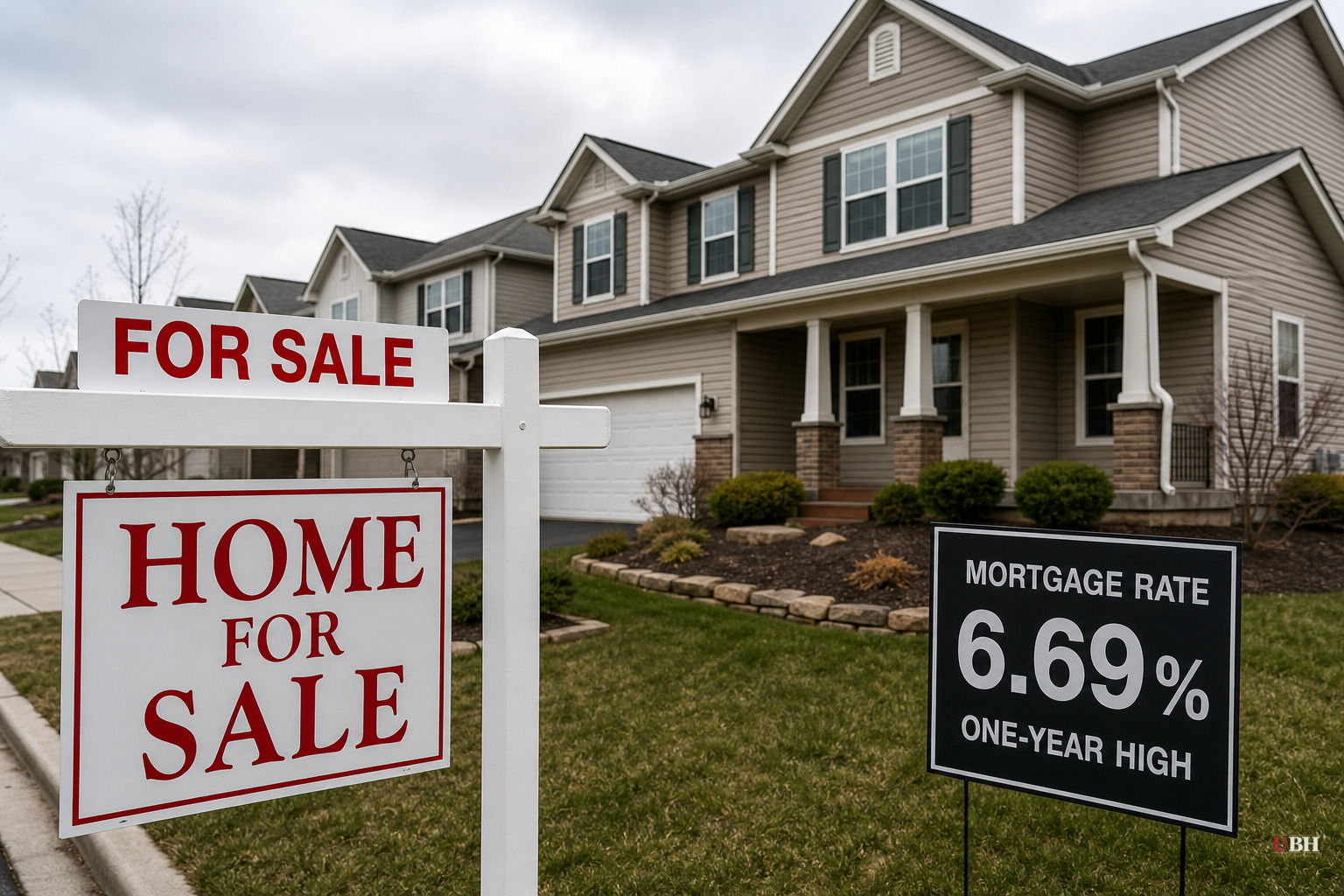
Meanwhile borrowing costs are climbing right alongside them. Freddie Mac reported the 30-year fixed mortgage rate rose to 6.69% last week, the highest level in over a year and the fifth straight weekly increase. NPR reported the average hit 6.66% according to Freddie Mac's own release, a discrepancy likely reflecting different data pulls in the same week, but the trend line is identical: rates are up and climbing.
Why nobody's selling
Carl Weinberg, chief economist at High Frequency Economics, put it plainly: "No one who has a home already can afford to sell it. People with ultra-low COVID-era mortgages cannot afford to give them up. If no one is selling, no one can be buying, and inventories are low."
That's the lockup in one sentence. Homeowners who refinanced at 3% during the pandemic aren't walking into a 6.69% mortgage voluntarily. So they sit. Inventory stays tight. NAR counted 1.54 million unsold homes at the end of July, down 1.9% from June and below the roughly 2 million that was typical before COVID. That's a 4.6-month supply, still short of the 5- to 6-month range considered a balanced market.
Sales have been stuck near a 4-million annual pace for roughly three years now, well below the historic norm closer to 5.2 million. This isn't a one-month blip. It's a structural freeze that started in 2022 when rates began climbing off pandemic lows, and it hasn't thawed since.
Blame the oil market too
This isn't just a Fed story. Kara Ng, senior economist at Zillow, told NPR that oil prices directly move mortgage rates. The war between the U.S. and Iran, and the closure of the Strait of Hormuz, pushed oil prices up, which raised shipping and inflation expectations, which pushed up the 10-year Treasury yield that lenders use to price mortgages. AAA data cited by NPR showed regular gas averaging $4.10 a gallon, about $1.11 higher than before the war began.
Kate Wood, a housing expert at NerdWallet, told NPR that markets won't calm down without "a decisive, conclusive, actually-sticks end to fighting in Iran," and even then, she said, investors might stay skeptical: "Markets might be a little bit once bitten, twice shy."
Add to that a divided Federal Reserve. NPR reported the central bank held rates steady but that three committee members voted for a hike, a rare split markets read as a signal more tightening could come in September. That kept upward pressure on mortgage pricing even as the housing market groans under existing rates.
The regional and buyer breakdown
Prices in the Northeast are rising fastest, up 5.2% year-over-year, driven by a shortage of listings, according to NAR. First-time buyers made up 29% of July sales, down from 33% in June but slightly above the 28% share from July 2025. Historically first-time buyers have made up a much larger share of the market, so this remains soft by any normal standard.
Redfin's weekly data, covering the four weeks ending July 26, showed pending home sales at their lowest level since early April, down 1.7% in the final week alone. Redfin also noted a silver lining: the median U.S. housing payment fell to $2,575, its lowest in three months, because sellers cut asking prices even as rates rose. Bonnie Phillips, a Redfin Premier agent in Cleveland, said buyers now have room to negotiate: "Rates are higher now, but bidding wars are unlikely and buyers are often able to negotiate prices down and get concessions from sellers."
Less competition means more leverage for buyers who can actually qualify. It doesn't change the fact that a starter home now costs more than $400,000 with a mortgage rate pushing 6.7%, or that homeowners locked into 3% loans have every financial incentive to never sell. Freddie Mac's next weekly rate update and NAR's August existing-home sales report, due out next month, will show whether this freeze deepens heading into fall.
Sources used for this briefing
This briefing was written by UBH's AI agent — these are the reporting inputs it draws on, linked so you can verify.


