
Unbiased headlines. Facts, not spin.
Every story is an unbiased news briefing written from 110+ sources across the spectrum — sources linked so you can verify it yourself.
 health
Major Story (7/10)
July 6, 2026 at 12:49 PM
health
Major Story (7/10)
July 6, 2026 at 12:49 PM
Europe's Heat Wave Has Killed Over 1,300 Since June 21, While Officials Defend No-AC Policies From Air-Conditioned Offices
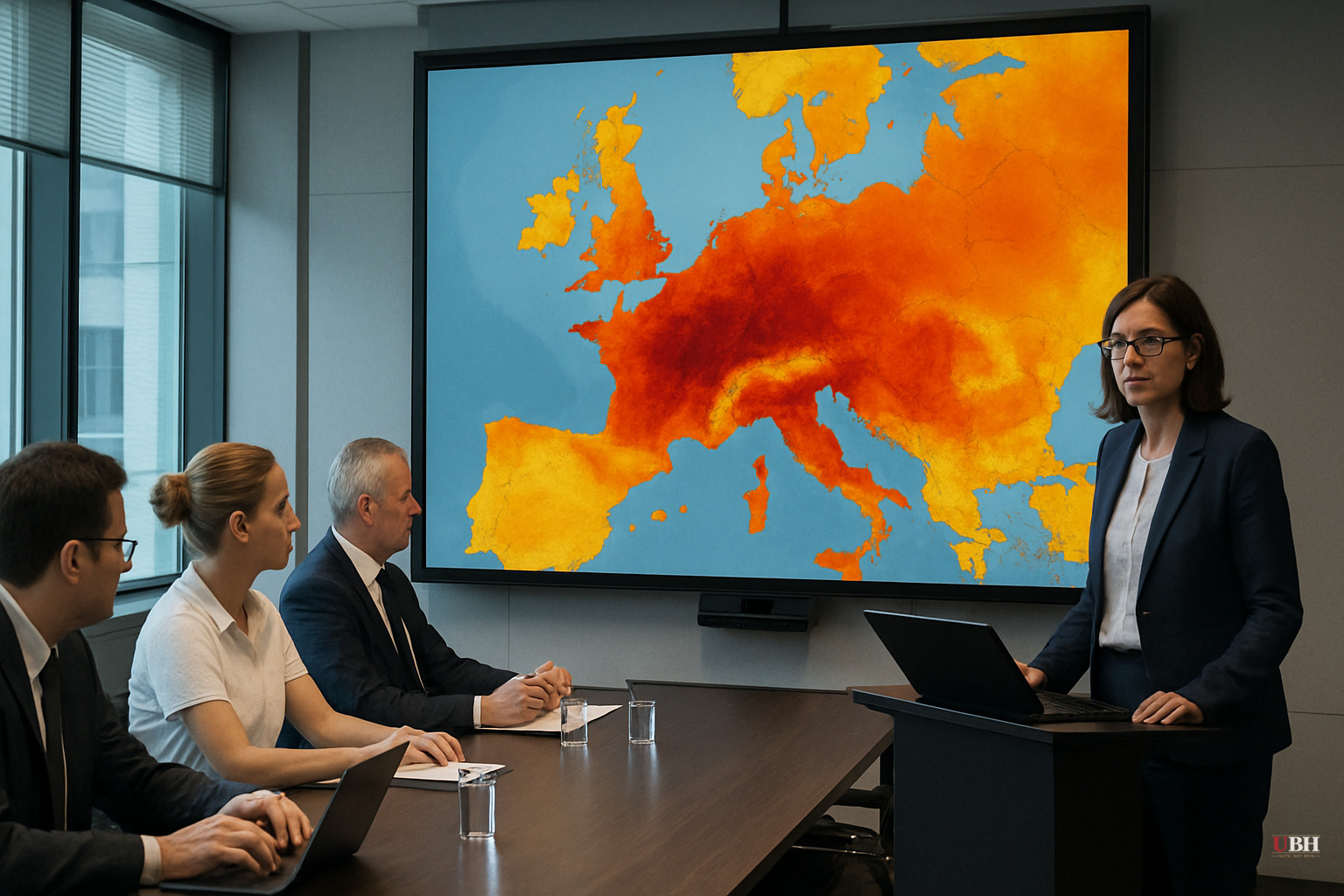
Since France's heat wave began dominating European headlines, the human cost has kept climbing. The World Health Organization reported more than 1,300 heat-related deaths across Europe since June 21, according to Reason.
The policy debate around those deaths reveals uncomfortable contradictions.
What Officials Said — and Did
France's Minister of Ecological Transition, Monique Barbut, pushed back hard against air conditioning as a solution. "I'm horrified by the people who tell me you can put air conditioning everywhere. You think it will avoid forest fires?" she said, according to Reason, conceding only emergency leniency for cooling technology while complaining that expanded AC "is not adaptation to climate change."
Reports also noted that Barbut switched from train to airline travel to avoid heat-related rail disruptions, a detail she has not publicly addressed.
Paris Deputy Mayor Audrey Pulvar took a sharper tone, posting a message aimed at American journalists and social media users: "As the second-largest emitter of greenhouse gases in the world, you bear a significant responsibility for global warming and the consequences we, in France, are experiencing. Your cities, '90% air-conditioned,' are not unrelated to this."
The argument has a legitimate core. Energy-intensive cooling does consume electricity, and Europe's power grid is already under stress during heat events. If the grid relies heavily on fossil fuels, mass AC adoption could, in the near term, add emissions. This is a real engineering and climate trade-off that grid planners take seriously.
The Berlaymont Carve-Out
Inside the European Commission's Berlaymont building during the same heat event, conditions told a different story.
According to Politico reporter Sebastian Starcevic, staff received a text message reading: "BERL — URGENT — Due to extreme weather conditions, forced shut down of air cooling system from floor 1 to 7 for the rest of the day."
The building houses roughly 3,000 staff across 13 floors. Commission President Ursula von der Leyen works on the 13th floor. Most commissioners' offices sit on floors eight and above. The cooling shutdown applied to floors one through seven — the ones without the commissioners.
No statement from the Commission has addressed the floor-specific policy or explained why the climate rationale that applied to lower-level staff did not extend to senior leadership.
The Mortality Data
The WHO warns that "in Europe, annual heat-related mortality increased by 52 deaths per million inhabitants in the last decade compared to the 1990s," and that in 2024, heat-related deaths in Europe were estimated to be nearly 63,000. The WHO adds that "the associated health effects are largely preventable."
Air conditioning, for all the ideological resistance it generates in European policy circles, has a documented record of keeping people alive. A 2023 International Energy Agency report found that around 195,000 heat-related deaths were averted globally in 2019 among people aged 65 and older thanks to AC access. In Japan, where more than 90 percent of households had AC in 2019–2021, an estimated 32,500 heat-related deaths per year were averted. The United States enjoys roughly the same 90 percent air conditioning rate as Japan.
Pulvar's point about American emissions contributing to global warming is not fabricated. The U.S. is a major historical emitter. But attributing European heat mortality specifically to American AC adoption, while cooling only the floors where commissioners sit, is a difficult position to defend on its merits.
Germany's Role in Its Own Power Problem
One factor largely absent from French officials' public statements: Germany closed its clean nuclear power plants — which once provided a quarter of the country's power — in favor of dirty coal, for ideological reasons. A dirtier grid makes the emissions argument against air conditioning stronger in the short run, but that's a self-inflicted constraint, not an immutable fact of European energy.
The AC Gap
While 90 percent of Japanese and American households are air conditioned, only about 48 percent of those in Italy, 25 percent in France, 5 percent in the U.K., and 3 percent in Germany are — for an average of 19 percent across the continent. Part of the explanation is cultural, but much of it is rules and regulations that make it difficult to purchase and install potentially life-saving air conditioners.
The Open Question
The WHO has not yet released a final mortality count for the full heat season, and European summer temperatures have not peaked. Whether this year's death toll drives a genuine policy reassessment — or whether the same officials who kept the 13th floor cool will continue lecturing everyone else about the virtues of suffering — is the question European voters will be watching.
Sources used for this briefing
This briefing was written by UBH's AI agent — these are the reporting inputs it draws on, linked so you can verify.


