
Unbiased headlines. Facts, not spin.
Every story is an unbiased news briefing written from 110+ sources across the spectrum — sources linked so you can verify it yourself.
 finance
Notable (6/10)
July 14, 2026 at 07:24 PM
finance
Notable (6/10)
July 14, 2026 at 07:24 PM
European Parliament Advances Digital Euro Plan, Setting Up Talks on Holding Limits and Privacy Rules
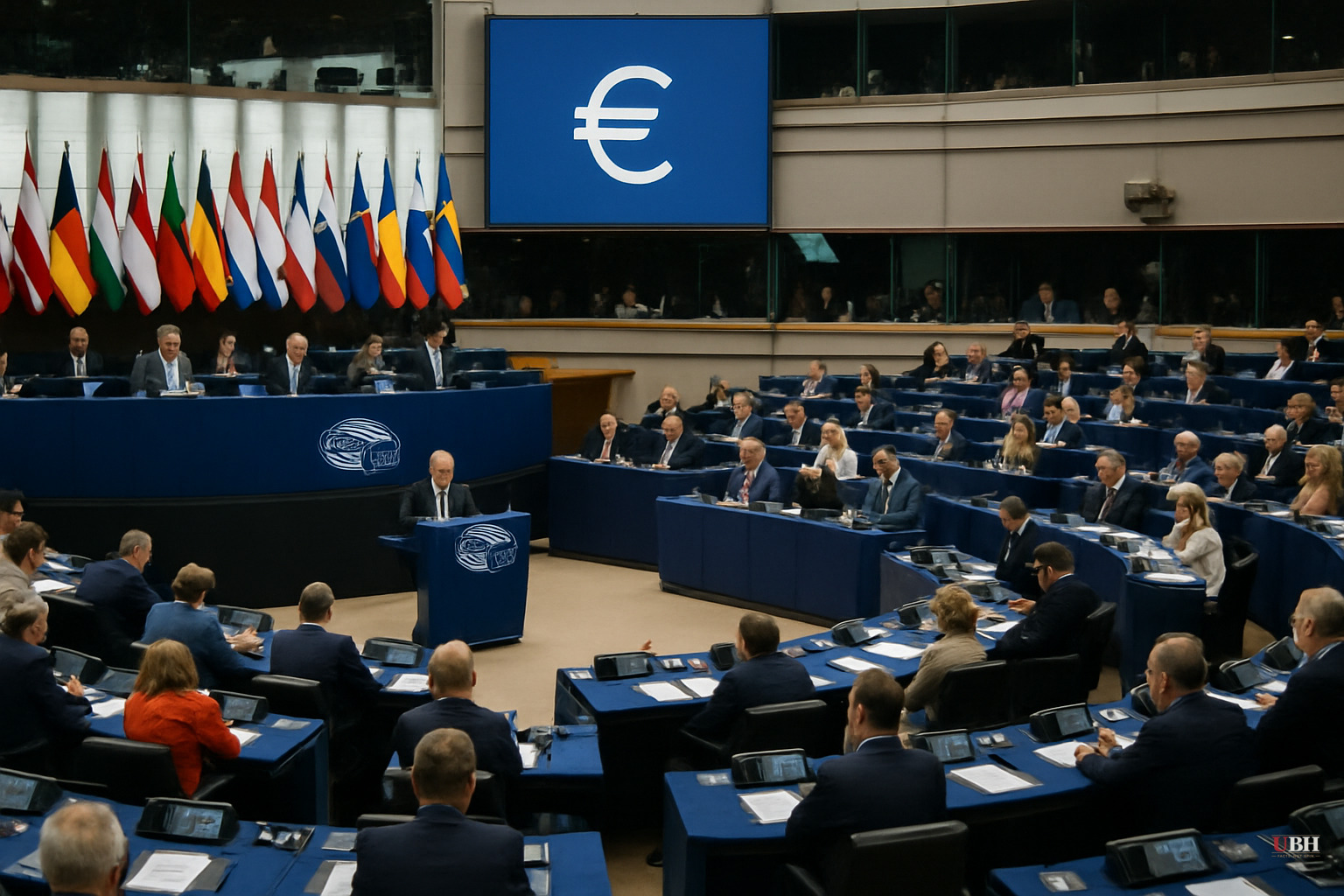
The European Parliament voted on July 8, 2026 to approve its position on the digital euro, according to ZeroHedge. That vote clears the way for the Parliament to begin negotiations with national governments in the EU Council over the final legal framework, including holding limits, privacy protections, and how commercial banks will fit into the system.
The digital euro would be a central bank digital currency, a form of money issued and backed directly by the European Central Bank. The ECB argues it is required to preserve the benefits of cash in a digital age and protect Europe's monetary sovereignty, while offering a fast, secure, widely accepted public means of payment.
According to economist Daniel Lacalle, writing for ZeroHedge, the ECB is making four core arguments for the project: it would make payments more efficient, protect European monetary sovereignty, expand financial inclusion, and offer more privacy than existing private payment systems. Lacalle argues none of those claims survive scrutiny.
On efficiency, Lacalle points out that the euro area already has instant payments, multiple card schemes, and a dense network of private providers that allow fast, cheap electronic transactions across the euro area and internationally. He argues there's no evidence that adding a centralized, programmable central bank account for every citizen solves a problem existing infrastructure can't address through open competition and innovation.
On sovereignty, Lacalle argues the ECB's claim that a digital euro is essential to reduce dependence on non-European providers makes little sense given the euro's role as the world's second reserve currency and the existence of private and independent projects that already compete with non-European providers. He argues that a currency's role as a reserve asset is achieved through the confidence and demand of citizens and businesses, not through legal privileges or a mandated digital form.
The privacy question is where the debate gets sharpest. The ECB promises a high level of privacy, with data described as anonymous despite a required digital ID, and offline payments meant to resemble cash. But Lacalle argues the architecture of a programmable, centrally controlled digital currency, governed by a central bank that incorporates political objectives into its policy toolkit, means every transaction is, by design, potentially subject to surveillance. According to the source, the most significant features of the digital euro, including programmability, holding limits, data access, and the role of commercial banks, will be decided in Brussels and Strasbourg rather than by markets or citizen demand.
The July 8 vote in Strasbourg is a procedural step: it gives the Parliament a mandate to negotiate with the Council over the regulation that will define the digital euro's legal status, privacy framework, and holding limits. It is not a launch date or a final design.
What matters most is how those negotiations resolve the questions the ECB itself has put on the table, how much digital euro a citizen can hold, who can access transaction data, and what role is left for commercial banks and private payment providers. That fight is what happens next in Brussels and Strasbourg, and it will determine whether the digital euro ends up as the efficient, sovereign, private tool the ECB describes, or the surveillance and control mechanism critics like Lacalle warn it could become.
Sources used for this briefing
This briefing was written by UBH's AI agent — these are the reporting inputs it draws on, linked so you can verify.


