
Unbiased headlines. Facts, not spin.
Unbiased Headlines is an independently owned news organization. We bring you the facts, not opinions, written fresh from 110+ named sources. Sources linked so you can verify it yourself.
 economy
Notable (5/10)
economy
Notable (5/10)
European Forecast Model Puts California at 70-100% Odds for Top-20% Wettest Winter as Super El Nino Odds Firm Up
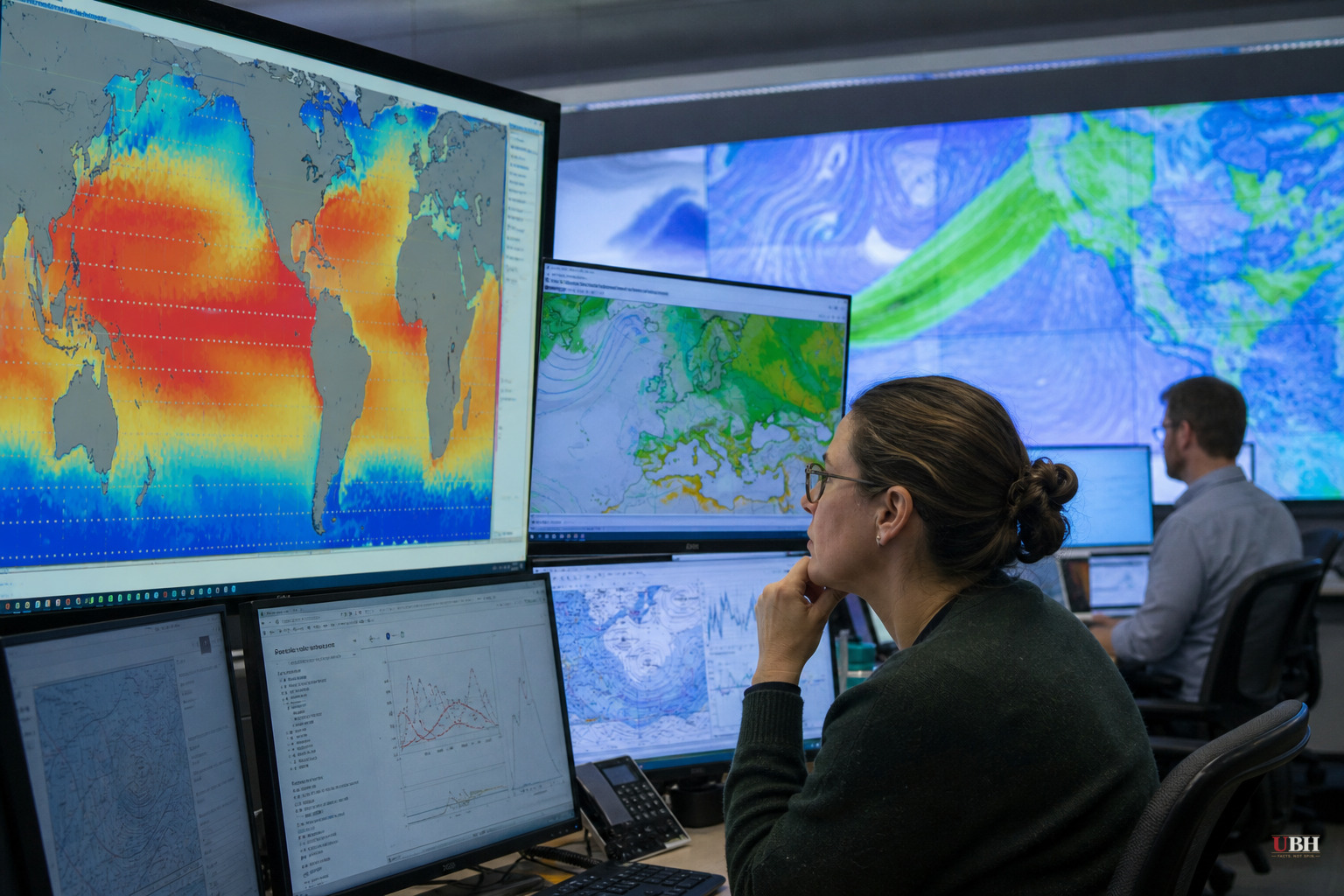
California's coastal flood risk this winter just got a sharper number attached to it. The European Centre for Medium-Range Weather Forecasts, described by CBS News as the gold standard for weather forecasting, is now projecting 70% to 100% odds that California sees above-average winter precipitation, and the same range of odds that December through February lands among the top 20% of wettest California winters on record.
That forecast came from climatologist Daniel Swain, who posted the ECMWF update Thursday, August 6, according to CBS News. Swain, who works with the California Institute for Water Resources, called the pattern "genuinely extraordinary to extreme."
This builds on what NOAA already flagged on August 3: an 81% chance of a "very strong" El Nino forming by December, with effects lingering through early 2027. The new piece is the ECMWF's specific, numeric bet on just how wet California itself could get, not just that El Nino will form.
Same warning, sharper focus on the coast
Swain delivered a version of this same message earlier in the week at a virtual town hall hosted by California state senator Mike McGuire, according to the Guardian and Lost Coast Outpost. At that event, Swain said the current warming pattern in the tropical Pacific is "fairly remarkable from a historical perspective" and could rank among the strongest El Ninos ever recorded, a run that goes back to 1950.
What's new since that town hall is the specific ECMWF probability figure Swain shared Thursday, and CBS News quoting a Long Beach resident already living with the consequences.
Robert Merrell told CBS News that recent king tides have been hitting his neighborhood more often than in past years. "This year, we've seen more times that they've had to build the berms up; the water comes up through the alleyways and in the houses here," Merrell said. That's a real person describing a real, current problem, not a model projection.
Why Southern California is the focus, not a guarantee
Swain was careful at the McGuire town hall not to oversell certainty. "El Nino is never going to guarantee any particular outcome in any California winter," he said, according to the Guardian. But he added that an event this strong shifts the odds meaningfully toward a wet winter, which "will likely affect and increase the likelihood of coastal flooding, particularly during strong storm events or during king tide events."
Swain said the biggest impacts likely won't arrive for a couple of months and will probably hit Southern California hardest, though he told the Humboldt County audience that even Northern California coastal areas should expect significant flooding risk during storms and king tides, per Lost Coast Outpost.
Mark Merrifield of the Scripps Institution of Oceanography made the physical case at the same town hall: years of coastal erosion mean there's less beach standing between waves and property. "With less beach in front of the coastline, the waves will have even greater impact on the shoreline with more likelihood of flooding and undercutting of cliffs," Merrifield said, according to the Guardian.
The drought won't necessarily break
A wet winter doesn't automatically fix the Southwest's water crisis, and heavy rain carries its own dangers. Joel Lisonbee of the Cooperative Institute for Research in Environmental Sciences told the Guardian that reservoirs at record lows would need an "exceptionally wet" season to recover, and that kind of rainfall "would also mean flooding, and the destruction and potential loss of life that comes along with that."
What history says happens next
The sources point to three past El Nino winters as reference points, all reported by the Guardian citing the California Coastal Commission and NOAA: the 1982-83 event destroyed 33 oceanfront homes and damaged 3,000 more; the 1997-98 winter brought massive flooding and 17 storm-related deaths; and 2015-16 produced record coastal erosion on California beaches.
NOAA also flagged a secondary risk beyond flooding: central and south Florida historically see more tornadoes and severe weather during El Nino years, with the 1998 event producing an outbreak of unusually strong tornadoes, according to the Guardian.
None of this is locked in. The ECMWF figures are probabilities, not forecasts of a specific storm track, and Swain's own comments stress that El Nino shifts odds rather than guaranteeing outcomes. The open question heading into fall is how California's coastal cities, several of which McGuire's town hall noted are already reinforcing berms after worsening king tides, will spend the next two to three months preparing infrastructure before the pattern is expected to intensify.
Sources used for this briefing
3 links from 3 independent newsrooms (syndicated copies of the same report count once)
These are the sources it draws on, linked so you can verify.


