
Unbiased headlines. Facts, not spin.
Every story is an unbiased news briefing written from 110+ sources across the spectrum — sources linked so you can verify it yourself.
 finance
Low Interest (4/10)
July 24, 2026 at 01:19 PM
finance
Low Interest (4/10)
July 24, 2026 at 01:19 PM
Euronext's Turnover Grew Nearly 4x Since 2016 as Exchange Expands Beyond Stock Trading
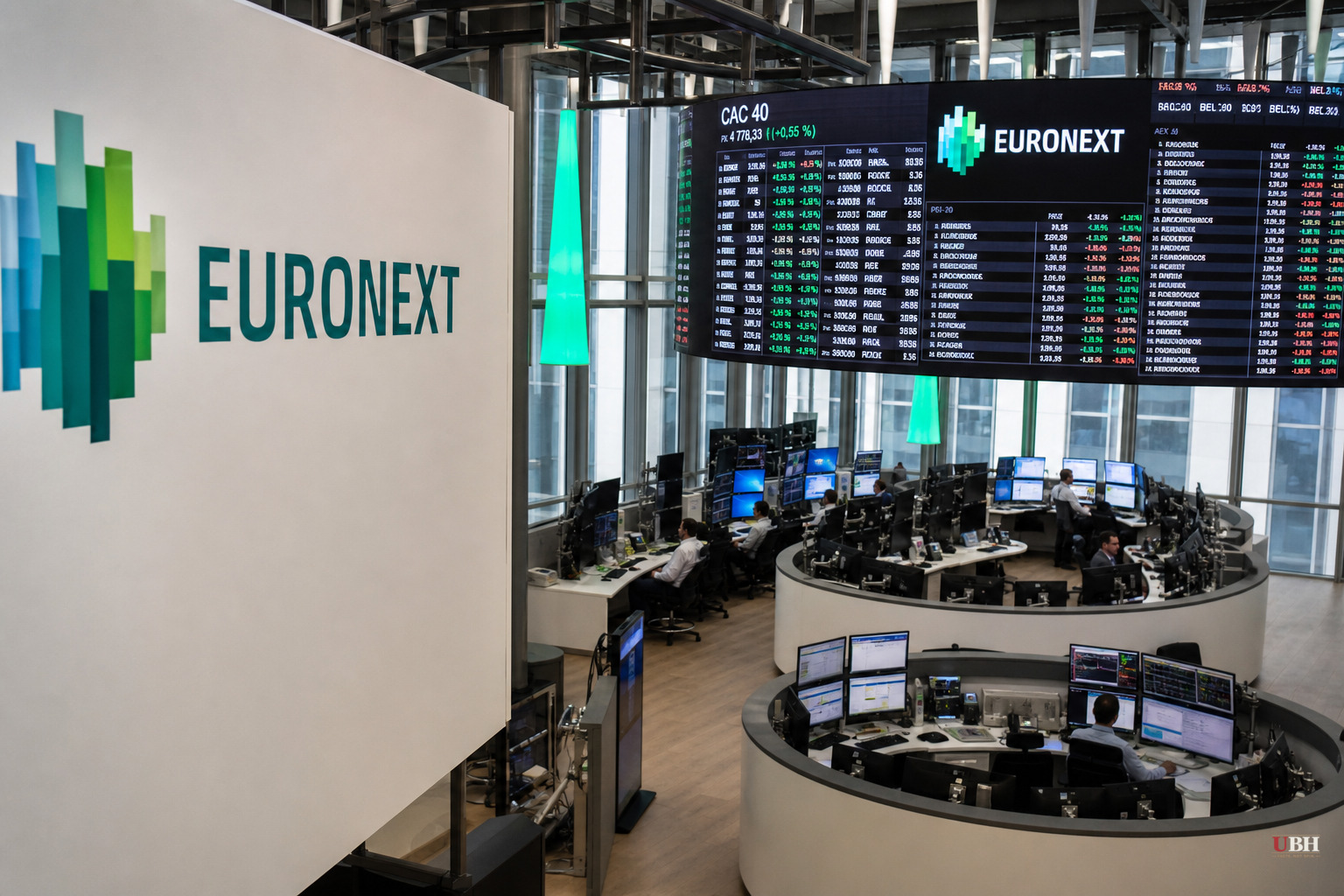
Euronext isn't just a stock exchange anymore. It's building an empire.
Nicolas Rivard, Euronext's global head of cash equity and data services, told Markets Media that turnover was below €500 million when he joined the company in 2016. By 2025, it topped €1.8 billion. That's roughly a fourfold increase in under a decade.
Euronext now sits in France's CAC 40 index. It runs exchanges in Amsterdam, Athens, Brussels, Dublin, Lisbon, Milan, Oslo, and Paris. And it isn't slowing down.
The Athens Integration
In April, Euronext rebranded the Athens Exchange Group as Euronext Athens, folding Greece's capital market into its pan-European structure. Camille Beudin, who sits on Euronext's executive committee and chairs the Euronext Athens board, called the rebrand a key step in that integration, according to Markets Media.
The technical migration is still years out. Greek markets are scheduled to move onto Optiq, Euronext's proprietary trading technology, in June 2027. Clearing and central securities depository operations won't shift until 2029.
Rivard says Euronext has run this playbook three times already, in Ireland, Norway, and Italy. He's betting Athens follows the same pattern: volume growth after integration. He pointed to strong performance already, saying equities average daily volume in Athens has doubled since the start of 2026 compared to the year before.
The first-quarter 2026 numbers back up part of that story. Euronext reported average daily cash trading volumes of €16.6 billion, up 18.8% year-over-year on a pro forma basis, with Athens cited as a strong contributor. On March 20, 2026, Euronext says it set a single-day trading record of more than €38 billion on its cash equity markets.
Those are real, reported figures from the company. What's not yet proven is whether the volume gains hold up once the harder technical migration work in 2027 and 2029 actually happens. Integrations that look smooth on paper can hit snags when clearing and settlement systems change hands.
Beyond Stocks: Power and Bonds
Euronext's ambitions don't stop at equities. Camille Beudin, who heads diversified services including commodities, power trading, foreign exchange, and investor services, told Markets Media that Euronext's power trading business has posted double-digit growth since it bought Nord Pool, the Oslo-based physical power market, in 2020. Continuous market volumes are up fivefold over four years as the business expanded from the Nordics and UK into France, Belgium, and the Netherlands.
On January 28, 2025, Euronext signed a binding agreement to buy Nasdaq's Nordic power futures business, pending regulatory approval. Beudin said the deal fits Euronext's "Innovate for Growth 2027" plan and accelerates its push into power futures.
The migration plan called for testing Euronext's new cash-settled electricity futures starting in March 2025, going live ahead of a full transfer of trading positions. Euronext and Nasdaq said they intended to complete the migration in the first half of 2026, with open positions moving from Nasdaq Clearing to Euronext Clearing pending member approval. Until that migration wrapped up, Nasdaq said it would keep running its Nordic power futures business as usual.
Euronext also moved into fixed income derivatives in 2025, launching contracts on major European government bonds, another leg in a stated strategy of not depending solely on equity trading fees.
The Integration Challenge
Skeptics might ask whether this is genuine diversification or empire-building that adds complexity without adding resilience. Rolling up smaller national exchanges, a power market, and bond derivatives into one company creates operational risk. If one piece stumbles, whether it's a late technology migration in Athens or a messy clearing handoff with Nasdaq, the whole group could take a hit.
Euronext's own numbers so far suggest the strategy is working. Turnover nearly quadrupled in a decade. Trading records keep getting set. Athens volumes reportedly doubled. But a lot of the harder integration work, especially in Greece, doesn't finish until 2029.
The next real test comes in June 2027, when Greek markets are set to migrate onto Euronext's Optiq trading platform. Whether that transition goes as smoothly as Rivard says it did in Dublin, Oslo, and Milan will tell investors and market participants a lot about whether Euronext's growth story has staying power or is running ahead of its own integration timeline.
Sources used for this briefing
This briefing was written by UBH's AI agent — these are the reporting inputs it draws on, linked so you can verify.


