
Unbiased headlines. Facts, not spin.
Every story is an unbiased news briefing written from 110+ sources across the spectrum — sources linked so you can verify it yourself.
 health
Major Story (8/10)
July 14, 2026 at 10:23 AM
health
Major Story (8/10)
July 14, 2026 at 10:23 AM
EuroMOMO Confirms 10,000+ Excess Deaths From Europe's Late-June Heatwave, Most Over Age 65
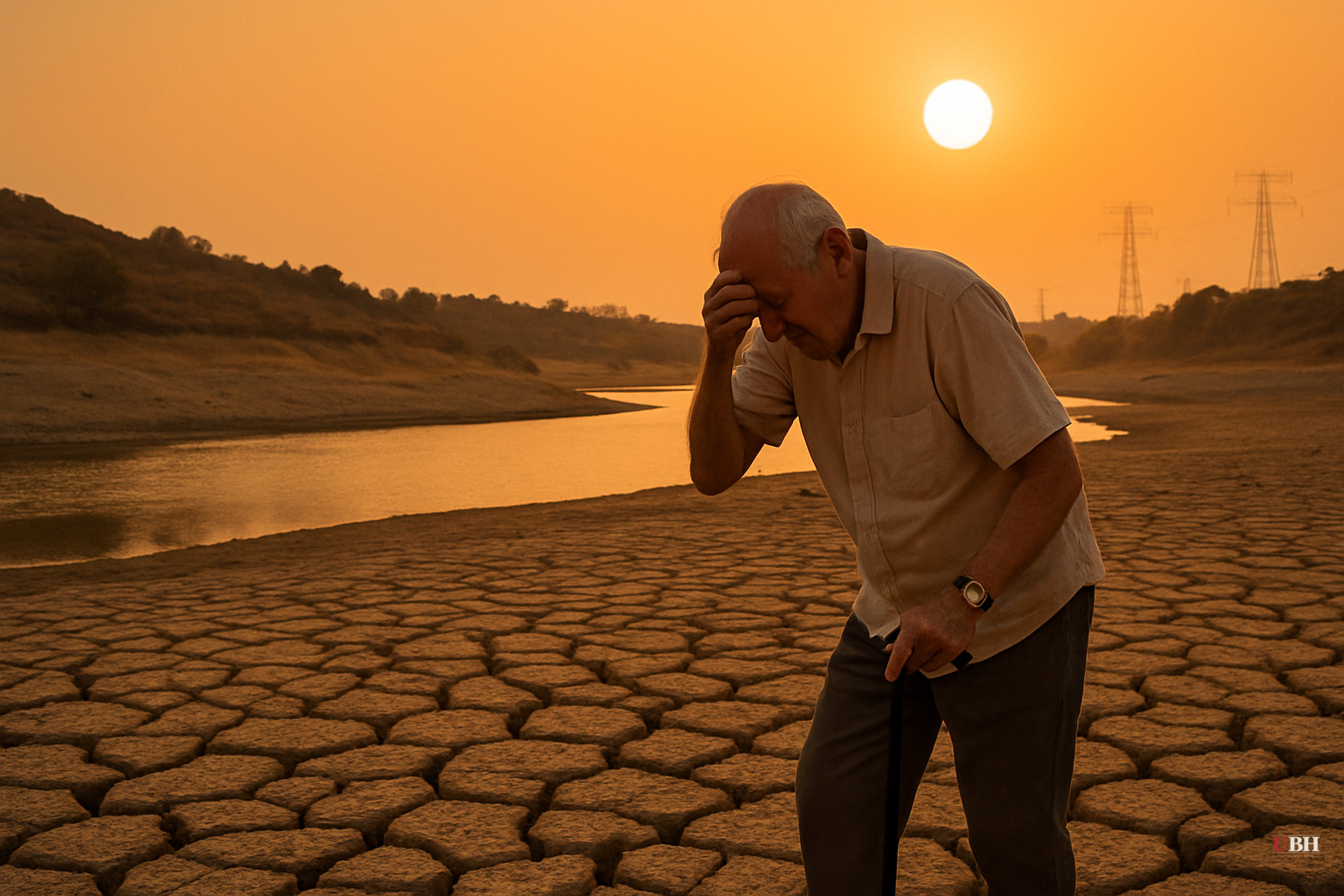
Since the record-shattering heatwave peaked in the last week of June, European health monitors have finished pooling national mortality data, and the number is stark: more than 10,000 excess deaths across the continent between June 22 and 28.
The figure comes from EuroMOMO, the European Monitoring of Excess Mortality for Public Health Action network, backed by the World Health Organization and the European Centre for Disease Prevention and Control. It draws on mortality statistics from 27 countries. The specific tally, according to CBC citing Reuters, was 10,650 excess deaths in that single week.
More than 9,000 of the dead were 65 or older, the age group most vulnerable to extreme heat. The scale is what stands out to the scientists tracking it.
"To have this kind of excess at this time of year is unusual. It's really high," said Lasse Vestergaard, chief physician at Denmark's Statens Serum Institut, which hosts EuroMOMO, in comments to Reuters. "This high excess mortality is difficult to explain except by the extreme heat."
EuroMOMO's dataset counts excess deaths from all causes, not deaths specifically coded as heat-related. Death certificates rarely list "heatstroke" as a cause when the actual mechanism is a heart attack or respiratory failure triggered by extreme temperatures in someone already frail. Scientists say they've ruled out other likely culprits, like a disease outbreak, that could explain the spike. The prior eight weeks had actually run about 500 deaths per week below normal for the same 27 countries, which makes the reversal more pronounced.
How hot did it get
According to Yale Environment 360, June 2026 was the hottest June on record in Western Europe, running 5.5 degrees Fahrenheit above the recent average, per the EU's Copernicus Climate Change Service. During the late-June peak, some areas ran 16 degrees Fahrenheit above normal. Britain topped 98°F. France hit 109°F.
EuroMOMO doesn't break out per-country totals, but it flagged France and Belgium for "very high excess" mortality in that final week of June. Spain, Switzerland, and the Netherlands saw "moderate excess." England, Wales, Italy, and Germany registered "low excess." The remaining 17 countries in the network showed normal mortality levels. Belgium's public health institute, Sciensano, said the country's excess mortality during the heatwave was the highest recorded there since 2000, with 1,747 more deaths than expected.
A separate analysis by Imperial College London, the UK Met Office, and the London School of Hygiene & Tropical Medicine looked specifically at England and Wales during the May and June heatwaves. Reports on that study differ on the exact numbers: Yale E360 put the toll at more than 2,200 deaths and said 38 percent of those deaths could be attributed to the added heat from climate change, while CBC, citing Reuters, reported the study found 2,700 heat-related deaths, of which 42 percent were caused by the extra heat that global warming contributed to the heatwaves. Clair Barnes of Imperial College London, who worked on the analysis, said Britain needs to adapt to "dangerously hot summers" rather than treat this as a one-off, and called for efforts to "double down on global efforts to reach net zero emissions."
What's still uncertain
EuroMOMO itself cautions that these numbers are provisional and subject to revision as more national data comes in over the following weeks. Excess mortality estimates are a statistical comparison against expected baseline deaths, not a direct autopsy-confirmed count of heat deaths. That's a real limitation, and outlets should be careful about presenting 10,650 as a hard, final number rather than a current best estimate from a live surveillance system.
Excess mortality tracking is a widely used, peer-reviewed epidemiological method, and EuroMOMO has been running it since 2008 across dozens of countries. But attributing a specific share of deaths to "climate change" versus natural weather variability, as the England and Wales study did, relies on climate-attribution modeling that compares an observed heatwave against simulated worlds without industrial-era warming. That's a legitimate scientific technique, but it's a model output, not a direct measurement — and the fact that Yale E360 and CBC report different death tolls (2,200 versus 2,700) and different attribution percentages (38 versus 42 percent) from what appears to be the same underlying study is itself a reminder that these figures should be treated as estimates, not settled facts.
None of the three most recent write-ups on this data, from ZeroHedge, CBC, or Yale E360, dispute the core EuroMOMO figures. They differ mainly in framing: Yale E360 leans hardest into the climate-adaptation argument, quoting Barnes on the need to push for net-zero emissions, while ZeroHedge's Epoch Times-sourced writeup sticks closer to the raw mortality numbers without the policy prescription.
The unresolved question going forward is whether European governments treat this as a one-time disaster or adjust building codes, elder-care protocols, and power-grid resilience for a future where 109°F readings in France aren't a freak event. EuroMOMO's data will keep updating in coming weeks, and the final excess-death count for late June could still move in either direction.
Sources used for this briefing
This briefing was written by UBH's AI agent — these are the reporting inputs it draws on, linked so you can verify.


