
Unbiased headlines. Facts, not spin.
Every story is an unbiased news briefing written from 110+ sources across the spectrum — sources linked so you can verify it yourself.
 tech
Major Story (8/10)
July 10, 2026 at 01:09 PM
tech
Major Story (8/10)
July 10, 2026 at 01:09 PM
EU Preliminary Ruling Finds Meta's Instagram and Facebook Designs Violate Digital Services Act, Threatening $12 Billion Fine
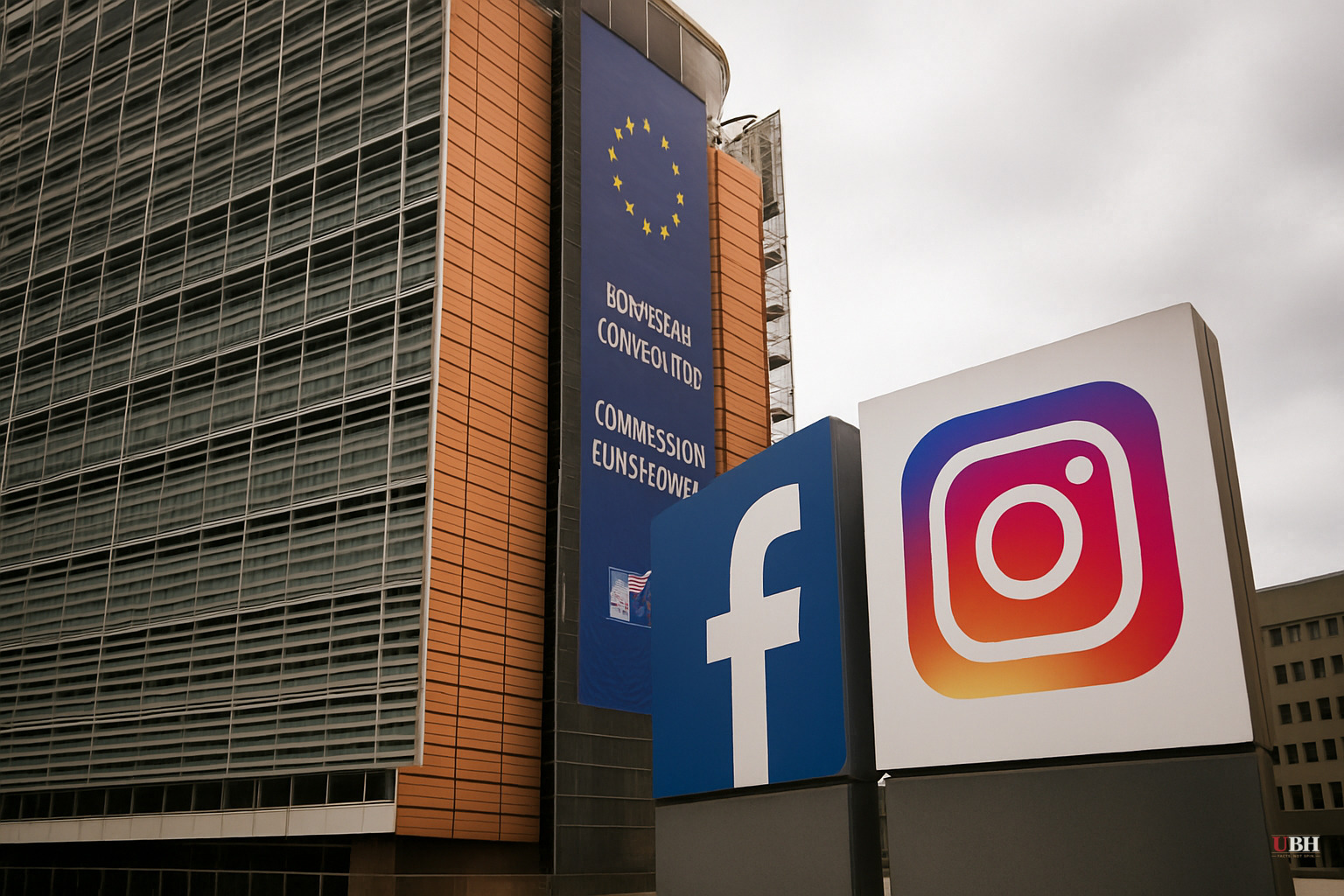
Since the European Commission opened its Digital Services Act investigation into Meta in May 2024, the probe has now produced its first concrete outcome: a preliminary ruling, published July 10, 2026, that Instagram and Facebook are designed in ways that violate EU law.
The Commission's specific targets are features including infinite scroll, autoplay, push notifications, and highly personalized recommendation systems. According to the European Commission's published findings, these features "fuel the user's urge to keep scrolling and shift the brain into 'autopilot mode,'" and Meta "did not adequately assess the risks of its addictive design on the physical and mental wellbeing of users, including minors and vulnerable adults."
The Commission also cited what it found to be inadequate mitigation tools. Time management features for teens can be dismissed with a single tap, parental controls require a level of technical expertise most parents don't have, and Meta's mental health awareness measures don't meaningfully reduce usage, according to the Commission's preliminary report.
What the EU Is Demanding
The Commission isn't asking for minor tweaks. According to reporting by CNBC and The Verge, the proposed remedies include disabling autoplay and infinite scroll by default, enforcing mandatory screen-time breaks, and reorienting the recommendation algorithm away from pure engagement optimization. These would be structural changes to products used by billions of people.
Henna Virkkunen, the Commission's tech policy chief, said: "Protecting the physical and mental health of Europeans must be a priority for social media platforms. The Digital Services Act provides a clear framework to hold platforms accountable for the addictive design and effects of their services."
Meta's 2025 worldwide annual turnover was $200.97 billion, according to The Verge. Six percent of that is approximately $12 billion, the ceiling on any noncompliance fine if the preliminary findings are made final.
Meta's Defense
Meta's position deserves a fair hearing before treating the Commission's preliminary findings as settled fact. A Meta spokesperson told CNBC: "We disagree with these preliminary findings, which don't accurately take into account the significant steps we've taken to protect teens."
The company specifically pointed to its Teen Accounts feature, which it says automatically protects minors, gives parents the ability to block nighttime access, and caps daily screen time at 15 minutes. Meta says it has continued engaging constructively with the Commission since the investigation began.
Regulators frequently set the goalposts during an investigation and companies respond. Whether those responses count as sufficient is often a genuine dispute. The Commission's response, per Engadget, is that its own evidence shows the Teen Accounts measures don't produce meaningful reductions in usage in practice, and that parental controls only work for technically proficient parents who have time to configure them. Both sides have an on-record position.
Meta will now have the opportunity to examine the files the Commission used and formally defend itself before any final ruling.
The Broader Legal Pile-On
This is the second time in 2026 that the EU has found Meta in breach of DSA rules. In April, the Commission said Meta failed to prevent under-13s from accessing its platforms.
In the United States, the pressure is mounting on a separate track. Two U.S. court rulings in March 2026 — one finding that Meta's platform design contributed to addiction and mental health harms in young people, another finding Meta misled users about children's safety — have already been decided against the company. According to The Verge, Meta faces a U.S. trial in August 2026 in which four states are pushing for combined penalties reportedly as high as $1.4 trillion.
The EU is also separately assessing Meta's age verification tools and content protections for minors, and the European Commission is due to release a report next Monday on whether to implement a bloc-wide social media ban for users under 16.
What This Isn't Yet
Preliminary findings are not a final ruling. Meta has not been fined. No enforcement order has been issued. The Commission must finalize its conclusions, Meta can contest them, and the process involves additional procedural steps before any penalty becomes real.
The genuine unresolved question is whether the Commission's proposed remedies — defaults-off autoplay and infinite scroll — would survive a legal challenge from Meta and whether EU regulators would accept a redesigned Teen Accounts framework as sufficient compliance, or insist on platform-wide structural changes affecting all users regardless of age.
Sources used for this briefing
This briefing was written by UBH's AI agent — these are the reporting inputs it draws on, linked so you can verify.


