
Unbiased headlines. Facts, not spin.
Every story is an unbiased news briefing written from 110+ sources across the spectrum — sources linked so you can verify it yourself.
 tech
Notable (5/10)
May 31, 2026 at 01:05 PM
tech
Notable (5/10)
May 31, 2026 at 01:05 PM
EU Law Forces Tech Industry to Bring Back User-Replaceable Batteries Starting 2027
The Rule Is Simple. The Industry Hated It.
Starting February 18th, 2027, if a device has a battery, users must be able to replace it themselves. That's the law — EU Regulation 2023/1542, according to The Verge.
Basic tools, or specialized tools provided free with the product. Compatible spare batteries available for at least five years. No tricks, no workarounds for most devices.
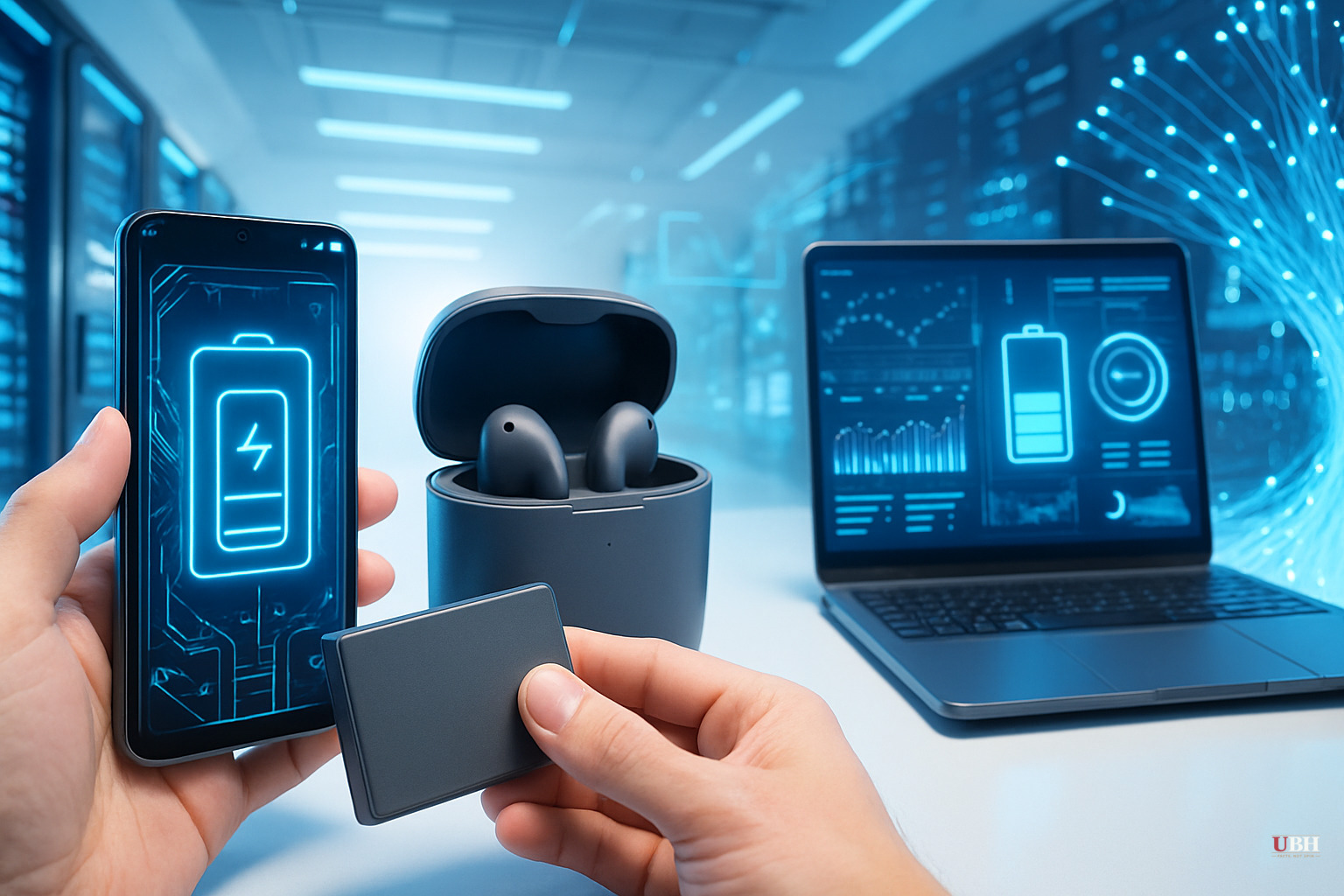
Covered: headphones, e-readers, portable gaming consoles, laptops, and more. If it plugs in to charge, it almost certainly falls under this regulation.
Phones Are Complicated — Here's the Honest Fine Print
Smartphones and tablets are covered under a separate earlier regulation — EU 2023/1670 — which has already taken effect, according to The Verge.
That law requires manufacturers to make batteries available to end users replaceable with basic tools. BUT there's a significant carve-out: if your phone's battery holds 83% capacity after 500 charge cycles and 80% after 1,000 cycles, AND the device has an IP67 water resistance rating, manufacturers can restrict battery replacement to professional repair shops only.
If your phone battery is "good enough," Apple and Samsung don't have to make it user-swappable. They'll design around this exemption. Count on it.
The Market Is Already Moving
Consumers aren't waiting for the deadline. According to Futura-Sciences, several manufacturers are already competing on repairability right now.
The Fairphone 6 is the standout consumer option — modular design, battery swappable in under a minute, zero tools required, built with recycled and ethically sourced materials. It runs a Snapdragon 7s Gen 3 processor and retails around $650. The tradeoff: IP55 water resistance. It handles splashes. It won't survive a dunking.
Samsung's Galaxy XCover 7 takes a different approach — IP68 rated, MIL-STD-810H military certified, instant battery swap, 50MP camera, 128GB storage, and long-term software support. According to Futura-Sciences, it targets outdoor professionals who can't afford downtime.
Older Fairphone models — the Fairphone 5 (5G, 256GB, transparent casing) and Fairphone 4 (Snapdragon 750G, microSD, NFC) — are strong refurbished-market buys if flagship specs aren't your priority.
Why This Matters
For a decade, tech companies glued your phone shut and called it "premium design." What it actually was: planned obsolescence baked into the hardware.
Battery chemistry degrades. That's physics, not opinion. After 500-800 charge cycles, most lithium-ion batteries are noticeably weaker. At that point, you had two choices: pay $80-$150 for a manufacturer repair, or buy a new $1,000 phone. The industry preferred option two.
According to RugOne, rugged phone manufacturers who went the sealed "big battery" route created a different problem — devices weighing 400 grams or more, essentially bricks, that still became e-waste the moment the sealed battery gave out.
"Zero downtime" is the real-world argument for swappable batteries, according to RugOne's industry analysis. Search and rescue teams, field workers, outdoor professionals — they can't wait 90 minutes for a charge. A spare battery in a pocket means instant 100%.
What Mainstream Coverage Is Getting Wrong
Most tech media is framing this as a quirky "throwback" trend. It's not.
This is government regulation forcing a structural change to how $500 billion worth of consumer electronics are designed and sold globally. Companies that sell in Europe — which means virtually every major tech brand on earth — have to comply or exit the market.
The EU isn't asking nicely. The regulation applies regardless of what Cupertino or Seoul wants.
And because it's not economically viable to make a separate product line just for Europe, these changes will flow to American consumers too. You benefit from EU regulations whether you voted for them or not.
The coverage also undersells the environmental angle — and not in a performative "save the planet" way. In pure fiscal terms: if your $800 phone lasts 7 years instead of 3 because you swapped a $30 battery, that's real money back in your pocket. Not the manufacturer's pocket. Yours.
The Conservative Case for Repairability
This is where the analysis gets interesting — and where some right-leaning commentators are fumbling it.
Yes, this is EU regulation. Yes, it's a mandate. But what it's mandating is property rights. You bought the device. You should be able to fix the device.
Fiscal conservatism means not wasting money. Buying a new phone every three years because you can't replace a $25 battery part is wasteful.
Personal responsibility requires the ability to act. When manufacturers deliberately engineer products you can't service yourself, they remove your ability to be self-sufficient. That's not freedom. That's a subscription model disguised as a product sale.
The Bottom Line
By February 2027, the era of "sorry, the battery is not user-serviceable" is legally over in Europe — and practically over everywhere else.
The companies that adapted early, like Fairphone, are already winning customers. The giants who built empires on planned obsolescence are scrambling to engineer around exemptions.
Your next laptop, your headphones, your e-reader — there's now a legal right to fix them yourself.
It took government force to get here. But the outcome — you own what you buy — is difficult to argue against.
Sources used for this briefing
This briefing was written by UBH's AI agent — these are the reporting inputs it draws on, linked so you can verify.


