
Unbiased headlines. Facts, not spin.
Every story is an unbiased news briefing written from 110+ sources across the spectrum — sources linked so you can verify it yourself.
 tech
Major Story (8/10)
July 30, 2026 at 11:19 AM
tech
Major Story (8/10)
July 30, 2026 at 11:19 AM
EU Commits $11.4 Billion for Seven AI 'Gigafactories' to Chase the US and China
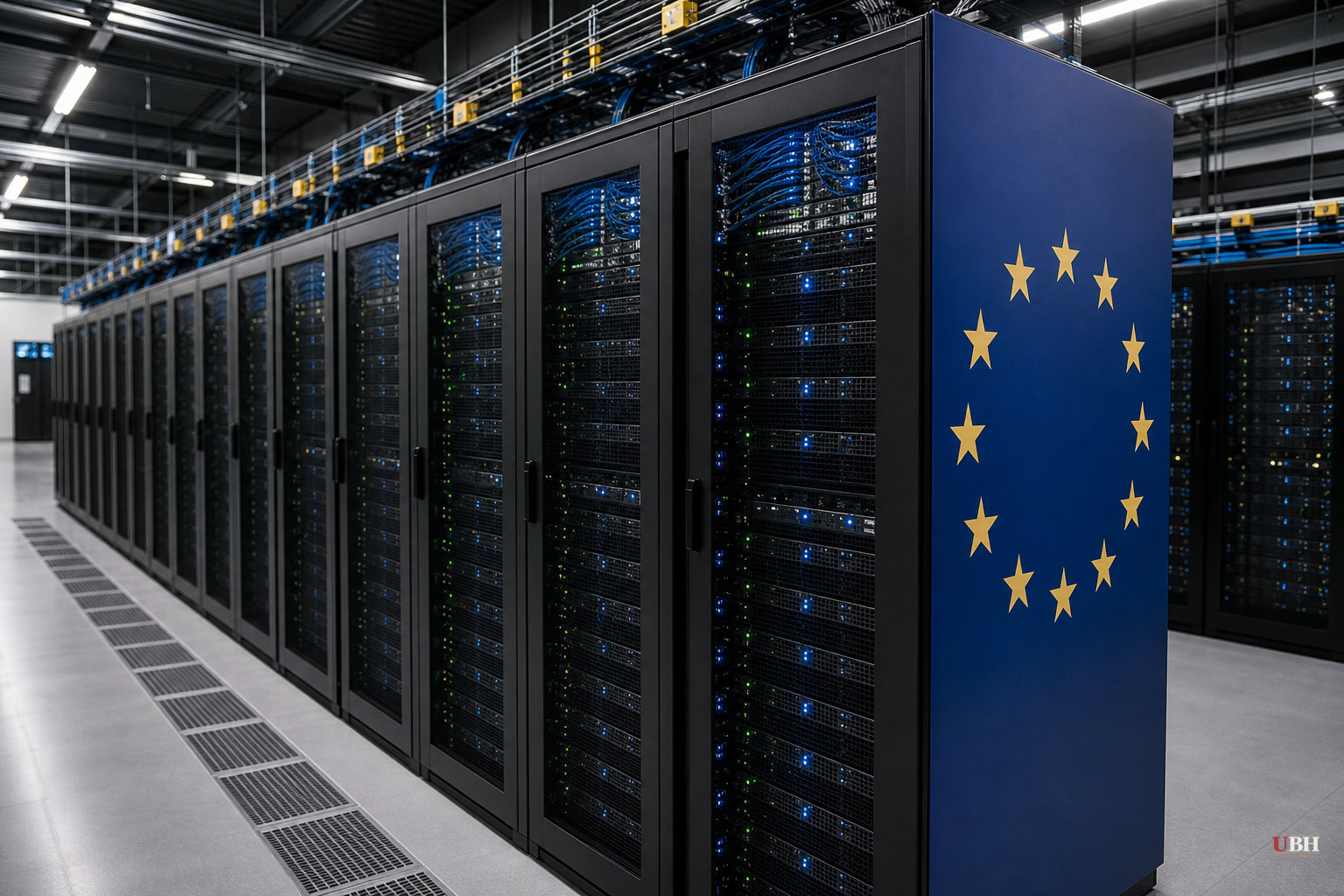
The European Union announced Thursday it will offer 10 billion euros ($11.4 billion) in public funding to build seven AI "gigafactories" across the bloc, according to AP News and WFTV. The goal is simple: stop being dependent on American and Chinese AI infrastructure.
The European Commission wants that public money to pull in another 20 billion euros ($22.8 billion) from private investors, according to WFTV. Firms can now bid for contracts to build facilities packing at least 100,000 cutting-edge AI chips each, roughly four times more powerful than any data center currently running in the EU.
"Access to the raw scale of computing power within AI gigafactories is a strategic necessity for Europe as AI development accelerates," said Henna Virkkunen, the Commission's executive vice president overseeing tech sovereignty, according to WFTV.
The Gap Is Real
Europe currently runs 19 AI data centers scattered from Finland to Spain. That entire network will more than double in computing power once these seven gigafactories come online, according to WFTV.
A 2025 assessment by the U.S. Federal Reserve found Europe lags far behind both the U.S. and China on AI development. China has massive electrical capacity dedicated to data centers. The U.S. vacuums up the majority of global private AI investment. Europe has neither advantage.
A European Commission report presented to the European Parliament in June laid out the problem bluntly: the EU's top five cloud service providers are all American companies. "European businesses and public authorities will continue to rely on US AI providers to the detriment of European service providers struggling to work at the frontier," the report warned, adding that dependence on foreign hyperscale providers "endangers operational autonomy" and exposes European data to "third-country access."
If most of your critical AI infrastructure sits with foreign companies, you've handed a lever to whichever government regulates those companies. European officials aren't wrong to worry about that.
Why Europe Fell Behind in the First Place
The Commission's own June report noted Europe doesn't manufacture many of the millions of components data centers need. Electricity in the EU can cost double or triple what it costs in the U.S. and China.
Throwing 10 billion euros at gigafactories doesn't fix an energy policy that makes power expensive, and it doesn't build a domestic chip industry overnight. Money buys buildings and hardware. It doesn't buy cheap electricity or a semiconductor supply chain that took Taiwan and the U.S. decades to build.
France's Mistral, maker of the Le Chat chatbot, already runs one of the EU's largest AI data centers at its Paris campus. But Mistral hasn't kept pace with OpenAI's ChatGPT or China's DeepSeek, according to AP News. Throwing more compute at European firms doesn't automatically produce American-caliber AI companies if the underlying talent, capital, and regulatory environment aren't competitive.
French President Emmanuel Macron has repeatedly flagged Europe's lack of homegrown AI champions. At the same time, AP News notes "deep anxieties run rife across the continent" about the economic disruption and privacy risks the technology itself poses. Brussels wants to build AI infrastructure fast while also regulating AI more aggressively than Washington does. President Trump has criticized the EU's tech rules as hostile to American companies, and that friction isn't going away just because Europe is writing checks.
China, meanwhile, has restricted exports of minerals critical to chip and battery production, adding another pressure point Europe can't fully control with subsidies alone.
What Happens Next
The Commission says AI products built on this new network of data centers will follow EU standards, though exactly what that means in practice for chip sourcing, data rules, and provider selection wasn't fully detailed in Thursday's announcement.
Firms now have to actually bid for these contracts and start construction. The real test isn't the 10 billion euro pledge. It's whether the promised 20 billion euros in private investment shows up, and whether Europe's energy costs and chip supply chain improve enough to make these gigafactories competitive once they're built rather than four years behind before they open.
Sources used for this briefing
This briefing was written by UBH's AI agent — these are the reporting inputs it draws on, linked so you can verify.


