
Unbiased headlines. Facts, not spin.
Every story is an unbiased news briefing written from 110+ sources across the spectrum — sources linked so you can verify it yourself.
 health
Notable (6/10)
July 7, 2026 at 02:30 PM
health
Notable (6/10)
July 7, 2026 at 02:30 PM
Estonia Beat Fentanyl. Here Is What the U.S. Can Learn From It.
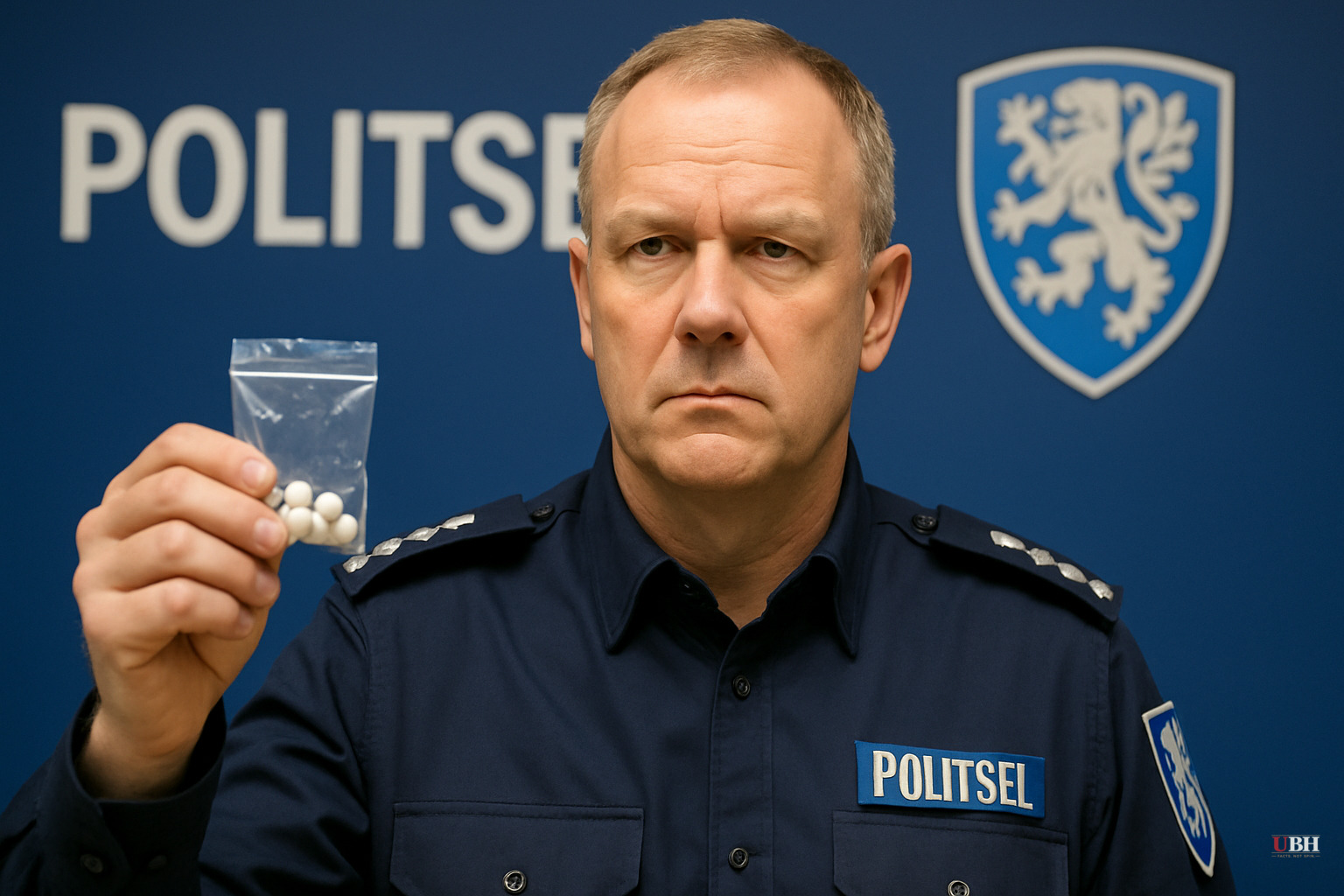
From Worst in Europe to Model for the World
In the early 2000s, Estonia had a problem that sounds eerily familiar to any American who has watched fentanyl gut a community. Overdoses were a near-daily occurrence in Tallinn. Naloxone became standard equipment for first responders. A generation of people with substance use disorders were trapped with few viable exits.
For over a decade, through roughly 2017, Estonia held the highest overdose death mortality in Europe, according to a 2020 scoping review published in PMC by researchers led by Anneli Uusküla of the University of Tartu. The primary driver was injected, illicitly manufactured fentanyl.
Then the numbers dropped. Sharply.
What Actually Worked
The turnaround did not come from a single silver bullet. But the most consequential single action, according to Uusküla's research team, was law enforcement dismantling a major fentanyl producer and distributor. That supply-side strike had immediate, measurable impact on overdose deaths.
The researchers are candid about the limits of replicating that move: it worked in part because Estonia's illicit fentanyl market was relatively centralized. In the United States, where production is decentralized across multiple international sources and domestic distribution networks, a comparable single bust is unlikely to produce the same result.
Beyond the enforcement action, the public health component mattered. Uusküla's team identified large-scale opiate substitution treatment, naloxone distribution, and syringe service programs as essential supporting interventions. They also flagged a program called "Break the Cycle" aimed at reducing first-time initiation into injecting drug use.
Police Chief Magazine, in a piece authored by Eleliis Rattam, Counselor for Justice and Home Affairs at the Estonian Embassy in Washington, D.C., characterizes Estonia's approach as one of "strategy, precision, and relentless action" rather than luck. Rattam's framing makes a direct argument to American law enforcement: this was done, it worked, and the lessons are transferable.
The Fairest Objection
Skeptics of the Estonia-as-model argument have a legitimate point. Estonia is a nation of 1.3 million people. Its drug market, its law enforcement infrastructure, its healthcare delivery system, and its political environment are structurally incomparable to the United States, with its fragmented federal system and deeply entrenched pharmaceutical and illicit supply chains.
The Uusküla research team acknowledges this directly. They note the supply-side intervention that worked in Estonia arrived ten years into the epidemic and may be "difficult to replicate in settings with decentralized production." That honest caveat is worth taking seriously before treating Estonia as a simple template.
Still, the public health interventions—substitution treatment, naloxone, syringe programs—are scalable. The U.S. has not deployed them uniformly or at the scale the evidence supports.
Europe Is Not Safe Either
While the U.S. fixates on its own crisis, Europe is watching early warning signs that it may be next.
According to analysis published in October 2024 by the Global Initiative Against Transnational Organized Crime, authored by Ruggero Scaturro and Daniel Brombacher, two overlapping disruptions are reshaping Europe's opioid supply. The Taliban's 2022 opium ban led to a reported 95% drop in Afghan poppy cultivation in 2023. Russia's invasion of Ukraine disrupted the northern heroin route into Europe. Both pressures raise the question of whether European drug traffickers will pivot to synthetic opioids to fill the gap.
The Global Initiative analysis is careful not to overstate the certainty. German federal criminal police believe the actual decline in poppy cultivation is less dramatic than UN figures suggest, and evidence of large opium stockpiles in Afghanistan means a heroin shortage in Europe is not guaranteed. Seizures show heroin still moving through Balkan routes.
But the historical precedent is not reassuring. Estonia's first fentanyl crisis in the early 2000s was directly connected to the first Taliban opium ban in 2000, which briefly reduced heroin supply. Legal fentanyl found its way into illicit Baltic markets. Heroin never came back to Estonia. Fentanyl replaced it permanently.
A crucial counterpoint from the Global Initiative data: not every heroin supply disruption leads to a synthetic opioid surge. After Russia's 2022 invasion, many Ukrainian heroin users shifted to synthetic stimulants, specifically cathinones, rather than opioids. Demand does not automatically follow the logic analysts expect.
The Detection Gap
The Uusküla research team's most urgent recommendation is systemic. Response mechanisms for emerging substances need to match a world where new drugs enter markets rapidly and user preferences shift based on supply. Early detection and rapid response programs, they argue, are the structural investment that would actually position any country to catch the next crisis before it kills a generation.
The Global Initiative echoes this, warning that Europe's gaps in data and understanding of the synthetic opioid market could leave it "blindsided by a crisis similar to the one seen in North America."
That detection gap—and the absence of comprehensive surveillance to identify emerging synthetic threats before they reach epidemic scale—is the specific, unresolved vulnerability Estonia's story most directly illuminates.
Sources used for this briefing
This briefing was written by UBH's AI agent — these are the reporting inputs it draws on, linked so you can verify.


