
Unbiased headlines. Facts, not spin.
Unbiased Headlines is an independently owned news organization. We bring you the facts, not opinions, written fresh from 110+ named sources. Sources linked so you can verify it yourself.
 economy
Notable (6/10)
EPFO Board Cuts Minimum PF Balance to 10%, Approves Systematic Withdrawal Plan for Retirees
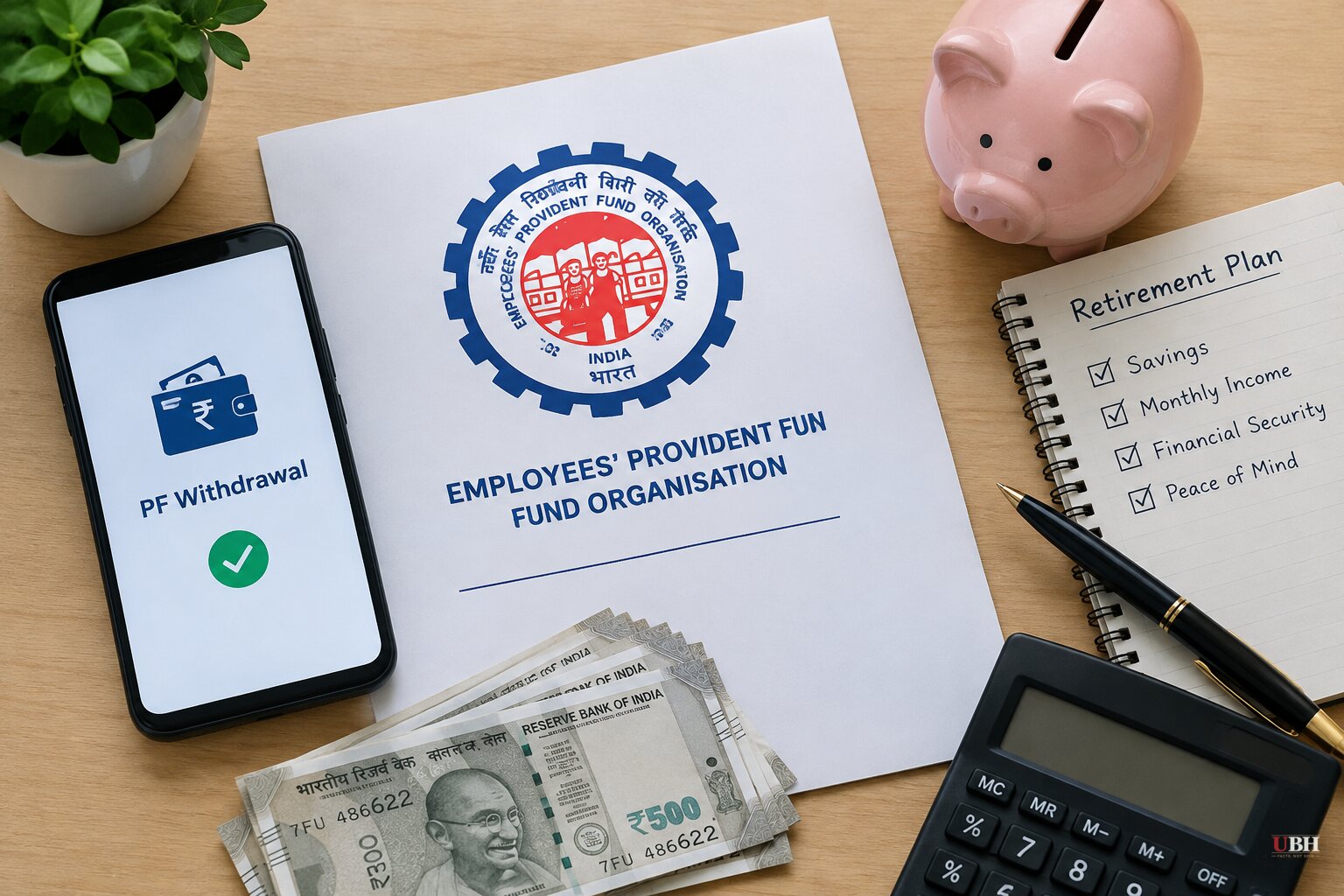
The Employees' Provident Fund Organisation (EPFO) loosened the rules on how workers can reach their own retirement savings on Thursday, Nov. 19. Its Central Board of Trustees (CBT) made the decisions at its 240th meeting, chaired by Union Labour and Employment Minister Mansukh Mandaviya.
There are three headline changes.
Minimum balance cut from 25% to 10%
Members up to 55 years old now need to keep only 10% of their EPF corpus in the account. The requirement was 25%. The partial-withdrawal ceiling therefore rises from 75% to 90%.
The 25% floor had been in place for about a year. The board has now rolled most of it back.
The 90% figure is not a blank check. Withdrawals remain tied to purpose and eligibility. Under the board's decision, the 90% limit applies to three categories: essential needs (illness, education, marriage), housing needs, and special circumstances. The right to take 100% of the corpus at retirement is unchanged.
On a Rs 10 lakh balance, the new rule allows up to Rs 9 lakh out, provided the member meets the conditions.
The EPFO said it approved the minimum-balance and waiting-period provisions "with a view to safeguarding the long-term social security interests of EPF members."
Job-loss wait drops to two months
The waiting period for withdrawals during unemployment falls from 12 months to two. Under the old framework, an unemployed member could pull up to 75% right away and had to wait a year for the remaining 25%.
The waiting period under the Employee Pension Scheme (EPS) did not change. It stays at 36 months.
A paycheck-style option for retirees
Until now, retiring members had to withdraw their entire corpus within three years of retirement. The new systematic withdrawal plan (SWP) lets them take money in instalments instead, while the remainder keeps earning interest at the prevailing EPF rate.
Payouts can be monthly, quarterly, half-yearly or annual. Instalments can run up to 20 years, or "such period as may be notified" by the central government.
The framework has three options:
- Draw the eligible corpus in instalments.
- Take part as a lump sum and draw the rest periodically.
- Withdraw only the interest and leave the principal untouched.
Participation is voluntary, and members can quit the plan at any time and take the remaining balance. If a member dies during the payout period, a nominee or dependant can withdraw the balance or keep receiving the payments.
The EPFO estimates about 632,000 members above 55, with balances above Rs 5 lakh, stand to benefit. The first rollout covers statutory EPF members only. Exempted PF trusts are outside its scope, officials said.
People aware of the process say the SWP should take effect in roughly two months.
The case for it
Vineet Nahata, managing director of Power Gilt Treasuries and a CBT member, argued the plan gives members a fully secure fixed-income option with attractive interest, tax-exempt up to Rs 2.5 lakh annually. He called it superior to bank fixed deposits and mutual funds, which he said carry credit risk and market fluctuations.
The EPFO's own pitch is that retirees can get the fund's interest rate without moving savings into riskier assets elsewhere.
The tradeoff is simple arithmetic. The more a member pulls out early, the less is there at 60. The 90% ceiling widens access during a medical bill or a layoff. It also shrinks the cushion the fund was built to provide.
Other board decisions
The CBT also approved a UAN-linked mechanism for direct voluntary contributions and third-party micro-contributions, such as customer tips. These would work independently of employer payroll. The aim is to let unorganised-sector workers build PF savings with no employer in the picture.
The SWP framework envisages extending direct voluntary contributions later to gig and platform workers, construction workers, domestic workers, street vendors and home-based workers.
On investments, the board gave in-principle approval to put up to 3% of fresh accretion into eligible Alternative Investment Funds. The aim is to diversify the portfolio and raise returns for the fund's roughly 30 crore members.
The board also approved amendments to the EDLI Scheme, 2026, to clear pending legacy exemption cases. Eligible establishments get a six-month window to renew expired exemptions. It reviewed proposals to surrender exemption for 27 establishments and cancel exemption for four.
What the board left alone
The EPFO announced no increase in EPS pensions. It also made no decision on whether to approve higher-pension cases for all applicants.
The next step is the notification of the SWP rules, including the payout period the government will set. That is where the plan's actual terms will be fixed.
Sources used for this briefing
7 links from 6 independent newsrooms (syndicated copies of the same report count once)
These are the sources it draws on, linked so you can verify.


