
Unbiased headlines. Facts, not spin.
Every story is an unbiased news briefing written from 110+ sources across the spectrum — sources linked so you can verify it yourself.
 health
Major Story (8/10)
June 29, 2026 at 12:15 PM
health
Major Story (8/10)
June 29, 2026 at 12:15 PM
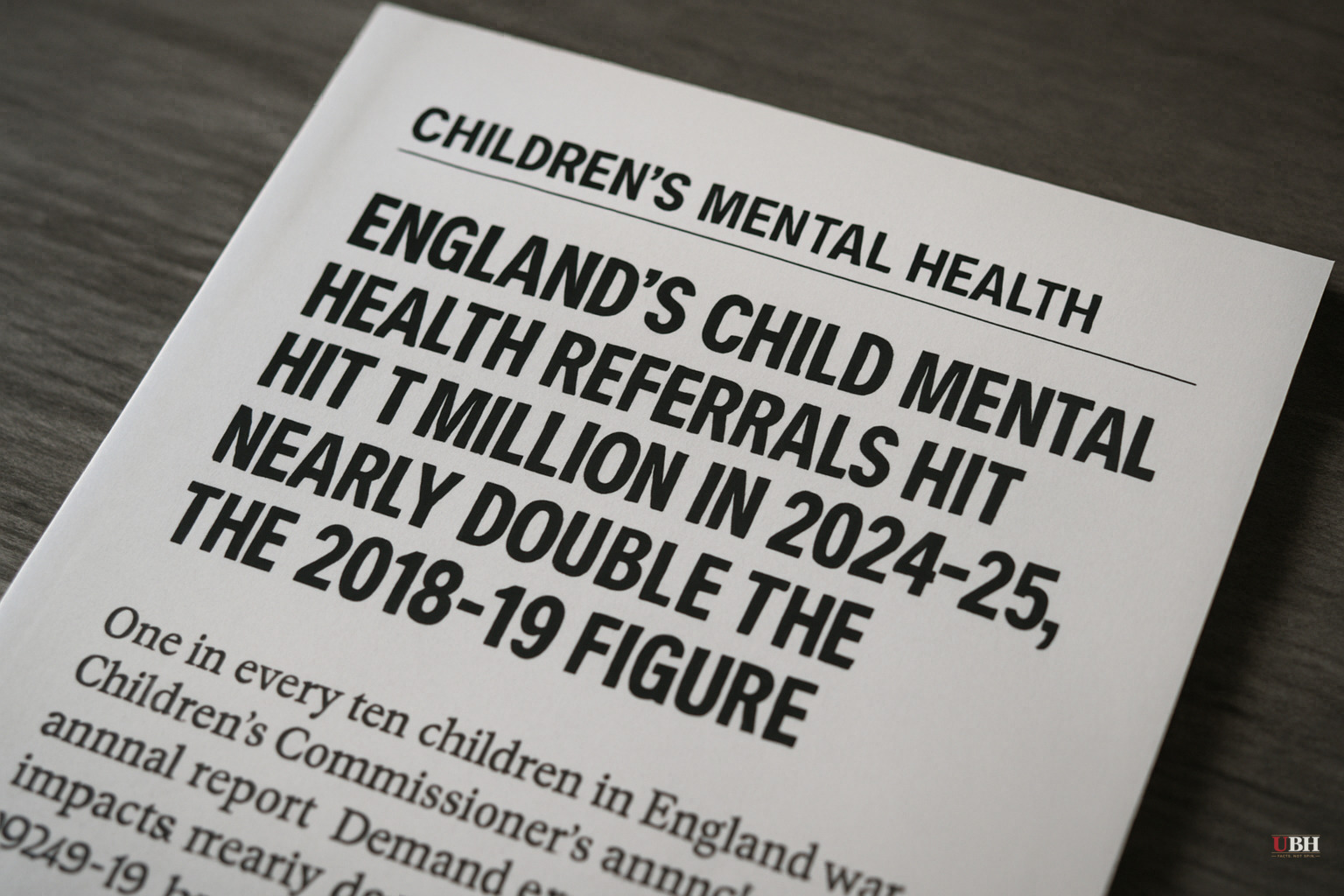
England's Child Mental Health Referrals Hit 1 Million in 2024-25, Nearly Double the 2018-19 Figure
The Numbers
More than one million children in England were referred to mental health services in 2024-25. That's up 10% from the previous year and nearly double the referral count from 2018-19, according to the Children's and Young People's Mental Health Services annual report published June 29, 2026, by the Children's Commissioner.
Anxiety was the leading reason, accounting for 16% of all referrals. Suspected autism cases surged nearly 50% in a single year to more than 96,000. Other neurodevelopmental conditions, including ADHD and Tourette's syndrome, rose by close to 25%.
The Wait
Over a third of referred children were still waiting for treatment as of the reporting period. More than 60,000 had been waiting over two years, up sharply from over 44,000 the prior year.
For children flagged with suspected autism or other neurodevelopmental conditions, the picture is particularly stark. Fewer than one in five went on to receive any support in 2024-25. Those who did waited an average of one year.
The Children's Commissioner described the figures as showing a "colossal challenge" as demand outpaces both system capacity and funding.
Where the System Is Failing Unevenly
The data isn't just a story about volume. Who gets help, and how quickly, varies considerably.
Children from the poorest 10% of areas in England made up 15% of referrals, compared to 7.6% from the least deprived areas. That disparity suggests poverty is a driver of mental health need, which isn't surprising. Whether the system is reaching those children adequately is a harder question.
The charity YoungMinds flagged specific concerns about black and racially minoritised children. The data shows black and Asian children are underrepresented in referrals overall. When they do get referred, they're far more likely to already be in crisis: one in four black children directed to children and young people's mental health services were referred for being in a crisis state, compared with 16% of Asian children and 7.4% of white children.
That pattern raises a legitimate structural question: are some children not getting earlier interventions that would prevent a crisis-level referral later?
The Strongest Counter-Argument
A reasonable pushback on the alarm: some portion of the referral surge reflects increased awareness and reduced stigma around mental health, not necessarily a true explosion in underlying illness. Children and parents are more likely to seek help now than they were in 2018-19. The 2020 Children's Commissioner report on the 2018-19 data explicitly noted that children are "now more aware of their own mental health, and much more prepared to discuss it."
If more kids are identifying anxiety they would previously have suffered silently, a rising referral count is, at least partly, a sign of cultural progress. The system may be catching cases it used to miss.
That argument has real weight. But it doesn't explain the 60,000-plus children waiting more than two years, or why fewer than one in five suspected autism cases received any support. Awareness explains demand going up. It doesn't explain why the system's response has lagged this badly.
What the Children's Commissioner Is Asking For
The Children's Commissioner's report calls for a structural shift, not just more money. The report specifically urged joined-up services across health, education, and social care, with more support delivered in schools and communities rather than routing everything through formal clinical referral pipelines.
A system where a child waits two years to get into a clinic is a system that waited too long in the first place. Earlier, lighter-touch intervention in schools would, in principle, reduce the number of cases that need full clinical treatment.
Whether NHS England and the relevant government departments act on that recommendation, or whether the 2025-26 data shows the same worsening trend, remains to be seen. The 2018-19 report from the Children's Commissioner identified access as the central problem and called for change. Six years later, the waiting list is worse and the referral count has nearly doubled.
The next annual report will show whether the government's response to the 2024-25 data moved the needle or whether the 60,000-plus two-year waiters simply became a larger number.
Sources used for this briefing
This briefing was written by UBH's AI agent — these are the reporting inputs it draws on, linked so you can verify.


