
Unbiased headlines. Facts, not spin.
Every story is an unbiased news briefing written from 110+ sources across the spectrum — sources linked so you can verify it yourself.
 finance
Notable (6/10)
July 17, 2026 at 02:28 AM
finance
Notable (6/10)
July 17, 2026 at 02:28 AM
Energy IPOs Hit $12.6 Billion in First Half of 2026, Highest Since the Dotcom Bubble
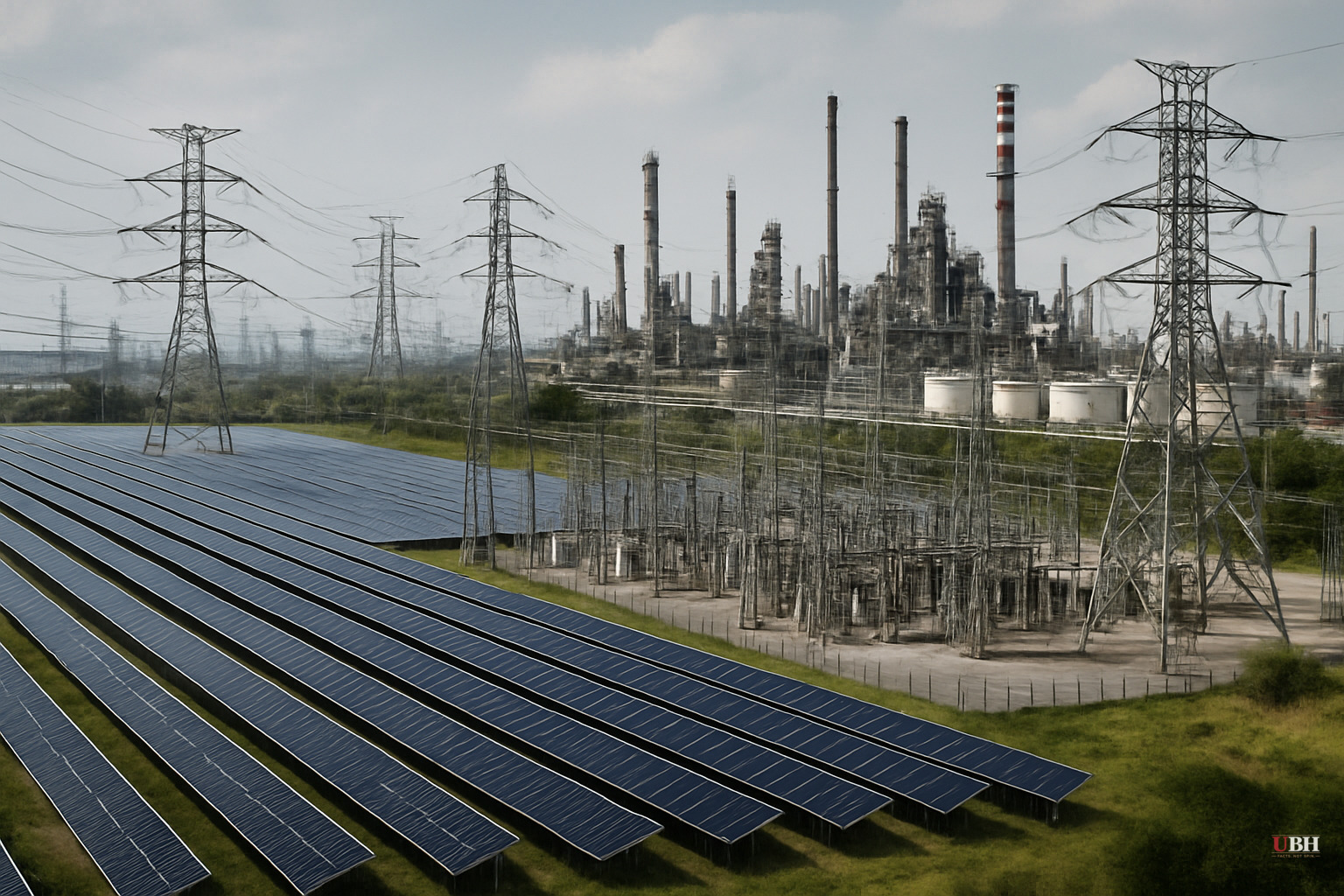
Energy companies raised $12.6 billion through IPOs in the first half of 2026, according to data firm Dealogic. That is the highest first-half total on record and the strongest half-year haul since the dotcom bubble peaked in late 1999.
It also blows past 2025's full-year number. Last year, energy IPOs raised just $4.3 billion for the entire twelve months, according to the same Dealogic data cited by Ars Technica. This year did it in six.
The money is chasing a bottleneck, not a hype cycle. AI data centers need enormous amounts of electricity, and Wall Street has figured out that chips are useless without power to run them.
Why investors are rotating out of chips and into wires and turbines
RBC clean energy analyst Chris Dendrinos put it simply: investors started with Nvidia, then realized every chip needs energy behind it. That realization has become, in his words, "a huge tailwind" behind energy stocks.
A single AI-focused data center burns through roughly 876,000 megawatt hours a year, according to figures cited in the Ars Technica report. That's comparable to the entire household electricity usage of a city the size of Glasgow or Salt Lake City. Multiply that by the hundreds of data centers under construction or planned across the country, and the math gets ugly fast for an aging U.S. grid.
Consultancy ICF projects U.S. electricity demand will jump 39 percent between 2026 and 2035, driven largely by data centers. That is not a modest uptick. The grid was built for a slower-growing country and is suddenly asked to do a third more work in less than a decade.
Manish Kabra, head of U.S. equity strategy at Société Générale, says power-capacity expansion, U.S. reshoring, and AI infrastructure remain the firm's "central strategic allocations." Translation: this isn't a side bet anymore. It's where the smart money says the next decade of returns live.
The deals actually happening
Forgent Power Solutions, which makes electrical distribution equipment for data centers, raised $1.7 billion in its February IPO, riding what the company and analysts describe as long wait times for transformers and switchgear.
Innio, a German gas engine manufacturer, completed a nearly $2.8 billion IPO in June. Its pitch to investors: data centers are increasingly skipping the overloaded public grid entirely and generating their own power on-site.
ETF provider GMO this week launched a "power infrastructure ETF" aimed at capturing returns from power generation, grid, and electrification stocks. Standard Nuclear is expected to go public in the U.S. later this month.
Renaissance Capital's Bill Smith says 2026 will be remembered for two things in IPO history: SpaceX, and as the year that financed the AI revolution's physical infrastructure.
The case for skepticism
None of this comes with a guarantee. IPO booms tied to a single dominant narrative have a track record of overshooting. The dotcom era this year's totals are being compared to ended in a crash that wiped out trillions in market value once growth assumptions failed to materialize.
A fair skeptic would ask whether every company riding this wave, from gas engine makers to nuclear startups, actually has the technology, permits, and grid interconnection queue position to deliver what investors are paying for today. Interconnection delays for new power projects have run years in some U.S. regions, a real bottleneck that no IPO prospectus can wish away. If AI capital expenditure growth slows even modestly, some of these newly public energy names could see the same air come out that hit unprofitable tech listings in past cycles.
That said, the demand side of this story is not hypothetical. Data centers are being built now, contracts for power are being signed now, and utilities are already flagging capacity constraints in Virginia, Texas, and other data-center hubs. The bottleneck is real. The question is which companies actually solve it versus which ones just rode the headline.
What comes next
Standard Nuclear's IPO later this month will be an early test of whether investor appetite extends to earlier-stage, higher-risk nuclear technology or stays concentrated in proven infrastructure plays like transformers and gas turbines. Whether the $12.6 billion first-half pace holds through the back half of 2026, or whether it was front-loaded by a handful of blockbuster deals like Innio and Forgent, will tell investors whether this is a durable new sector or another AI-adjacent bubble waiting for its correction.
Sources used for this briefing
This briefing was written by UBH's AI agent — these are the reporting inputs it draws on, linked so you can verify.


