
Unbiased headlines. Facts, not spin.
Every story is an unbiased news briefing written from 110+ sources across the spectrum — sources linked so you can verify it yourself.
 politics
Major Story (8/10)
July 25, 2026 at 01:16 AM
politics
Major Story (8/10)
July 25, 2026 at 01:16 AM
Energy Department Admits in Court It Killed $7.5 Billion in Clean Energy Grants Based on State Politics, Not Merit
What the filing actually says
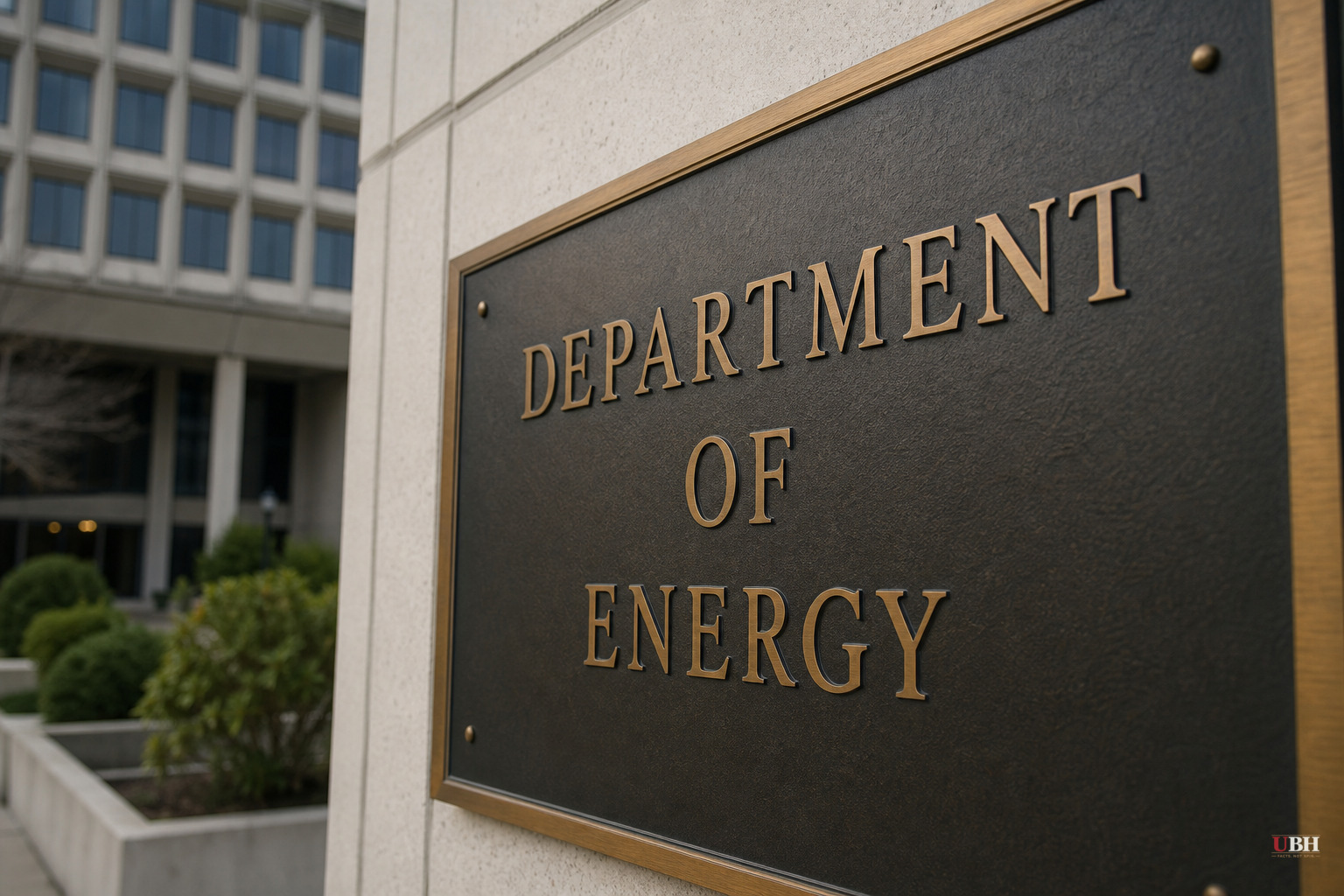
The Department of Energy told a federal court last week that it terminated more than $7.5 billion in clean energy grants "based solely on the political identity of the grant recipient's state," according to filings first reported by the New York Times and confirmed by the Guardian and WFTV.
The exact language matters here. Government lawyers wrote that the funding cuts were not based on "any programmatic, statutory, cost-reduction or performance-based factor." Instead, the department accepted that the deciding factor was simply whether a state was "a Blue State or a non-Blue State."
That is a direct written admission in a federal court document. It is not a leak, not an anonymous quote, not a Democrat's spin. It is the department's own lawyers, on the record, in filings tied to a lawsuit brought last year by six University of California researchers and other plaintiffs.
The cover story that didn't survive contact with a courtroom
When the Energy Department announced the cancellations last October, targeting 321 funding awards across 223 projects, the official line from Secretary Chris Wright was that the projects "did not adequately advance the nation's energy needs or were not economically viable," according to WFTV. Sixteen states lost funding: California, Colorado, Connecticut, Delaware, Hawaii, Illinois, Maryland, Massachusetts, Minnesota, New Hampshire, New Jersey, New Mexico, New York, Oregon, Vermont and Washington. Every one of them voted for Kamala Harris in 2024.
White House budget director Russell Vought posted at the time that money "to fuel the Left's climate agenda is being cancelled," a comment that, in hindsight, tracks a lot closer to the court filing's admission than the department's "business decisions" framing did.
Now that the department has told a judge the cuts had nothing to do with cost-effectiveness or program performance, the "waste and viability" justification looks like it was public messaging, not the actual decision-making process.
The Energy Department's pushback
The administration is disputing the interpretation. An Energy Department spokesperson told reporters Friday that the New York Times account is "a misrepresentation of the court filing" and insisted "none of the termination decisions were based on political considerations."
The spokesperson's explanation is that the admission about political identity "was referring to the timing of the announcement, not of the decisions themselves." A federal agency announcing cuts on a politically convenient schedule is different, legally and ethically, from picking targets by political map. The filing's language, however, does not obviously support that reading. It says the inclusion of grants "in the October notice tranche was based solely on the political identity of the grant recipient's state." That reads as describing which grants got cut, not merely when the announcement went out. The department has not, in the reporting reviewed here, offered a line-by-line rebuttal of that specific sentence.
Why this matters beyond one lawsuit
Democrats did not wait to pile on. Rep. Marcy Kaptur of Ohio and Sen. Patty Murray of Washington, the top Democrats on the House and Senate Appropriations committees, said in a joint statement that the administration had "admitted in court what has long been obvious" and called it "outright un-American" and a "corrupt abuse of power." The underlying factual claim—that funding decisions tracked 2024 vote margins rather than project performance—is now something the department itself put in writing.
This lands at the same moment the White House is pushing a 400-page proposed rule, published May 29, that would let Trump's political appointees review federal discretionary grants and block funding that does not "demonstrably advance the President's policy priorities," according to the Guardian. If the ARCHES grant program and 222 other projects were killed by ZIP code politics rather than merit review, that proposed rule would formalize exactly that kind of screening across the entire federal grant system, not just at Energy.
What's actually unresolved
The lawsuit brought by the UC researchers is still active, and this filing is a discovery admission, not a verdict. No court has yet ruled on whether the terminations were unlawful, and the Energy Department has not conceded any legal violation, only a factual description of how the decision was made. Whether "political identity of the grant recipient's state" as a termination criterion violates federal grant law or the Constitution's equal protection principles is the actual question the court will have to decide, and that ruling has not happened yet.
Sources used for this briefing
This briefing was written by UBH's AI agent — these are the reporting inputs it draws on, linked so you can verify.


