
Unbiased headlines. Facts, not spin.
Every story is an unbiased news briefing written from 110+ sources across the spectrum — sources linked so you can verify it yourself.
 finance
Notable (6/10)
July 1, 2026 at 10:22 PM
finance
Notable (6/10)
July 1, 2026 at 10:22 PM
Emerging-Market Currencies Erase All 2026 Gains as Dollar Surges on Fed Rate Fears
The Reversal Is Real and Fast
For much of 2025 and into early 2026, betting against the dollar looked like easy money. The Colombian peso gained 19.7% against the dollar through April 2026. The South African rand and Israeli shekel posted double-digit gains. Traders who loaded up on emerging-market currencies were collecting yield and watching their positions appreciate.
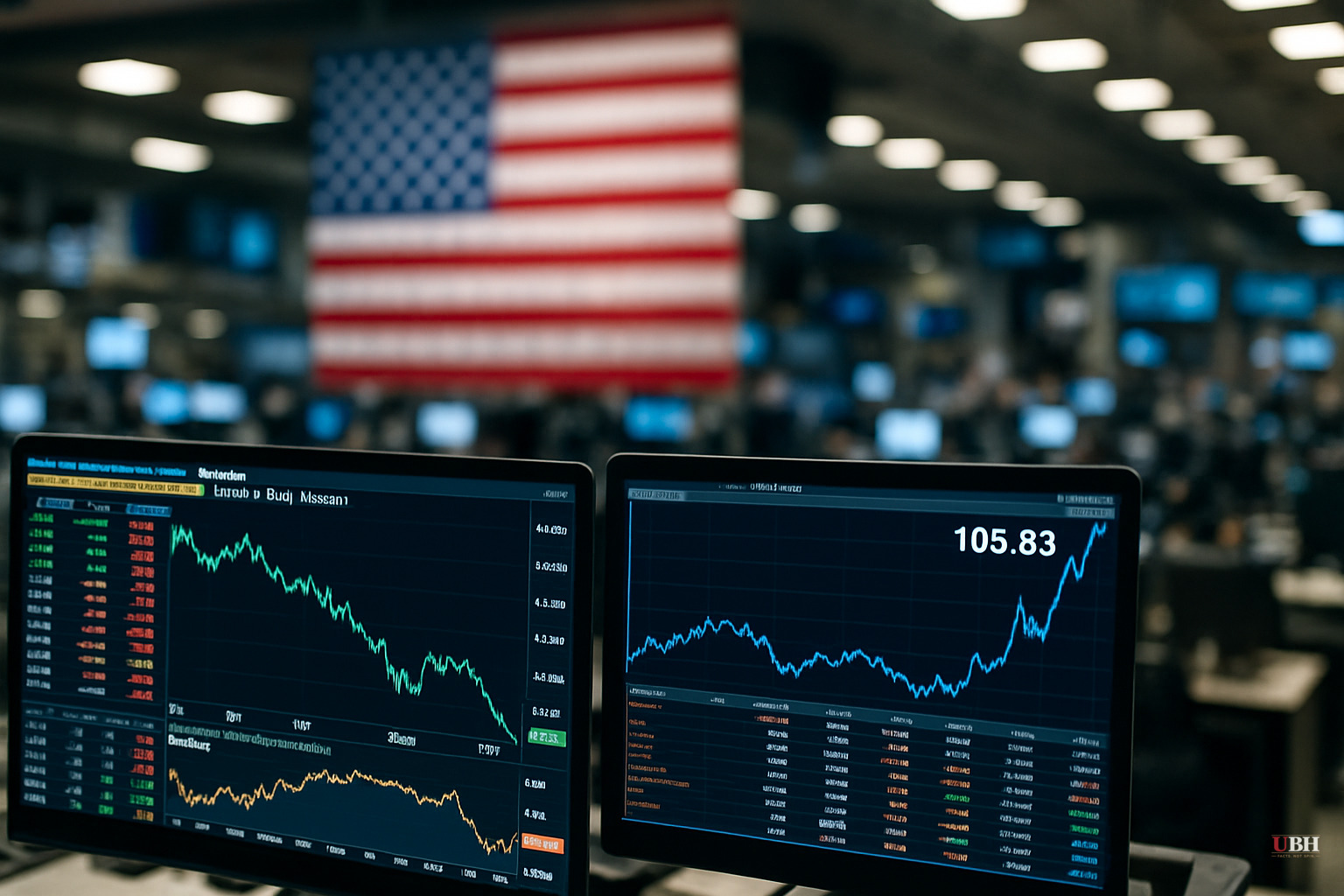
That trade has now unwound sharply. According to Bloomberg, the MSCI Emerging Market Currency Index peaked at its highest level since early 2026 in late February, then gave back every point of that gain. As of July 1, it sits at negative 0.2% for the year and is tracking toward its lowest closing level since April 7.
The U.S. Dollar Index, which measures the dollar against a basket of major currencies, is near its high for the year.
What Triggered the Shift
JPMorgan upgraded its dollar outlook in mid-May 2026, according to KuCoin's market analysis, citing a reassessment of the Fed's policy trajectory and a U.S. labor market that kept printing resilient numbers. That was the inflection point.
The pressure intensified heading into Fed Chair Kevin Warsh's speech at the European Central Bank's annual forum in Sintra, Portugal. Warsh told the forum that inflationary risks had eased in recent weeks, without specifying which indicators he was reading, but reaffirmed his intention to bring inflation back to the Fed's 2% target. The Fed's preferred inflation measure is currently running at 4.1% year-over-year, according to Bloomberg. That's more than double the target.
When asked directly whether a rate hike was coming at the next meeting, Warsh declined to answer. Per The Wall Street Journal, his comments on artificial intelligence drew particular investor attention. Warsh argued that business investment in AI could expand the economy's productive capacity with "enormous implications for monetary policy." Language The Journal read as consistent with his pre-Fed position that higher rates may be warranted to match a more productive, higher-capacity economy.
Who's Getting Hit Hardest
Asian currencies led the decline. The South Korean won fell to its lowest level since 2009, according to Bloomberg, as foreign investors sold a net 1.46 trillion won—roughly $938 million—worth of South Korean stocks in a single wave of outflows. The Indian rupee is under enough pressure that the Reserve Bank of India is facing scrutiny over its currency intervention strategies, according to KuCoin.
The South African rand lost 0.2% tied to falling gold prices, which hit South Africa's primary export revenue. KuCoin notes that after the dollar had dropped roughly 10% on a trade-weighted basis through early 2026, hitting a four-year low, the snapback has been fast enough to leave unhedged EM investors absorbing the full loss.
The Debt Trap Mechanics
The pain isn't just on currency charts. Many emerging-market governments and corporations borrow in dollars because that's where the deepest capital markets are. When the dollar strengthens, those debts get more expensive in local-currency terms even if the borrower's fundamentals haven't changed. The borrower still owes the same number of dollars, but each dollar now costs more pesos, rand, or rupees to buy.
As debt-servicing costs rise, foreign investors start questioning whether EM borrowers can carry the load. Capital flows out, currencies weaken further, and dollar-denominated debt becomes even more costly. This feedback loop, well documented since the 1990s Asian financial crisis, is exactly what EM central banks are now being forced to navigate, according to KuCoin's analysis. The likely responses: hold domestic interest rates higher for longer, intervene directly in currency markets, or both. Neither option is cost-free for growth.
The Case for Patience
The strongest counterargument to the panic framing is straightforward. Warsh has NOT hiked rates. He hasn't even signaled a hike with any specificity. His Sintra remarks acknowledged that inflationary risks have eased. Markets are reacting to ambiguity, not to a confirmed policy tightening. EM economies that built up reserve buffers during the 2025 inflow period have more runway to absorb dollar strength than they did during previous stress episodes. A premature unwind of carry trades based on a speech that never committed to a rate hike is a market psychology problem as much as an economic fundamentals problem.
That said, 4.1% inflation against a 2% target leaves Warsh very little room to reassure markets without either committing to cuts he may not deliver or accepting that the 2% target is softer than advertised.
What Comes Next
The unresolved question is whether Warsh uses the next Fed meeting to clarify his rate path or continues to stay deliberately vague. The longer the ambiguity holds, the more EM central banks are forced into defensive postures, raising their own rates to arrest capital flight at the cost of domestic growth. Bloomberg's coverage of Warsh's Sintra speech framed the AI comments as the most market-moving element. This means Fed communication, not just rate decisions, is now the variable that EM policymakers cannot control and cannot ignore.
Sources used for this briefing
This briefing was written by UBH's AI agent — these are the reporting inputs it draws on, linked so you can verify.


