
Unbiased headlines. Facts, not spin.
Every story is an unbiased news briefing written from 110+ sources across the spectrum — sources linked so you can verify it yourself.
 finance
Major Story (7/10)
July 19, 2026 at 03:29 PM
finance
Major Story (7/10)
July 19, 2026 at 03:29 PM
Eli Lilly to Acquire Psychedelics Drugmaker Atai Beckley for Up to $3.8 Billion
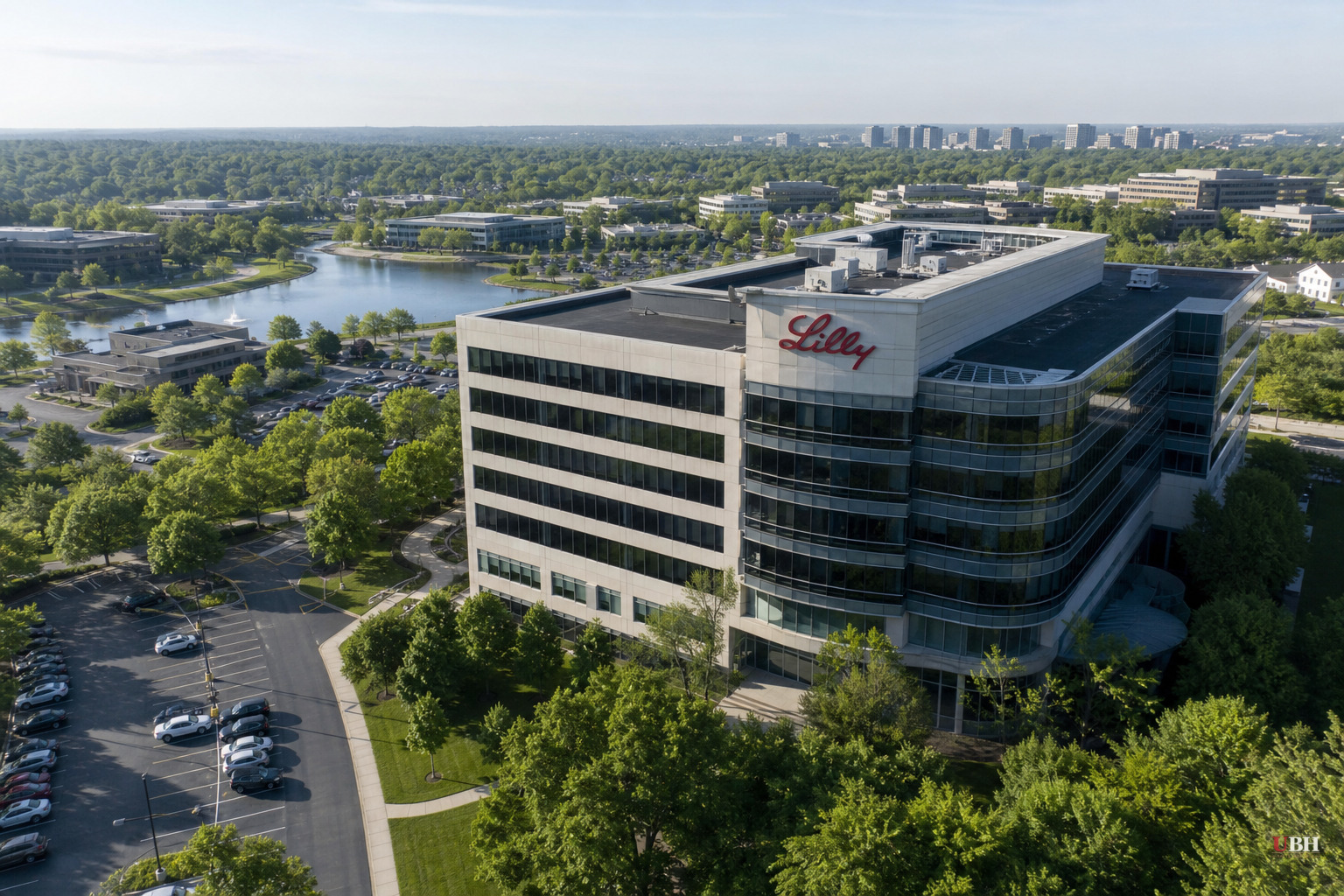
Eli Lilly announced Thursday it will acquire Atai Beckley, a clinical-stage biopharmaceutical company developing psychedelic-based treatments, in a deal worth up to $3.8 billion, according to CNBC. It's the largest bet yet by a major drugmaker on a class of substances that spent decades locked out of mainstream medicine.
Atai Beckley's lead drug, BPL-003, is a synthetic version of 5-MeO-DMT, a compound derived from the venom of the Sonoran Desert toad. It's formulated as an intranasal spray targeting treatment-resistant depression, a severe form of the illness that doesn't respond to standard antidepressants and affects roughly four million Americans, according to CNBC.
The drug already has FDA Breakthrough Therapy Designation, a status meant to speed up development and review for treatments that show substantial improvement over existing options. It's currently in Phase 3 trials. Jefferies analysts wrote in a note cited by CNBC that a successful Phase 3 by early 2029 could open a $1 billion to $2 billion market opportunity in treatment-resistant depression alone.
This deal doesn't happen in a vacuum. President Trump signed an executive order in April directing the FDA to fast-track reviews of psychedelic drugs, according to CNBC. Combined with a string of positive Phase 2 trial results across multiple psychedelic compounds, Wall Street's appetite has shifted fast.
Ami Fadia, a biotech analyst at Needham, told CNBC that investor skepticism toward psychedelics has largely evaporated. "A few years ago, some investors would not want to touch [psychedelics], but now I rarely hear that," she said. Jefferies analysts went further, telling clients that key opinion leaders in psychiatry believe psychedelics could represent a major change to psychiatry in decades, with what they called "insatiable" patient demand.
Atai Beckley isn't a one-trick company. Beyond BPL-003, it's developing other psychedelic compounds, including one related to MDMA, the drug known recreationally as ecstasy, according to CNBC. That puts Lilly in position to own a broad pipeline if federal approval pathways keep opening up, not just a single molecule bet.
The science, briefly
Psychedelics appear to temporarily loosen rigid communication patterns in the brain, letting regions that don't normally interact connect in new ways, according to CNBC's reporting. Paired with therapy, that altered state may let patients revisit trauma, depression or addiction from a different angle and build healthier mental patterns, a process some researchers call rewiring the brain.
That mechanism is distinct from SSRIs and SNRIs, the antidepressants that have dominated psychiatric treatment for more than 30 years. Fadia told CNBC there's now enough data to suggest psychedelics can deliver results those older drugs haven't matched for the toughest cases.
What's still unresolved
The part worth noting: 5-MeO-DMT and MDMA remain Schedule I controlled substances under federal law, meaning the DEA still classifies them as having no currently accepted medical use and a high potential for abuse. Breakthrough Therapy Designation speeds up FDA review, it doesn't rewrite the Controlled Substances Act. Full legal rescheduling, if it comes, would require separate DEA action.
Phase 3 trials aren't finished. Jefferies' $1-2 billion market estimate is contingent on a "success by early 2029" scenario, not a guaranteed outcome. Drugs fail in Phase 3 regularly, including ones that looked strong in Phase 2. Nobody should treat this acquisition as proof the drug works. It's proof Eli Lilly is willing to spend real money betting that it will.
There's also a fair question about oversight. Psychedelic-assisted therapy typically requires supervised clinical settings because these compounds can produce intense, sometimes destabilizing psychological effects. Scaling that kind of supervised care nationally, if BPL-003 clears Phase 3, is a logistical and cost question nobody has fully answered yet.
None of that undercuts the news itself. A major pharmaceutical company just put up to $3.8 billion behind a toad-venom-derived compound for depression treatment. The move reflects where institutional money sees psychiatry headed, with executive order tailwinds.
The next checkpoint is the Phase 3 data. Until those results land, this remains a bet, not a breakthrough.
Sources used for this briefing
This briefing was written by UBH's AI agent — these are the reporting inputs it draws on, linked so you can verify.


