
Unbiased headlines. Facts, not spin.
Every story is an unbiased news briefing written from 110+ sources across the spectrum — sources linked so you can verify it yourself.
 health
Low Interest (4/10)
June 20, 2026 at 06:37 PM
health
Low Interest (4/10)
June 20, 2026 at 06:37 PM
Eight Months After Being Shot by ICE Agents, California Man Remains in Adelanto Detention Without Physical Therapy or Adequate Pain Care
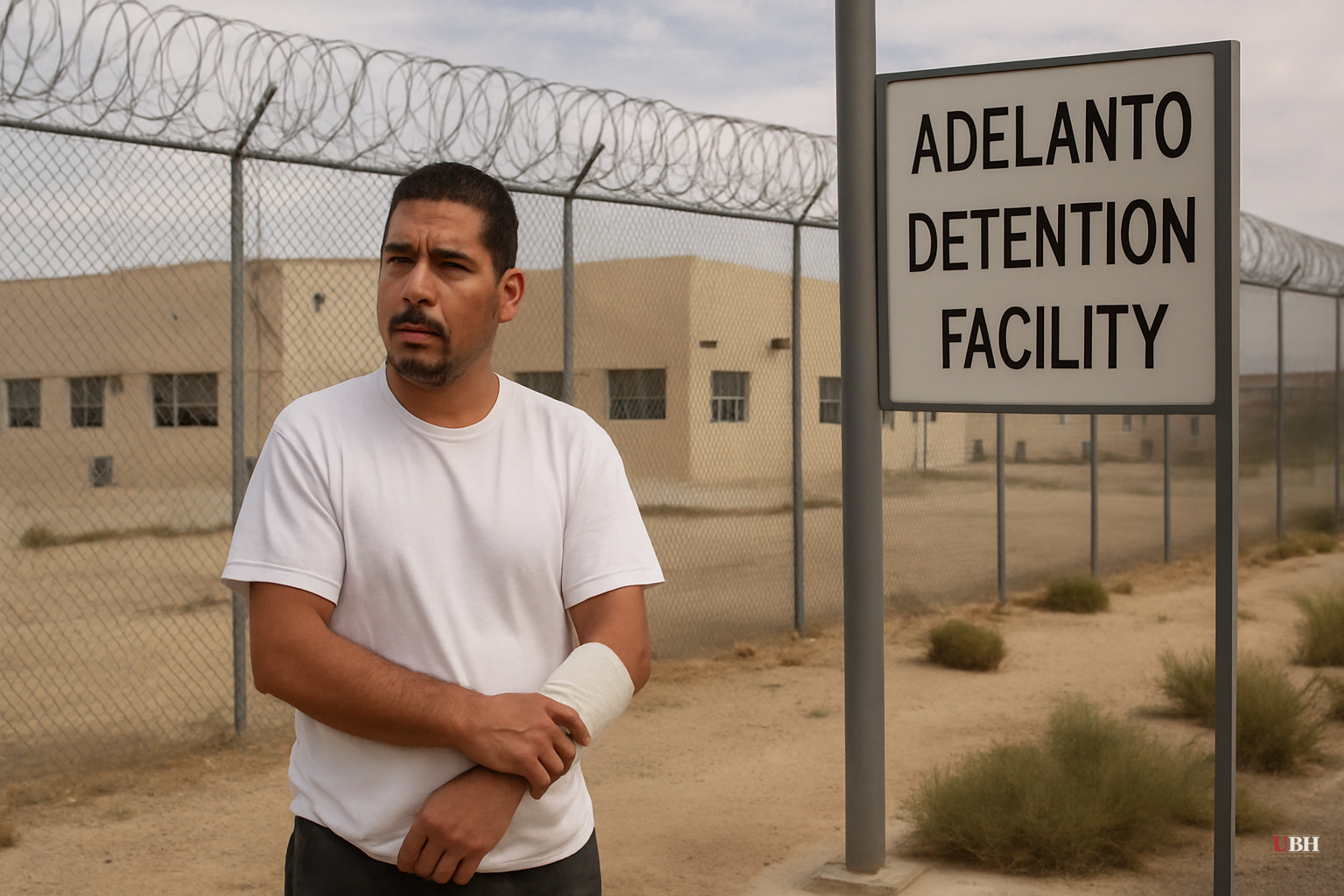
Every Saturday, his son Ulises Parias drives two hours to visit him at the Adelanto Detention Center in California's San Bernardino County. According to NPR, Parias reports persistent pain in his left arm, recurring headaches, fevers, and blurry vision. NPR reviewed medical records from November to May showing consistent pain and decreased mobility. A report from May includes details of pain radiating from his neck, down his arm, to his hand on his left side, and notes that no therapy was completed and Parias had been in a sling for six months.
His immigration attorneys say he has not received adequate pain medication or physical therapy since the shooting. They have petitioned for his release while his case proceeds. That request has been denied.
Ulises, 20, told NPR: "The last thing he told me was, have a good day at school. Then, like five minutes later, I heard some commotion outside. My heart stopped for a minute, and then I quickly went outside to the streets. And that's when I found my dad's car. The window was shattered."
The Shooting
Body camera footage released by the Los Angeles Times shows several federal agents surrounding the vehicle Parias was driving when federal officers blocked his path. "I'm going to break the window," one agent yelled, shortly after Parias came to a stop, and began to smash the passenger-side window while holding a gun in the other hand. Yelling in Spanish can be heard from officers saying, "I am going to shoot you" and "turn off the car." Others yelled, "Police, get out!" Several officers drew their firearms as Parias appeared to try to move his car, which was blocked by a larger police vehicle. Parias can be heard yelling in Spanish, "I don't have anything" and "kill me." Seconds later, an officer opened fire. The bullet also hit a U.S. marshal who was part of the operation.
Following the shooting, Parias was taken to a hospital to be treated for a gunshot wound near his left elbow. The federal government subsequently brought criminal charges against Parias: assault on a federal officer.
DHS provided NPR a statement from an unnamed spokesperson: "All use-of-force incidents involving individuals in ICE custody are documented and subject to internal review, consistent with ICE detention standards and DHS oversight requirements." The agency did not respond to questions about the outcome of any investigation into this use of force.
The Oversight Problem Is Structural
His attorneys describe a design flaw, not just a personnel failure. Parias was injured by ICE agents. He is also detained by ICE. The agency responsible for his injury is also the agency responsible for his care, with no independent body in the middle.
As NPR reports, his attorneys say there are "not enough people, and not enough concern" inside the detention system. Immigration attorney Margaret Hellerstein, who represents Parias, told NPR: "There are not enough people, and there's not enough concern. And that's leading to permanent disability and death. The legal avenues have been exhausted at this point."
DHS detention deaths and in-custody medical failures have drawn congressional scrutiny this year, accelerated by two cases in Minneapolis in which federal agents shot and killed two U.S. citizens during enforcement operations. Parias' case adds a variable the Minneapolis situations didn't involve: what happens when the shooting victim survives but remains in the custody of the shooting agency long-term.
The Fair Argument on the Other Side
The strongest good-faith counterpoint is this: ICE operates under detention standards that are federally mandated, and facilities like Adelanto are contractually required to provide medical services. DHS has maintained, in other contexts, that detainees receive care comparable to incarcerated populations in the broader justice system. Critics of immigration enforcement would argue those baseline standards are too low regardless, but the question of whether Adelanto is violating its own contract or simply operating within inadequate rules matters legally and morally. Violation of contract is actionable. Compliance with a bad contract is a legislative problem.
What Parias' Record Shows
NPR notes that Parias had no criminal history or infraction before the incident in which he was shot. That is relevant because it removes the most common counterargument used to dismiss detainee grievances. He entered the country illegally in 2002 from Mexico and spent the last two decades living in the Los Angeles area, including with his two U.S. citizen children. He gained more than 250,000 followers on TikTok documenting community events and immigration enforcement activity in Los Angeles.
Los Angeles City Council member Curren Price's office recognized Parias with a certificate of recognition in August 2025, before the shooting, per an AP photo caption. That context establishes he was known in his community before this incident.
What's Still Unknown
The federal government has not publicly explained why agents discharged their weapons during the arrest, what any use-of-force review concluded, or whether any disciplinary action followed. NPR's report does not include a response from ICE or DHS on Parias' specific medical situation or his attorneys' allegations about inadequate care.
Whether Adelanto's medical contractor is in compliance with DHS detention standards, or is breaching them, is the factual question that would determine whether Parias has a tort remedy or whether his attorneys' only realistic path is legislative.
Ulises Parias is 20 years old and taking college classes. He told NPR he visits his father every Saturday and speaks with him regularly by phone. His father is still in pain. The agency that shot his father is also the one deciding whether he gets a doctor.
Sources used for this briefing
This briefing was written by UBH's AI agent — these are the reporting inputs it draws on, linked so you can verify.


