
Unbiased headlines. Facts, not spin.
Every story is an unbiased news briefing written from 110+ sources across the spectrum — sources linked so you can verify it yourself.
 health
Low Interest (3/10)
July 25, 2026 at 08:19 PM
health
Low Interest (3/10)
July 25, 2026 at 08:19 PM
Egypt's Heatwave Peaks at 43°C as Meteorological Authority Warns of Worst 24 Hours
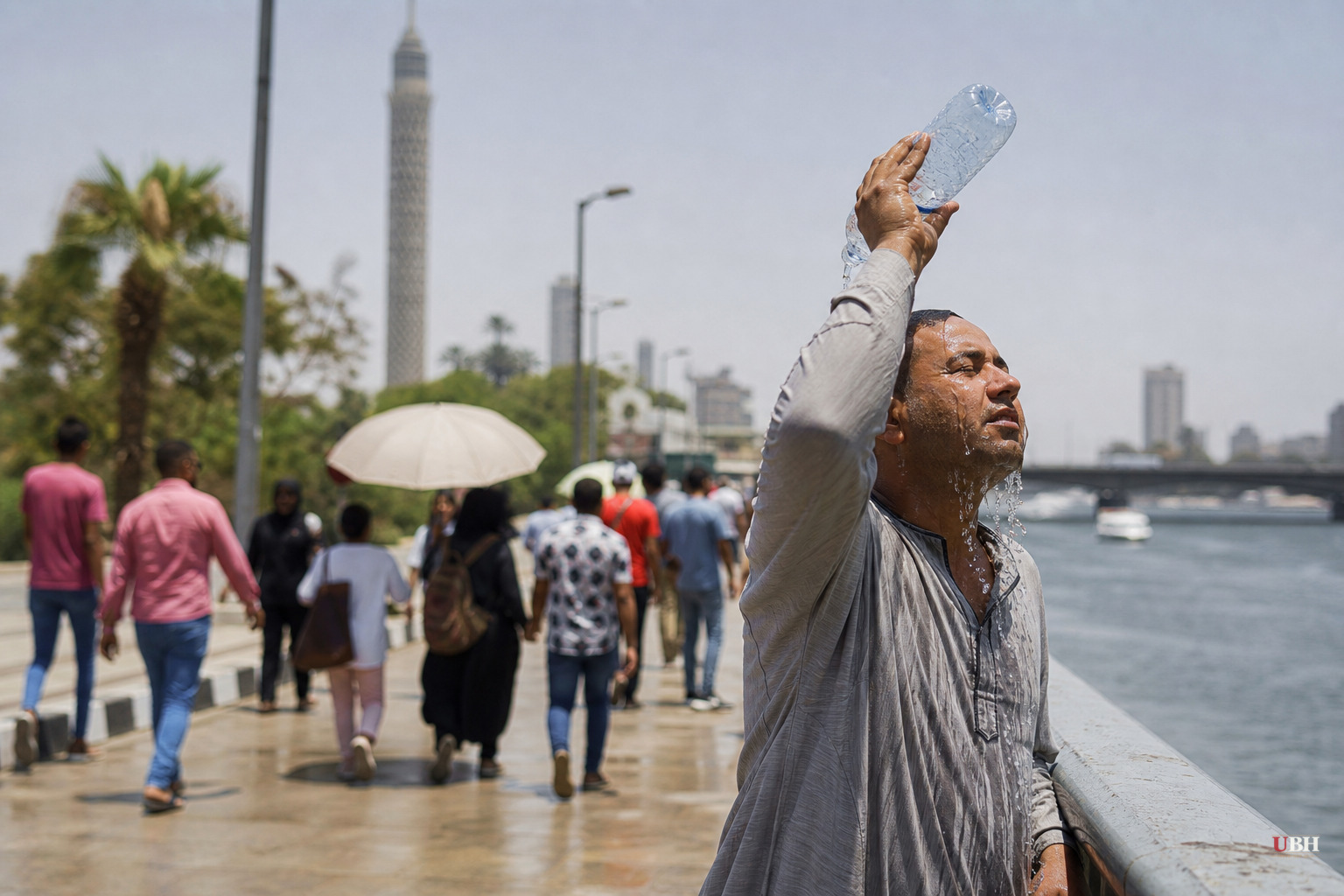
Egypt's Egyptian Meteorological Authority (EMA) issued a warning this week that a severe heatwave gripping most of the country is hitting its peak, with the next 24 hours expected to be the most intense stretch yet.
According to the EMA, high temperatures are expected to reach 40°C in Greater Cairo, 43°C in Upper Egypt, 41°C in Northern Upper Egypt, 39°C in the Nile Delta, and 35°C along the northwestern coast. Coastal areas near the northeast are getting off easier, relatively speaking, at 33°C.
That's 104°F in Greater Cairo and 109°F in Upper Egypt, for anyone doing the math in the American system. Raw air temperature isn't the whole story, though.
The EMA says elevated humidity is pushing the heat index, what it actually feels like on your skin, up to 42°C in Greater Cairo, 44°C in Southern Upper Egypt, and 43°C in Northern Upper Egypt. That humidity load is why officials are calling this the peak of the heatwave rather than just another hot day in a hot country.
The authority also flagged morning fog forming between 4 a.m. and 8 a.m. across northern Egypt, extending into Greater Cairo, the Canal Cities, Central Sinai, and Northern Upper Egypt. In some spots the fog is dense enough to affect visibility on the roads. Along the Mediterranean coast, from El Saloum to Baltim, active winds are expected to kick up waves between 1.5 and 2.25 meters.
The headline is heat, and the EMA's own public guidance makes clear who's most at risk: the elderly, children, people with chronic illness, and anyone working outdoors. The agency is urging people to avoid direct sun during peak hours and stay hydrated.
A Personal Angle From NPR
NPR ran a comic by Malaka Gharib this week built around a phone call with her father in Cairo, who told her the heat has been "punishing." When she asked how hot, he answered in Celsius: 39 degrees. She had to look up that it converts to 102°F, with the following week's forecast projecting a high of 106°F.
Gharib's piece leans on personal history rather than hard data, recalling summers she spent in Cairo as a kid in the 1990s, before air conditioning was as common there as it is now. Her question—how are Egyptians getting by now—is a fair one, but neither her piece nor its companion run on NPR Illinois actually answers it. There's no reporting in either version on cooling centers, power grid strain, or what a lack of widespread AC means for vulnerable residents during a heatwave the EMA is calling the peak of the season.
Egypt Independent's coverage of the EMA's warning is the only one of these sources that treats the heatwave as a public safety event with specific numbers, specific regions, and specific guidance, rather than a personal reflection on nostalgia and family phone calls.
Extreme heat is measurable and it is dangerous, especially in a country where air conditioning penetration, while growing, is still far from universal. Much of the workforce, especially outdoor laborers and agricultural workers, has no choice but to be outside during the hottest parts of the day.
The EMA's warning doesn't include any casualty figures or hospitalization data, and none of the three sources cited here report deaths, heat-related emergency room visits, or grid failures tied to this specific heatwave. Egypt's government has faced criticism in past summers, including from domestic outlets and rights groups, over electricity load-shedding during heat spikes that leaves people without functioning fans or AC units precisely when they need them most.
Whether that's happening again this week is an open question none of the current reporting answers. What is confirmed, according to the EMA, is that the country is in the most intense 24-hour window of a heatwave that's already pushed heat-index readings above 40°C across multiple regions. The agency's advice is straightforward: stay out of the sun, drink water, and check on the people who can't do those things for themselves.
Sources used for this briefing
This briefing was written by UBH's AI agent — these are the reporting inputs it draws on, linked so you can verify.


