
Unbiased headlines. Facts, not spin.
Every story is an unbiased news briefing written from 110+ sources across the spectrum — sources linked so you can verify it yourself.
 politics
Major Story (7/10)
July 29, 2026 at 01:22 PM
politics
Major Story (7/10)
July 29, 2026 at 01:22 PM
EEOC Votes to End 60-Year-Old Requirement That Companies Report Workforce Race and Gender Data
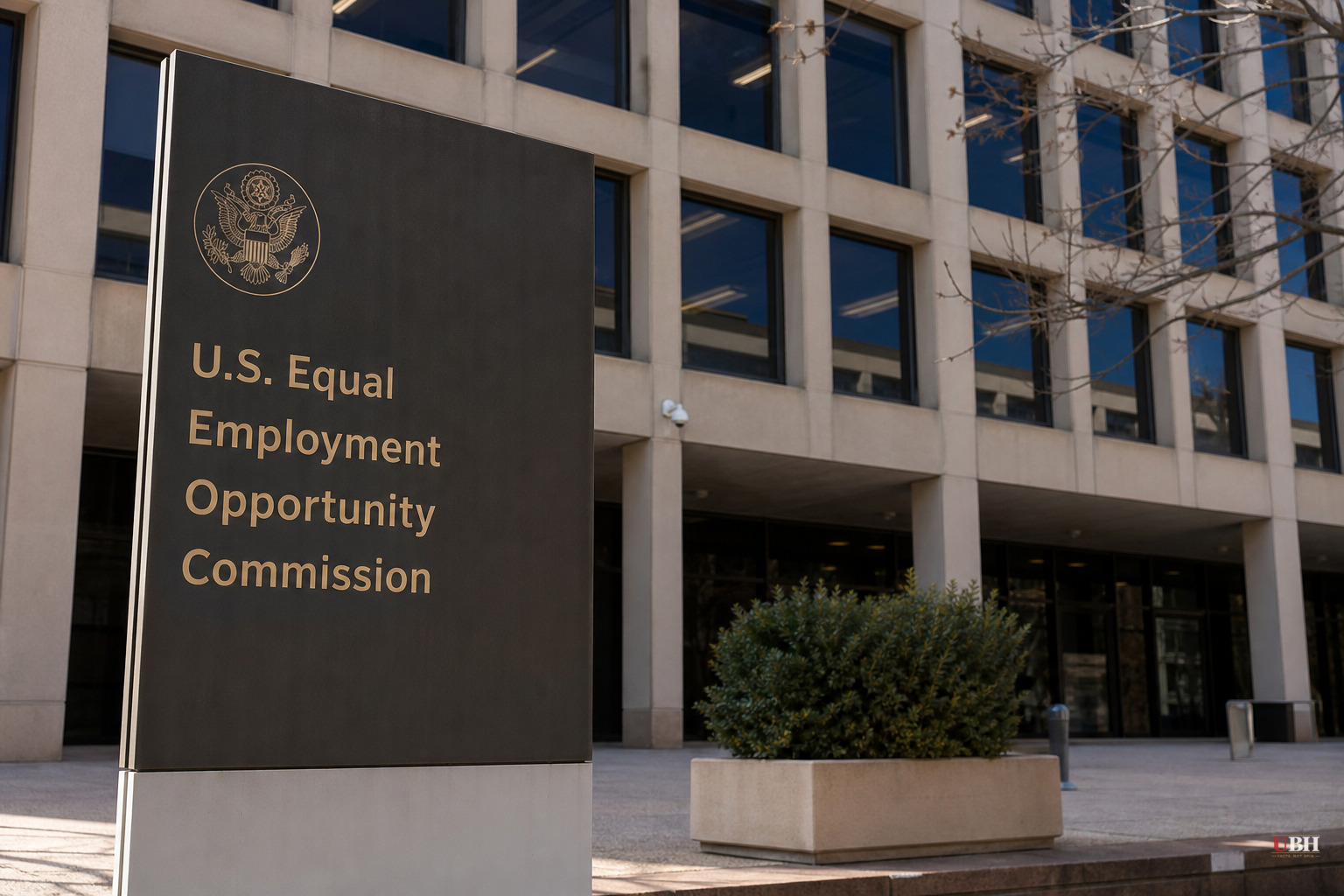
A 60-year paperwork requirement is going away
Since 1966, any private company with at least 100 employees, or a federal contractor with 50 or more, has had to file an EEO-1 form every year. The form breaks down a company's workforce by sex, race and ethnicity across 10 job categories, from "Executive/Senior Level Officials and Managers" down to "Laborers" and "Service Workers."
On Tuesday, the Equal Employment Opportunity Commission's Republican majority voted 2-1 to scrap that requirement, according to the Associated Press. The proposal now goes through a 30-day public comment period before final approval.
Why the EEOC says the data has to go
EEOC Chair Andrea Lucas, appointed by President Trump, made the case plainly at the hearing before the vote. "It may promote racial stereotyping at work, and it may encourage employers to engage in discrimination," she said, according to both the AP and TIME.
The commission's written proposal goes further, according to TIME. It states the demographic data "is unnecessary to enforce anti-discrimination laws" and that its "marginal benefits are outweighed by the substantial burdens imposed" on both employers and the agency. The proposal also argues the EEOC's own "investigative authority" is a "more reliable, narrowly tailored, and cost-effective tool" than blanket demographic reporting.
NOTUS reported the proposed rule goes so far as to argue the requirement "may encourage employers to discriminate against employees who are not considered 'minorities.'" The EEOC additionally raised a constitutional argument, according to NOTUS, that the reporting mandate may run afoul of equal protection guarantees.
Lucas has been open about her broader philosophy at the agency. She has described her approach as a "more conservative view of civil rights" and has said "hiring workers based on their merit, excellence, and character — not skin color or sex — is the right thing to do," per TIME. She has also posted online asking whether any "white male" has experienced workplace discrimination based on race or sex and inviting them to file complaints, according to NOTUS.
There's a real argument buried in that position, separate from the politics of it. If a data-collection requirement gets used, even informally, to pressure companies into hitting demographic targets rather than hiring the most qualified candidate, that's a legitimate concern under a colorblind reading of civil rights law. Critics of DEI programs have made this case for years: metrics can turn into quotas in practice even when they're not quotas on paper.
Why critics say this guts enforcement
Kalpana Kotagal, the EEOC's sole remaining Democratic commissioner, cast the only dissenting vote. "Today, the commission discusses whether to turn back time to a period before the civil rights movement, kneecapping its ability to protect workers," she said, according to the AP.
In a separate statement reported by NOTUS, Kotagal called the move part of "an attempt to weaken equal employment opportunity, and to undermine progress for women and historically marginalized communities." She also pushed back directly on the EEOC's constitutional argument, calling it "untethered from reality," according to NOTUS.
The EEOC fields more than 88,000 worker complaints a year, according to the AP, and has historically used EEO-1 data to spot patterns and direct its investigations, not just to react complaint by complaint. Without the aggregate data, the agency and outside researchers lose a baseline for tracking whether, say, women or minority workers are systematically underrepresented in executive roles at specific companies or industries over time.
Deborah Vagins, senior vice president at the Leadership Conference on Civil and Human Rights, called the EEOC a "mouthpiece for Trump's attacks" on workplace diversity efforts, according to TIME.
The commission itself has been reshaped
This vote didn't happen in a vacuum. Trump fired two of the EEOC's three Democratic commissioners early in his second term, an unprecedented move for the five-member, bipartisan commission that by law is supposed to have no more than three members from one party, according to NOTUS.
That left only Kotagal and Lucas on the commission for a stretch, before Brittany Bull Panuccio was confirmed by the Senate as a second Republican, handing the GOP its current 2-1 majority, per NOTUS. The agency is also now at its lowest staffing level in more than 45 years, having lost roughly a quarter of its workforce since Trump took office, NOTUS reported.
What happens next
The rule isn't final. It faces a 30-day public comment window before the EEOC can adopt it, giving civil rights groups, employers and the public a formal chance to weigh in before this becomes binding policy.
None of the three sourced reports here indicate any legal challenge has yet been filed against the proposal, and no court has ruled on whether ending EEO-1 collection is lawful. Whether Democratic state attorneys general or civil rights organizations move to challenge the rule once it's finalized remains to be seen.
Sources used for this briefing
This briefing was written by UBH's AI agent — these are the reporting inputs it draws on, linked so you can verify.


