
Unbiased headlines. Facts, not spin.
Every story is an unbiased news briefing written from 110+ sources across the spectrum — sources linked so you can verify it yourself.
 politics
Major Story (7/10)
August 15, 2026 at 08:46 AM
politics
Major Story (7/10)
August 15, 2026 at 08:46 AM
EEOC Sued Over Frozen Discrimination Cases, Blames Judge for Error as HRW Report Details Wider Cuts
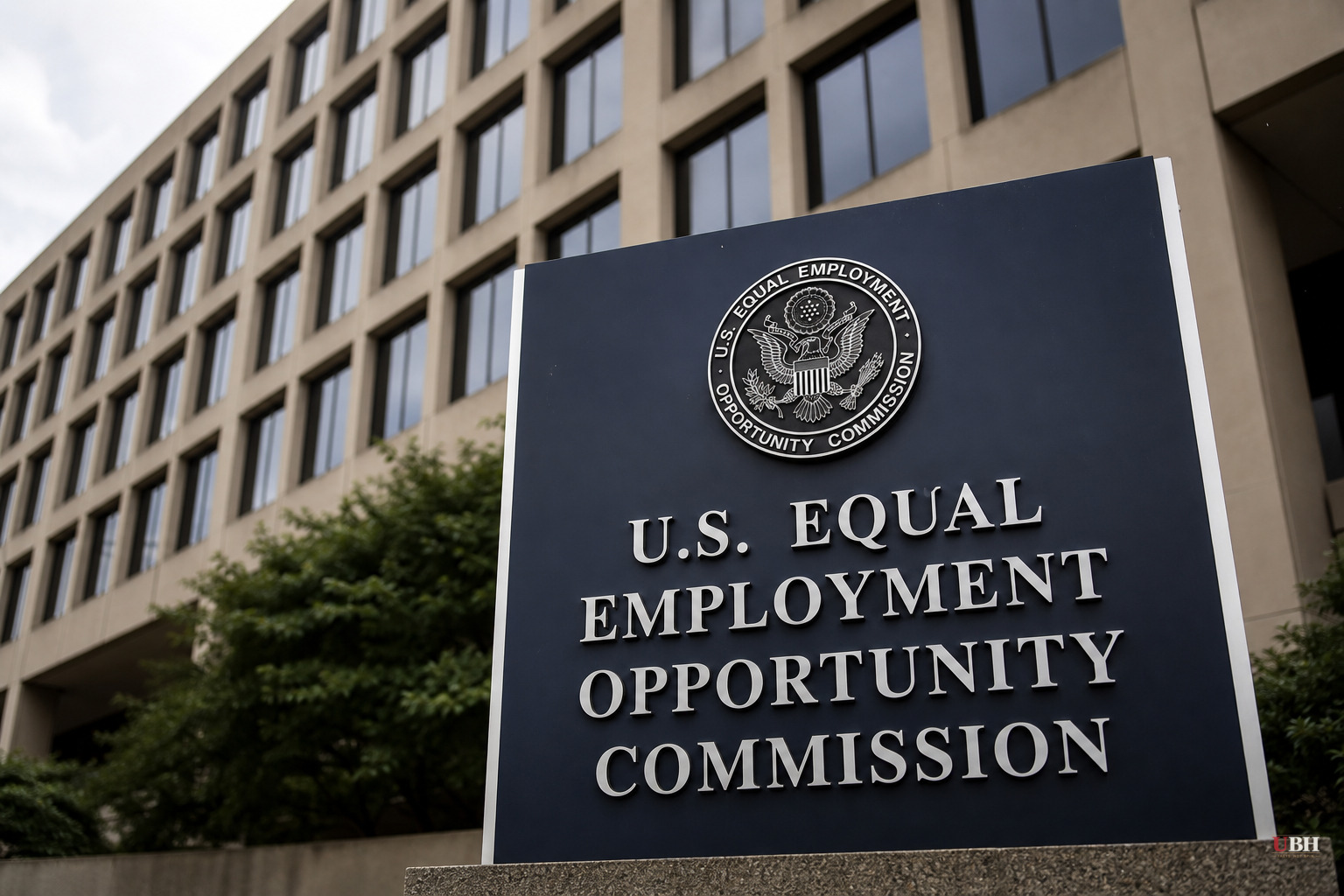
A lawsuit filed by the American Federation of Government Employees and two female correctional officers accuses the Equal Employment Opportunity Commission of freezing every federal-sector class discrimination complaint pending before its administrative judges. The EEOC says that never should have happened and blames a single judge for a mistake.
The case centers on two women who work as correctional officers at the Federal Correctional Complex in Pollock, Louisiana. They're part of a pending class complaint alleging sexual harassment. According to court filings cited by The Independent and ClickOnDetroit, an administrative judge issued an order on December 10, 2025, pausing their case and stating the pause "applies to all class cases in the federal sector."
If true, this means every group discrimination complaint in the federal workforce got shelved by fiat, with no public announcement.
The union and the two officers sued, seeking a preliminary injunction. In a court filing submitted Thursday evening, EEOC Chief Operating Officer Sharon Rose told the court the judge's notification was issued "in error" and called it an "isolated incident." The agency says it reassigned the case to a different judge, who issued a scheduling order Monday to move things forward again.
Justice Department attorney James Harlow sent the plaintiffs' lawyers a letter making the same argument and asked them to drop their request for an injunction. "In short, Defendants agree that processing of federal-sector class complaints should not be suspended," Harlow wrote, according to both The Independent and ClickOnDetroit.
The "isolated incident" defense runs into a problem. Joseph Sellers, co-chair of the civil rights and employment practice at Cohen Milstein Sellers & Toll and one of the plaintiffs' attorneys, says his firm is representing federal workers in at least five other stalled class complaints, including cases against the FBI and the Department of Defense. Two of those cases also got fresh scheduling orders this Monday, per Harlow's letter.
Sellers isn't buying the timing. "The timing speaks for itself. We have evidence of a number of cases that were stayed. It is not an isolated incident as the EEOC seems to claim," he said Friday. His read is straightforward. Nothing moved on any of these cases until after his clients filed suit, and multiple judges got the memo to get moving in the same week.
Harlow, for his part, asked the plaintiffs' attorneys to send along names and case numbers for any other complaints they believe were frozen, "so we can investigate." Sellers says his side is open to resolving this without further court fighting.
Is this actually a coordinated slowdown, or did one judge genuinely overreach and the agency is now correcting course? The available evidence—an order explicitly stating it applies to "all class cases," followed by silence for months, followed by sudden scheduling activity only after a lawsuit—points toward something more systemic than an oops. But no court has ruled on that yet, and the EEOC's sworn filing denies any directive to freeze cases agency-wide. That denial is now a matter for a judge to sort out.
The bigger picture: HRW's report
The lawsuit landed days after Human Rights Watch published a 112-page report, "Remedies Abandoned: US Civil Rights Enforcement Under the Trump Administration," released Thursday, August 13. HRW researcher Trey Walk said in a statement that "while claiming to protect all Americans, the administration is rolling back systems that communities have long turned to for relief."
The report, covered by Al Jazeera, Common Dreams, Truthout and others, examined the DOJ Civil Rights Division, the Education Department's Office for Civil Rights, HUD's Fair Housing Office, and the EEOC. HRW says the DOJ Civil Rights Division lost roughly 75% of its attorneys. The Education Department's OCR reportedly cut nearly half its staff in a single day and closed seven of twelve regional offices, while sitting on a backlog of almost 12,000 cases and managing only 112 settlement agreements in 2025, a 78% drop from the prior year on the same budget, according to HRW's figures as reported by washingtoncentre. HUD's Fair Housing Office reportedly shrank from 31 staffers to 11, and the EEOC hit its lowest staffing level in more than 40 years.
HRW also ties the cuts to policy. Trump's April 2025 executive order directed agencies to eliminate "disparate impact" analysis "to the maximum degree possible," a framework HRW describes as allowing challenges to hiring criteria, lending practices, and housing rules based on discriminatory outcomes rather than explicit intent. Critics on the right have long argued disparate-impact enforcement forces employers and landlords into race-conscious decision-making to avoid statistical disparities, rather than actually proving discrimination occurred. That's a real, longstanding policy disagreement, not a fringe position, and it's the actual rationale the administration has given for narrowing the framework.
What's not seriously disputed, based on HRW's staffing numbers and the agencies' own workload data, is that fewer people are processing complaints and fewer cases are getting resolved. Whether that's a legitimate downsizing of an overgrown bureaucracy or an abandonment of statutory duty is the actual fight, and it's playing out now in a Louisiana prison guards' lawsuit as much as in Human Rights Watch's report.
The immediate next step: a federal judge will have to decide whether to grant the AFGE's request for a preliminary injunction, or accept the EEOC's account that the freeze was a one-off mistake now fixed. Harlow's request for a list of every other potentially frozen case, if answered honestly, could settle the factual dispute regardless of what any court decides.
Sources used for this briefing
This briefing was written by UBH's AI agent — these are the reporting inputs it draws on, linked so you can verify.


