
Unbiased headlines. Facts, not spin.
Every story is an unbiased news briefing written from 110+ sources across the spectrum — sources linked so you can verify it yourself.
 politics
Major Story (7/10)
July 19, 2026 at 10:38 AM
politics
Major Story (7/10)
July 19, 2026 at 10:38 AM
EEOC Ends Disparate Impact Enforcement and Moves to Scrap EEO-1 Demographic Reporting
A Federal Civil Rights Agency Changes Course
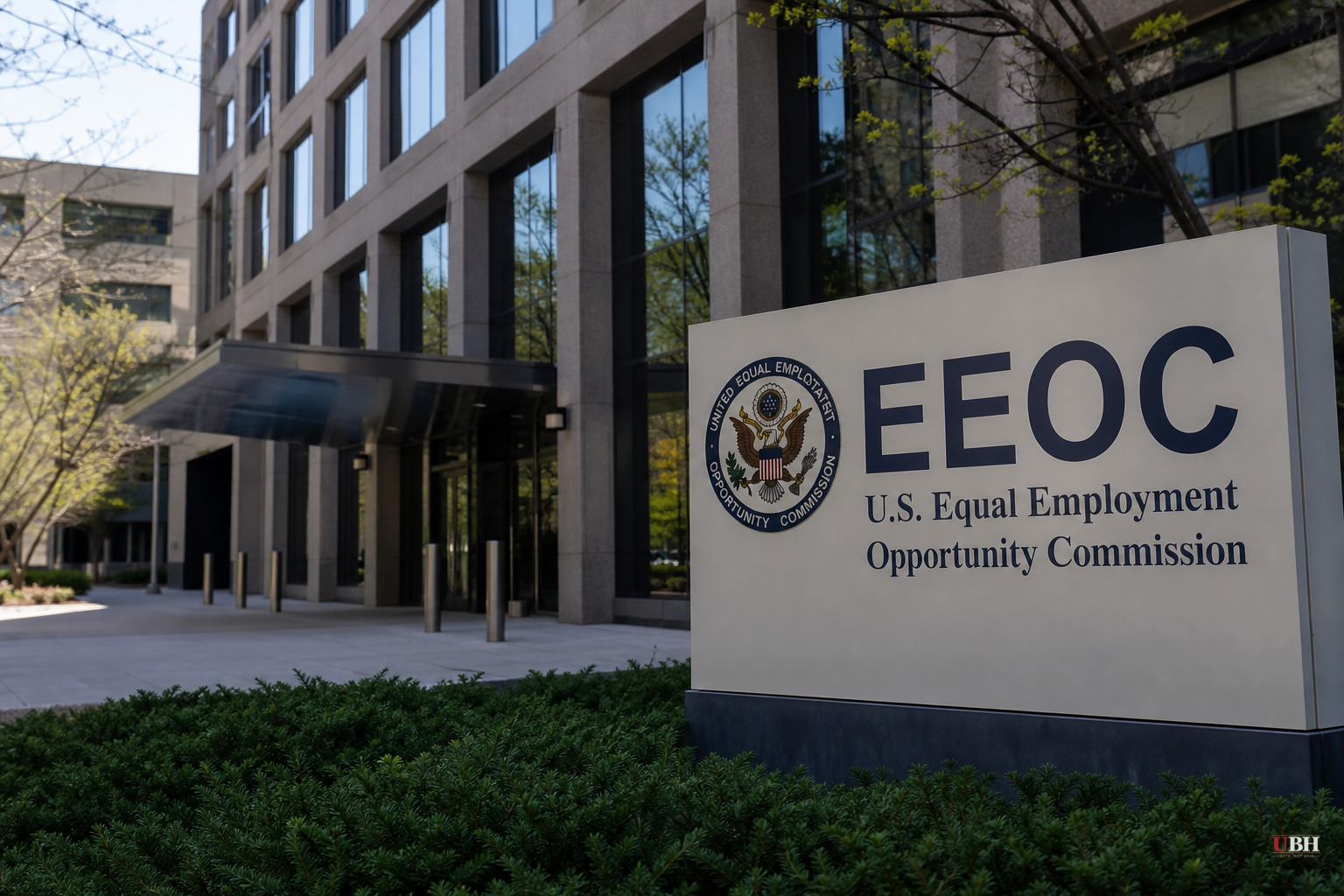
The Equal Employment Opportunity Commission has spent the first half of 2026 rewriting how the federal government enforces workplace discrimination law. Under Chair Andrea Lucas, the agency has walked away from disparate impact enforcement, moved to end mandatory demographic data collection, and rescinded guidance on affirmative action, according to HR Dive.
This didn't happen all at once. Lucas set the tone in December 2025 when she solicited discrimination claims from white men on X, according to HR Dive. She later told an audience at the Fortune Workplace Innovation Summit that she was actually "widening" the aperture of civil rights enforcement, not narrowing it.
In early June 2026, the EEOC rescinded the 2024-2028 Strategic Enforcement Plan adopted under President Biden and replaced it with priorities built around "remedying" DEI-related discrimination, protecting workers from what the agency calls "anti-American national origin discrimination," and defending what it terms "women's rights to single-sex spaces at work," according to HR Dive. On June 30, the agency rescinded prior affirmative-action guidance, arguing in a statement that it "ran afoul" of Title VII of the Civil Rights Act of 1964 and the Supreme Court's 2023 ruling in Students for Fair Admissions v. Harvard.
Disparate Impact Gets Cut
The most consequential change may be the EEOC's retreat from disparate impact enforcement, according to the National Partnership for Women & Families. Disparate impact theory holds that a facially neutral policy, like an unnecessary degree requirement or an aptitude test, can still violate Title VII if it disproportionately harms a protected group and isn't tied to actual job requirements. The Supreme Court established the doctrine unanimously in the 1971 case Griggs v. Duke Power Company, and Congress codified it in the Civil Rights Act of 1991.
Executive Order 14281 directs federal agencies to treat disparate impact liability as constitutionally suspect and to "deprioritize enforcement" of it to the maximum degree possible, according to the National Partnership for Women & Families. In response, the EEOC has directed the dismissal of pending complaints built on disparate impact theories.
Critics of disparate impact liability, including some conservative legal scholars, have long argued the doctrine effectively forces employers to hit demographic quotas to avoid lawsuits, even when a hiring test or requirement has nothing to do with intentional bias. That tension, between avoiding intentional discrimination and avoiding statistical disparities, has been argued in courts for over 50 years. The EEOC's position now is that Title VII's text targets intentional discrimination, and that disparate impact liability has drifted from that text. Whether the Supreme Court would actually strike down disparate impact liability as unconstitutional is untested. No such ruling has been issued.
Data Collection on the Chopping Block
The agency has also proposed ending mandatory EEO-1 reporting, which since 1966 has required employers with 100 or more employees to report workforce demographics by sex, race, and ethnicity, according to the Union of Concerned Scientists. A dozen former EEOC officials released a statement warning that scrapping this data collection would remove the evidence base regulators, researchers, and employers themselves use to spot hiring and pay disparities, according to the Union of Concerned Scientists.
The Union of Concerned Scientists frames this as an attack on data itself, arguing that without the numbers, discrimination effectively becomes uncountable and therefore unenforceable. That's a legitimate operational concern: if the government stops collecting the data, it becomes much harder for anyone, government or private plaintiffs, to prove statistical patterns of discrimination in future disparate impact-style claims. The first Trump administration also tried to halt this data collection, and the effort was part of the Project 2025 policy blueprint.
The EEOC has also removed the option for employers to report non-binary employee counts in EEO-1 filings, according to the Union of Concerned Scientists, consistent with the agency's broader position, laid out in its new enforcement priorities, defending "the binary nature of sex" in the workplace.
Legal Pushback Is Already Underway
The EEOC is currently facing a lawsuit from the NAACP alleging the agency improperly used a fee waiver denial to delay and obstruct access to public records under the Freedom of Information Act, according to HR Dive. Separately, a coalition of plaintiffs has challenged a Trump-era executive order barring federal contractors from DEI practices, pushing back on the administration's broader approach in court, according to HR Dive. Neither case has been resolved, and no ruling has been issued in either.
The Senate's confirmation of Brittany Panuccio as a commissioner in late 2025 restored the EEOC's quorum, giving Lucas and Panuccio the votes needed to formally advance these changes, according to the National Partnership for Women & Families.
What HR Departments Are Being Told
SHRM President and CEO Johnny Taylor Jr. told HR Dive that this is a moment of "reorientation" for HR professionals, and attorneys quoted by HR Dive advised employers to simply "lean on the law" by sticking to Title VII's text rather than trying to anticipate every enforcement shift.
The open question is what happens to the disparate impact doctrine if it reaches the Supreme Court. Executive Order 14281 asserts the theory is unconstitutional, but that claim hasn't been tested in litigation tied directly to the order. Until a court rules, the EEOC's enforcement retreat is a policy choice by the agency, not a change in what Title VII itself says on its face. How the pending NAACP and contractor-order lawsuits are resolved will determine how much of this reorientation survives contact with the courts.
Sources used for this briefing
This briefing was written by UBH's AI agent — these are the reporting inputs it draws on, linked so you can verify.


