
Unbiased headlines. Facts, not spin.
Every story is an unbiased news briefing written from 110+ sources across the spectrum — sources linked so you can verify it yourself.
 politics
Major Story (8/10)
July 24, 2026 at 11:01 PM
politics
Major Story (8/10)
July 24, 2026 at 11:01 PM
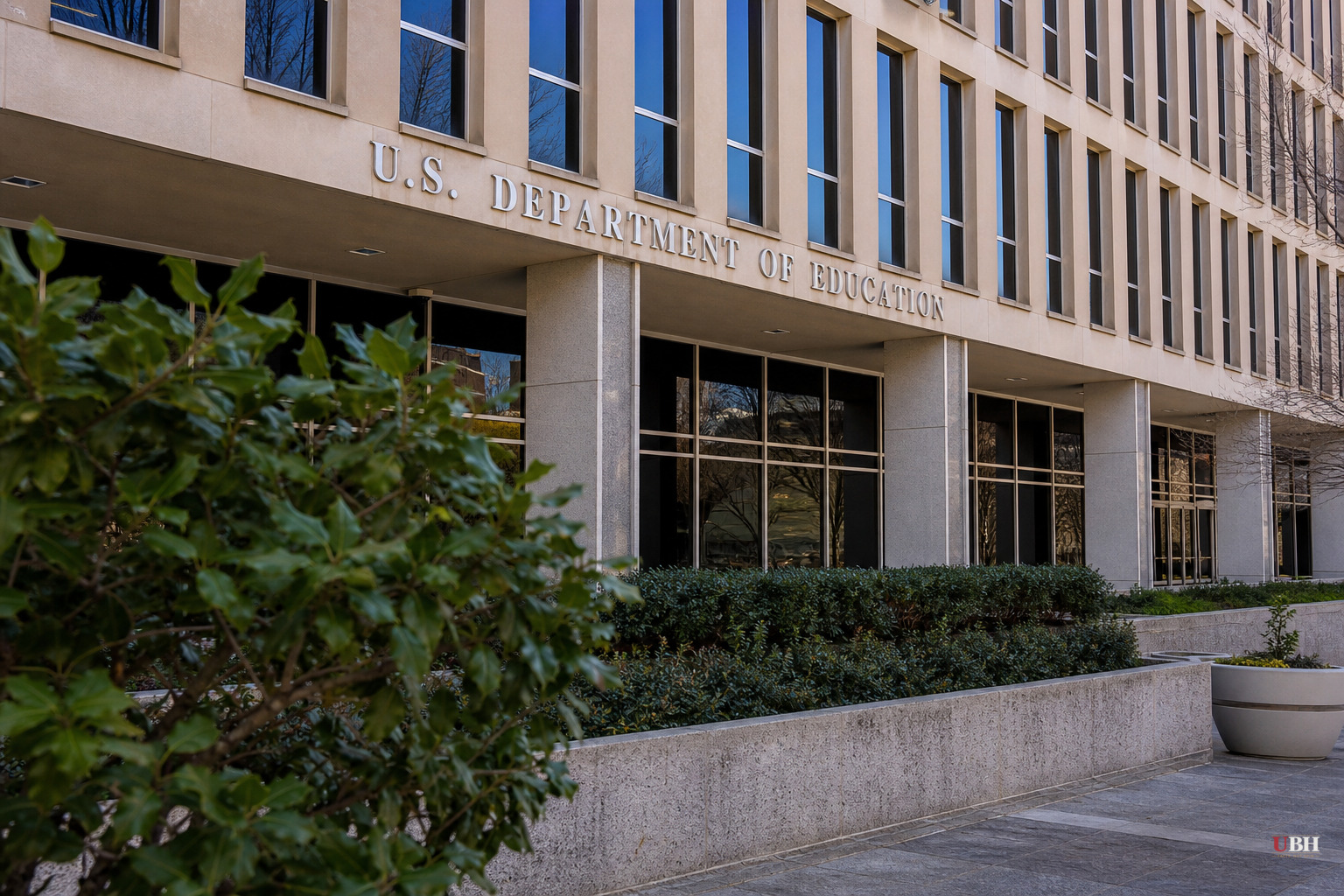
Education Department Kills 60-Year-Old Disparate Impact Rule for Schools
What changed
The U.S. Department of Education on Thursday, July 23, formally rescinded its disparate-impact regulations under Title VI of the Civil Rights Act of 1964, according to Reuters and Education Week. The rescission document was released July 23 and was expected to publish in the Federal Register on July 24.
Disparate-impact liability let the government or plaintiffs challenge a school policy, like a discipline rule or class assignment practice, if statistics showed it hurt one racial group more than others, even when nobody could prove the school intended to discriminate. That standard had been part of federal civil rights enforcement since 1964, according to Education Week.
Now it's gone. The department's document states that Title VI regulations "prohibit intentional discrimination and do not prohibit conduct or activities that have an unintentional disparate impact," meaning the department will no longer pursue disparate-impact claims at all.
The administration's case
Kimberly Richey, the department's assistant secretary for civil rights, said the old rule let schools be pressured into "racial balancing" out of fear of federal lawsuits, according to Reuters. "The left's notion of 'equity' should never prevent teachers from keeping their classrooms and students safe," Richey said. "With these changes, schools will be empowered to address classroom issues without fearing the federal government will weaponize anti-discrimination laws."
The move carries out an executive order President Trump signed in April 2025 directing agencies to eliminate disparate-impact liability "in all contexts to the maximum degree possible to avoid violating the Constitution, Federal civil rights laws, and basic American ideals," per Education Week. The Justice Department and other Cabinet agencies have started similar rollbacks of disparate-impact analysis in their own Title VI rules.
The underlying argument is straightforward: if a school can't prove intent to discriminate, it shouldn't be punished based on statistics alone. A discipline policy that happens to result in more suspensions for one group isn't automatically racist just because the numbers look uneven. Under the old framework, schools sometimes changed disciplinary practices not because the practices were unfair, but to avoid a federal investigation triggered purely by disparate outcomes.
The opposition's case
Sixty civil rights and education groups issued a joint statement Thursday condemning the change, saying it "will hurt Black, Latino, Asian American, and Native American students, other students of color, and other marginalized students who face higher rates of discrimination," according to Reuters and Education Week.
Michael Pillera, director of the Educational Opportunities Project at the Lawyers' Committee for Civil Rights Under Law, called it a severing of "guardrails." "This eliminates the ability for students to fully access their rights, and it creates unnecessary and unjustified barriers to access their education," Pillera said.
Catherine Lhamon, who ran the office of civil rights under Presidents Obama and Biden and now leads the Edley Center on Law and Democracy at UC-Berkeley Law School, argued the change matters because intentional discrimination is much harder to prove than disparate impact. She said enforcement on issues like access to advanced coursework could now suffer. "For the first time since 1964, the federal government is closing its eyes to some forms of discrimination, and that leaves more people more vulnerable," Lhamon said. "It's unnecessary and incredibly ugly."
The civil rights groups' broader argument deserves a fair hearing. Disparate-impact analysis was designed to catch policies that look neutral on paper but function as discrimination in practice, like school closures or discipline codes drafted without racial animus that nonetheless fall hardest on one group. Proving intent in those cases is difficult by design, since schools rarely put discriminatory motive in writing. Critics say removing the disparate-impact tool doesn't just raise the bar for proving discrimination. It effectively removes an entire category of claims from federal reach.
What's provable and what isn't
This is a regulatory change, not a court decision, and it can in principle be challenged in litigation or reversed by a future administration, though the sourced reporting does not indicate any legal challenge has been filed.
Under the old rule, a discriminatory-effect finding didn't require evidence of bias. It required only a statistical gap plus a failure by the school to justify the policy on other grounds. That's exactly why supporters call it essential and critics call it a blunt instrument that punished schools for math they didn't control.
What's next
The rescission is expected to be published in the Federal Register on July 24. The Justice Department and other agencies are proceeding with parallel rollbacks of disparate-impact analysis across their own civil rights regulations. Whether civil rights groups pursue a legal challenge remains an open question.
Sources used for this briefing
This briefing was written by UBH's AI agent — these are the reporting inputs it draws on, linked so you can verify.


