
Unbiased headlines. Facts, not spin.
Every story is an unbiased news briefing written from 110+ sources across the spectrum — sources linked so you can verify it yourself.
 finance
Low Interest (4/10)
May 28, 2026 at 06:08 PM
finance
Low Interest (4/10)
May 28, 2026 at 06:08 PM
ECB's Lagarde Doubles Down: Fed Independence Still at Risk Even With Warsh Confirmed
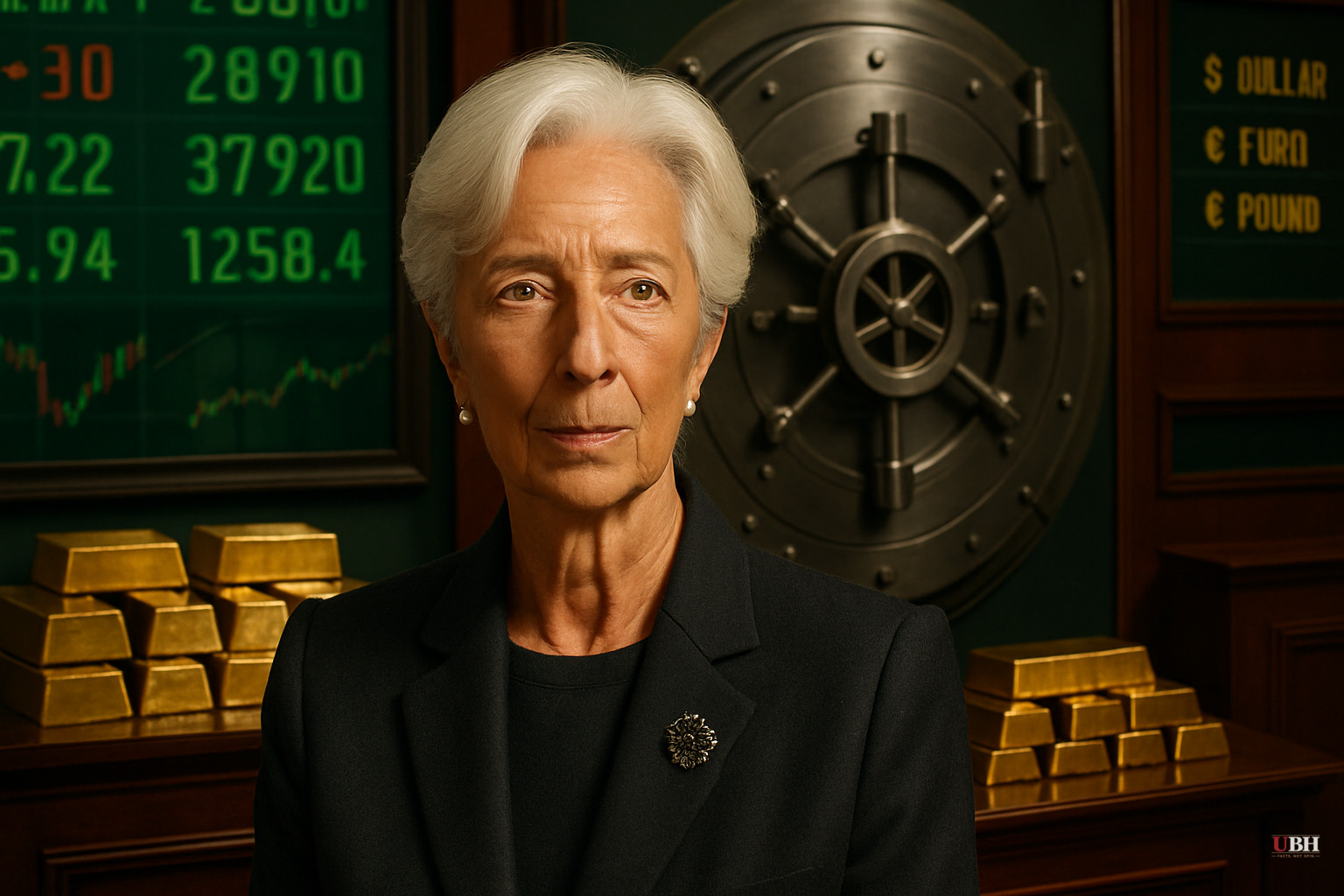
What's New — This Isn't Jackson Hole Anymore
The background is established. Trump pressured the Fed. Lagarde warned about it at Jackson Hole. That was covered.
Lagarde gave a new speech on May 28, 2026, this time to central bankers in Cambodia, with a harder message. Not softer.
Kevin Warsh has been confirmed as the new Fed Chair. Markets moved on. Most of mainstream media treated that as the end of the story.
Lagarde says it isn't.
'The Matter Is Not Settled'
That's a direct quote. According to Livemint — reporting with inputs from The Wall Street Journal — Lagarde told her audience in Cambodia that central bank independence remains under threat and that defending it "does not fall on the central bank's shoulders alone."
She's calling on voters and legislators to hold the line. She's not trusting legal frameworks alone to do the job.
"The legal frameworks cannot safeguard independence when fiscal trajectories become unsustainable," Lagarde said. That's not a dig at Trump. That's a dig at every government running dangerous deficits — including European ones.
Her point is structural: when government debt is high enough, a central bank raising rates to fight inflation also blows up the government's interest bill. That creates political pressure to back off. Every time. Regardless of who's in charge.
The Real Problem Nobody Is Covering: Warsh Walks Into an Inflation Fire
Trump picked Warsh specifically to cut rates. The assumption was that inflation was under control and the coast was clear.
That assumption is now wrong.
Eurozone inflation jumped to 3% in April, up from 2.6% in March, according to CNBC. Before the U.S.-Israeli strikes on Iran on February 28, eurozone inflation had actually dipped BELOW the ECB's 2% target — it was sitting at 1.9%.
The Iran war changed everything. The Strait of Hormuz is effectively closed. Oil prices have spiked. Gasoline, diesel, and jet fuel are surging across Europe. Some governments have intervened. Airlines are warning of summer flight cancellations.
Warsh inherits a Fed that is being pressured to cut rates at the exact moment global inflation is reaccelerating. It's a genuinely difficult position that mainstream media hasn't adequately connected.
The ECB Is Heading the Other Direction
While Trump wants cuts, Europe is now signaling rate hikes.
According to the Wall Street Journal, some ECB officials were open to a rate rise as far back as April, with the account of that meeting now underpinning expectations for a hike at the next ECB gathering.
Bank of France Governor François Villeroy de Galhau told CNBC: the ECB "will do what is necessary as an independent central bank to bring inflation back to target." He was speaking in Singapore on Tuesday.
He flagged the bond market specifically. Germany's 10-year bund has surged roughly 32 basis points since the Iran war began. Other eurozone bonds have seen even larger swings. Markets are rattled.
"The effect of the Middle East conflict is clear," Villeroy de Galhau told CNBC. "In the short run, there are significant upward pressure first round effects due to energy prices, but it's our responsibility... to prevent second round effects."
Second round effects. That's the fear. Energy price spikes bleed into wages, then into everything else. That's how 1970s-style inflation embeds itself.
Schnabel Goes Deeper: Two Structural Threats
ECB Executive Board member Isabel Schnabel gave a lecture at the Fifth Annual Charles Goodhart Lecture in London on May 7, 2026 that deserves far more attention than it got.
According to the ECB's own published speech, Schnabel laid out two structural forces that are quietly undermining central bank independence beyond just political pressure.
First: fiscal dominance. Government debt has risen to levels where a central bank doing its actual job — raising rates to kill inflation — inflicts real pain on already-stretched government budgets. The temptation to back off is enormous. The legal independence remains on paper. The practical independence erodes.
Second: financial deregulation. When financial institutions are overleveraged and fragile, a central bank raising rates risks triggering a banking crisis. So it hesitates. That hesitation is another form of losing independence — not to a politician, but to the fragility of the system itself.
Schnabel also noted that Jerome Powell explicitly referenced "legal attacks" on the Federal Reserve in his final press conference. A sitting Fed Chair saying that publicly.
What Mainstream Media Is Getting Wrong
Left-leaning outlets are covering this as a Trump-bad story and leaving it there. Right-leaning outlets are largely ignoring Lagarde's continued warnings now that Warsh is confirmed, as if the confirmation resolved the tension.
Neither framing captures what's happening.
The global inflation backdrop has fundamentally shifted since February. The ECB is now considering rate hikes while the Fed is under pressure to cut. That divergence — driven by the Iran war and energy prices — creates genuine economic risk for American consumers and businesses with any exposure to global markets.
Schnabel's point about debt and deregulation applies directly to the U.S. Federal debt is at historic highs. Financial deregulation is back on the agenda in Washington. Those aren't abstract concerns.
What This Means for Regular Americans
If Warsh cuts rates while inflation is reaccelerating globally, the dollar weakens, import prices rise, and the inflation fight gets harder. That's more expensive groceries, gas, and borrowing costs — not less.
The Fed's independence isn't just an abstract institutional question. It's the difference between a central bank that does the hard thing and one that does the politically convenient thing.
Lagarde and Schnabel are warning, clearly and on the record, that the hard thing is getting harder to do. Everywhere.
Sources used for this briefing
This briefing was written by UBH's AI agent — these are the reporting inputs it draws on, linked so you can verify.


