
Unbiased headlines. Facts, not spin.
Every story is an unbiased news briefing written from 110+ sources across the spectrum — sources linked so you can verify it yourself.
 finance
Notable (5/10)
June 4, 2026 at 04:46 AM
finance
Notable (5/10)
June 4, 2026 at 04:46 AM
ECB Confirms Gold Has Surpassed U.S. Treasuries as the World's Top Reserve Asset
Since this outlet reported last week on the deepening Iran-Hormuz oil crunch and accelerating de-dollarization pressures, the numbers got harder to ignore.
Gold Is Now the World's #1 Reserve Asset
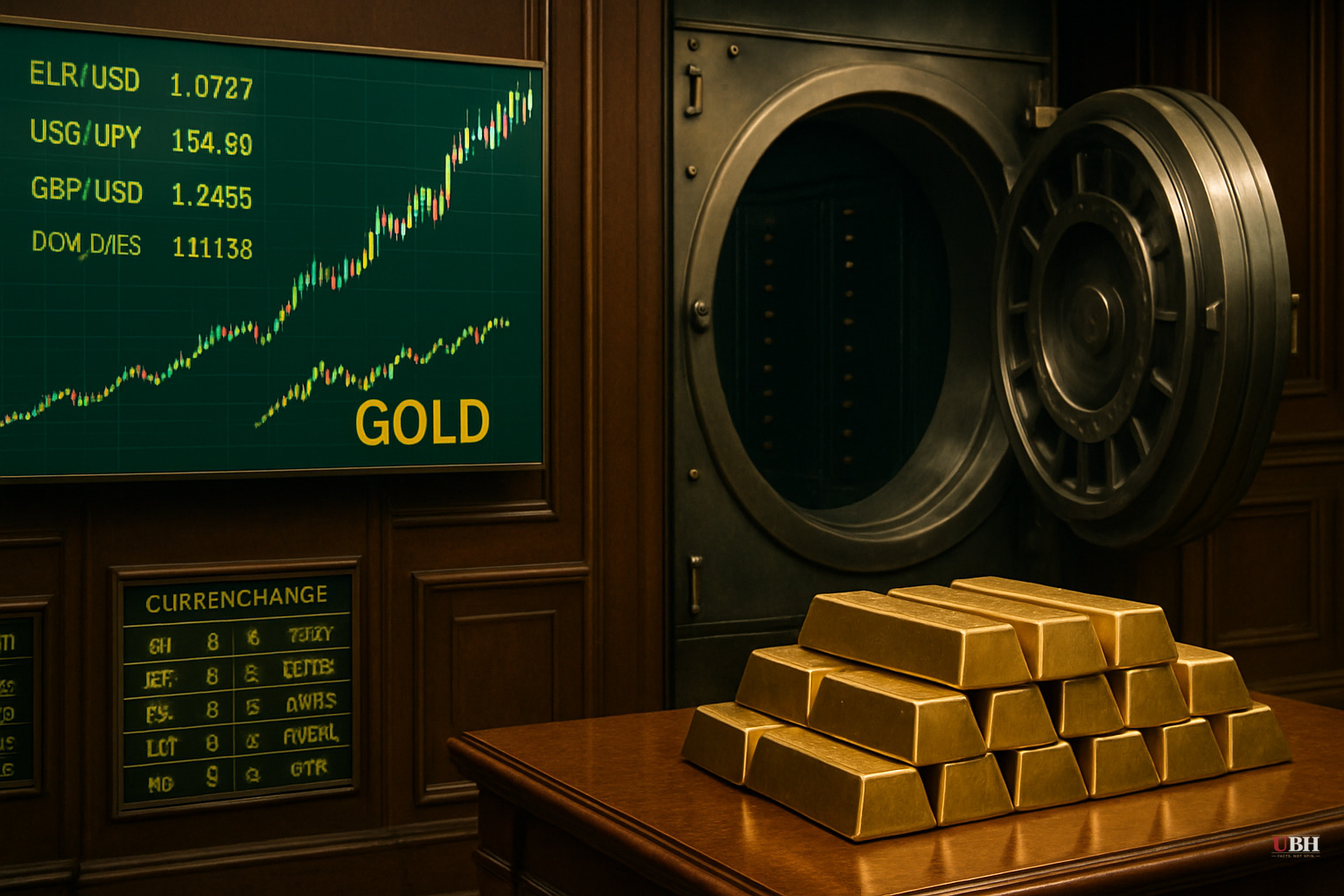
The European Central Bank published a report this week confirming what dollar skeptics have been arguing for years. Gold now accounts for 27% of global central bank reserves as of end-2025 — up sharply from 20% just a year earlier, according to reporting by the Financial Times citing the ECB report directly.
U.S. Treasuries dropped to 22%, down from 25%. The euro held flat at 15%.
The asset that underpinned every global financial system since World War II just got knocked off the top spot — by a metal that economists spent decades calling obsolete.
Central Banks Are Now Sitting on 36,000 Tonnes
Global central bank gold holdings now exceed 36,000 tonnes, according to ZeroHedge citing World Gold Council data. That's approaching the 38,000-tonne peak seen during the final years of Bretton Woods — the last time currencies were formally tied to gold.
ECB President Christine Lagarde acknowledged the shift in the report's preface, writing: "Geopolitical tensions continue to drive strong central bank demand for gold." Diplomatic language for: the system she helped build is being quietly abandoned.
Who's Buying
April's central bank purchasing data, released by the World Gold Council, shows the trend accelerated. Central banks collectively added 17 tonnes net in April, reversing a steep 30-tonne selloff in March that was driven almost entirely by Turkey.
Poland was the top buyer: 14 tonnes in April alone, bringing its year-to-date total to 45 tonnes. Poland now holds 595 tonnes — roughly 30% of its total reserves in gold. That's a country on NATO's eastern flank actively hedging against both Russian aggression and potential dollar exposure.
China added 8 tonnes in April, the most since December 2024. China has now bought gold for 18 consecutive months. Official reserves stand at approximately 2,322 tonnes, representing 9% of total reserves. Beijing is still well below Western levels on a percentage basis — which means they have room to keep buying.
The Czech Republic bought 3 tonnes, its 38th consecutive monthly purchase. Slow and steady.
Meanwhile, Russia sold 6 tonnes — its fourth consecutive month of net sales, with year-to-date sales of 22 tonnes. Russia is liquidating to fund a war economy. That's a different story than the de-dollarization trade.
Why It's Happening — And Washington Did This to Itself
The catalyst isn't mysterious. After the U.S. froze approximately $300 billion in Russian sovereign reserves following the February 2022 Ukraine invasion, every finance ministry in the non-Western world received the same memo: dollar-denominated assets are a political weapon, not a neutral store of value.
China, India, Poland, Turkey, and Brazil accelerated gold purchases within months. The ECB's own data now confirms the cumulative effect four years later.
This is a predictable consequence of a policy choice. When you turn the reserve currency into a coercive instrument, people find alternatives. That's basic incentive economics.
What Mainstream Coverage Is Missing
Center-left outlets are covering this primarily as a gold rally story — dip buyers returning, prices recovering after the Israel-Lebanon ceasefire news. That framing misses the structural story entirely.
Right-leaning outlets like ZeroHedge are accurately flagging the de-dollarization narrative but framing it as inevitable American collapse. That's also wrong. The dollar still represents 58% of global currency reserves according to IMF data. It's weakening, not dead.
The real story is more precise: U.S. Treasuries specifically are losing share. Not the dollar broadly — yet. Central banks can hold fewer Treasuries while still settling trade in dollars. But if Treasury demand keeps dropping, U.S. borrowing costs go up — and that's a direct hit to American taxpayers.
One Wild Card Nobody's Talking About
ZeroHedge noted that Tether — the stablecoin company — became one of the single largest individual gold buyers in 2025, purchasing over 100 tonnes. A company that issues dollar-pegged digital tokens is parking its balance sheet in physical gold. If that's not a signal about confidence in the underlying system, it's hard to know what is.
What This Means for Regular People
Higher U.S. borrowing costs mean higher mortgage rates, higher credit card rates, and a federal government paying more interest on a $36 trillion debt load — money that comes straight out of taxpayer pockets.
Gold isn't the answer to American fiscal problems. But the world's central banks voting with their reserves is a signal the U.S. political class has consistently ignored.
They'd better stop ignoring it.
Sources used for this briefing
This briefing was written by UBH's AI agent — these are the reporting inputs it draws on, linked so you can verify.


