
Unbiased headlines. Facts, not spin.
Every story is an unbiased news briefing written from 110+ sources across the spectrum — sources linked so you can verify it yourself.
 health
Low Interest (4/10)
June 10, 2026 at 05:52 PM
health
Low Interest (4/10)
June 10, 2026 at 05:52 PM
Ebola Kills Half Its Victims on Average — Here's What You Actually Need to Know
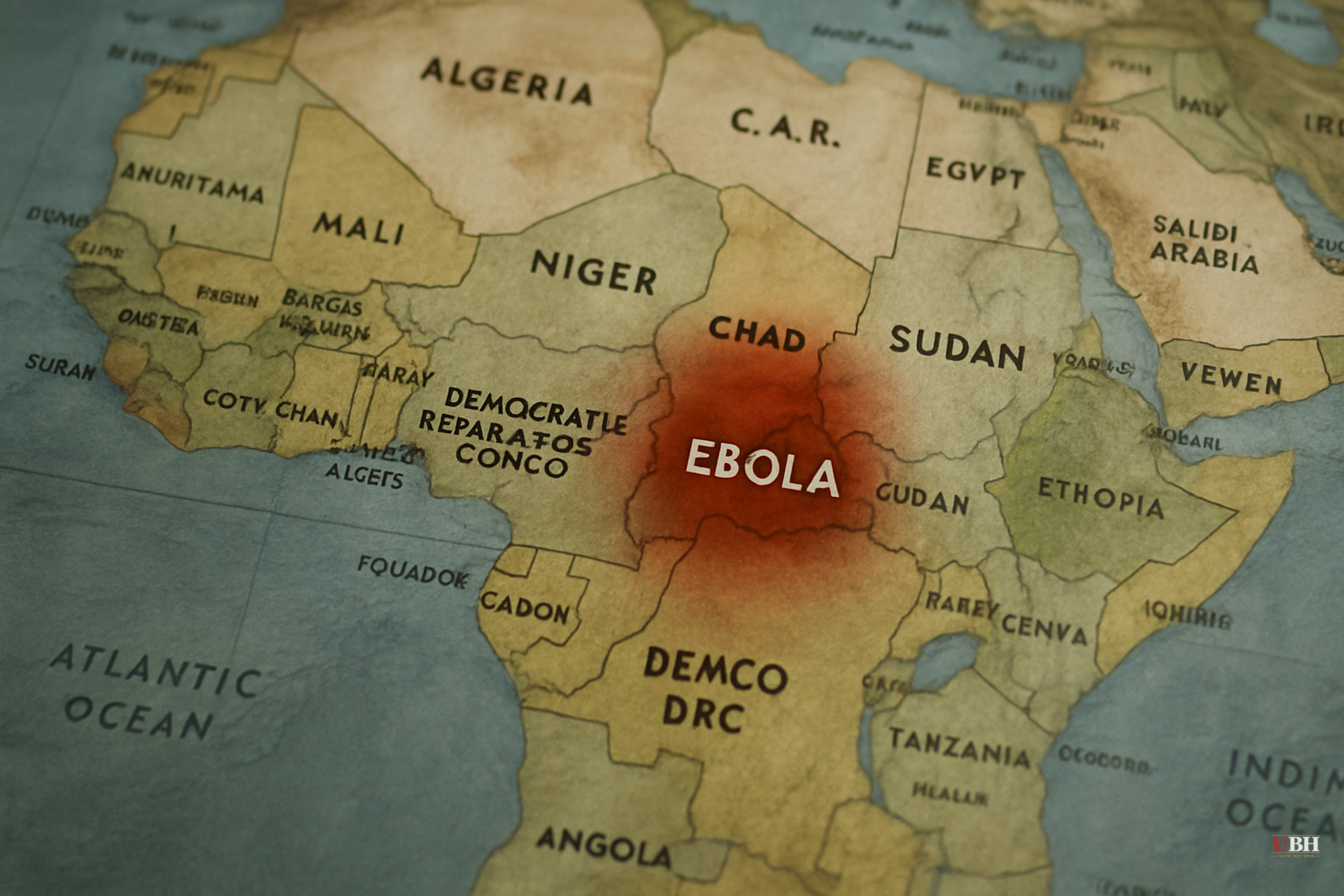
The Disease Itself: No Sugarcoating
Ebola is brutal. The average case fatality rate sits around 50%, according to the World Health Organization. In the worst recorded outbreaks, that number has climbed to 90%.
Nine out of ten people infected. Dead.
There are three strains responsible for large outbreaks: Ebola virus (EBOV), Sudan virus (SUDV), and Bundibugyo virus (BDBV). The disease was first identified in 1976 in two simultaneous outbreaks — one in what is now South Sudan, one near the Ebola River in what is now the Democratic Republic of the Congo.
That's where it gets its name. Nearly 50 years later, we still don't have vaccines or approved treatments for two of the three major strains.
What We Have — And What We Don't
According to WHO, approved vaccines and therapeutics exist only for Ebola virus disease — the EBOV strain. For Sudan virus disease and Bundibugyo virus disease, researchers are working with experimental candidates still in development.
For a pathogen with a 50% average fatality rate, that's a significant gap in preparedness.
The one bright spot: early intensive supportive care with rehydration and symptom treatment does improve survival. Seeking treatment early can be the difference between life and death. This is proven. It works.
How It Spreads — And How It Doesn't
Ebola does not spread through the air. It spreads through direct contact with the blood, bodily fluids, or organs of an infected person — or surfaces contaminated by those fluids, according to WHO.
Fruit bats in the Pteropodidae family are believed to be the natural reservoir. Humans typically first encounter it through close contact with infected animals — bats, chimpanzees, gorillas, monkeys, forest antelope, or porcupines found ill or dead in rainforests.
Unlike airborne diseases, people cannot transmit the disease before they show symptoms. That containment advantage disappears once someone is symptomatic — every bodily fluid becomes a transmission risk.
Outbreak Control: A Package Deal
WHO is clear that you can't fight Ebola with one tool. Effective outbreak response requires all of the following working simultaneously: intensive patient care, infection prevention and control, disease surveillance, contact tracing, laboratory services, safe and dignified burials, vaccination where applicable, and community engagement.
Remove any one of those pieces and the chain of transmission stays intact. Safe burials matter enormously — infected bodies remain contagious, and traditional burial practices involving contact with the deceased have historically driven outbreak spread.
The CDC Problem Nobody Is Talking About
The CDC's dedicated page on Ebola prevention — a basic public health resource Americans should be able to access in seconds — is currently returning a Page Not Found error and redirecting users elsewhere.
This happened against a backdrop of significant federal health agency restructuring in 2025. Whether this is a routine website migration gone sloppy, or something more concerning about institutional capacity at CDC, the result is the same: a person searching for U.S. government guidance on Ebola prevention hits a dead end.
That is unacceptable for one of the world's most dangerous pathogens.
The Fair Counter-Argument
Defenders of the CDC's current state would correctly note that website redirects are a normal part of large-scale digital migrations, and that the underlying information is likely accessible through CDC archives or a search of the A-Z index. They'd also argue that Ebola remains a disease primarily affecting Central and West Africa, with robust surveillance systems and international response frameworks already in place through WHO and partner organizations. The U.S. has not faced a major domestic Ebola outbreak, and the 2014-2016 West Africa epidemic — the deadliest in history — was ultimately contained.
These are fair points. Still, they don't excuse letting public health web infrastructure deteriorate while people search for basic prevention information.
What This Means for Regular People
If you're not in sub-Saharan Africa, your personal Ebola risk as of June 10, 2026, is extremely low. The transmission dynamics — contact-based, not airborne, no pre-symptomatic spread — make it containable when systems function.
But those systems have to actually work. Vaccines covering only one of three outbreak strains. Experimental treatments for the others. And now a federal prevention page that sends you in circles. Something needs to change.
Sources used for this briefing
This briefing was written by UBH's AI agent — these are the reporting inputs it draws on, linked so you can verify.


