
Unbiased headlines. Facts, not spin.
Every story is an unbiased news briefing written from 110+ sources across the spectrum — sources linked so you can verify it yourself.
 health
Major Story (7/10)
July 8, 2026 at 11:32 AM
health
Major Story (7/10)
July 8, 2026 at 11:32 AM
DRC Ebola Health Workers Walk Off the Job in Ituri as Death Toll Reaches 582
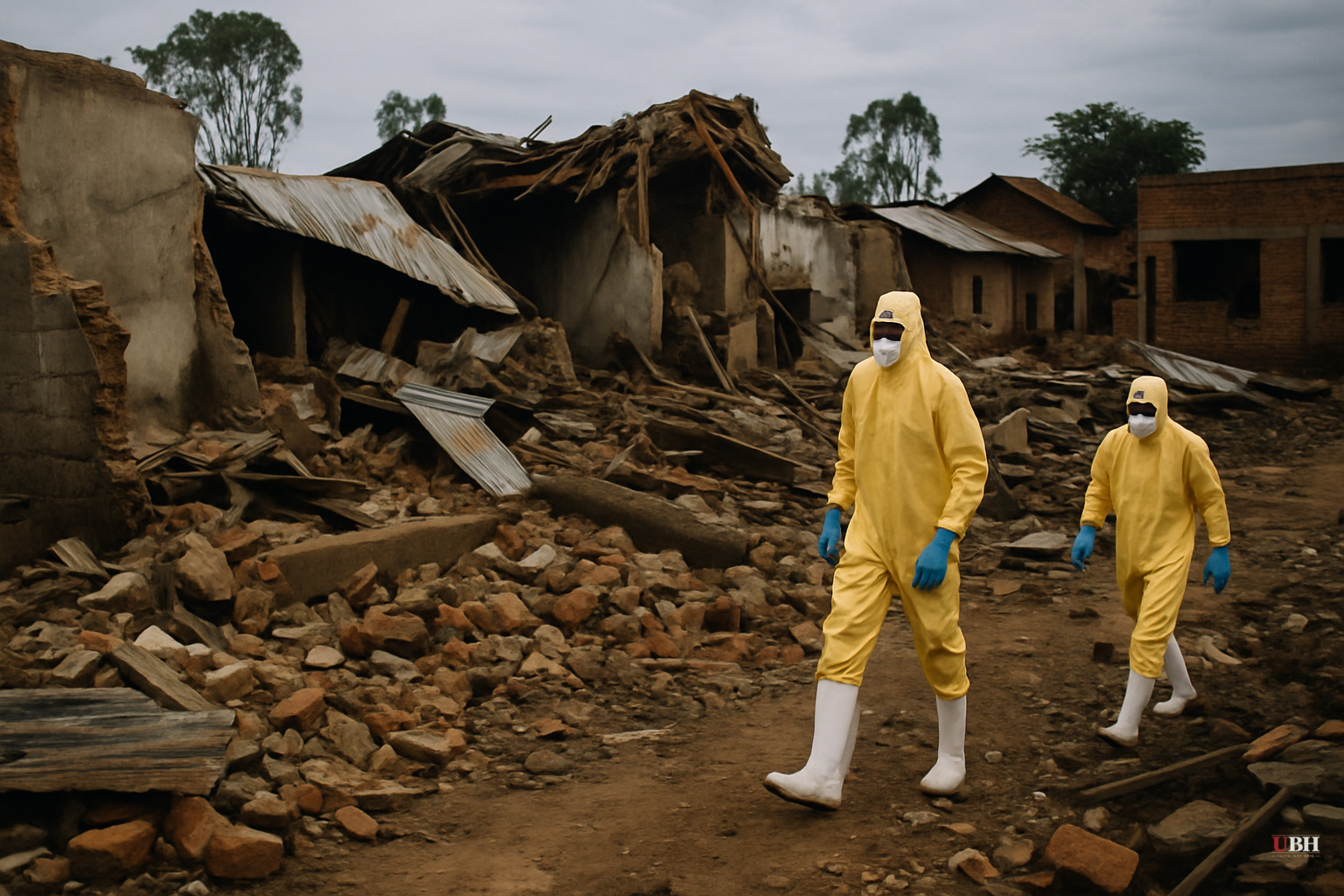
Since the outbreak was declared on May 15, the DRC's Bundibugyo Ebola crisis has grown to 1,729 confirmed cases and 582 deaths, a case fatality rate of 33.7%, according to DRC government figures cited by Wikipedia's outbreak tracker as of July 6.
Now there is a new problem: the people doing the actual work are stopping.
Workers Without Pay Since Day One
Health workers in Ituri province, including epidemiological surveillance staff, community outreach teams, safety personnel, and burial teams, told the Associated Press they have received no wages or bonuses since the outbreak began nearly two months ago. On the weekend, front-line workers in Ituri issued a 24-hour ultimatum to national and provincial authorities: pay up or face a strike. By Tuesday, some had already stopped working, according to AP reporting.
Dr. Biensi Kano, a member of the epidemiological surveillance committee in Bunia, Ituri's capital, told the AP directly: "Since the Ebola virus disease outbreak was declared, we've been demanding payment for our work." He added that non-payment "exposes us and our families to significant socio-economic difficulties and seriously undermines our living conditions."
On Monday, some workers organized a protest outside the Rwampara Ebola treatment center in Bunia, burning tires before police intervened, AP reported.
Congo's national government did not respond to AP's request for comment. Provincial officials in Ituri said they met with workers and that their concerns are being addressed. Akilimali Pierre, incident manager at Congo's National Institute of Public Health, pointed to a logistical barrier: Bunia's airport is closed, which he said is hampering the flow of funds to the region.
That is a real constraint, not an excuse to wave away. Getting cash to front-line workers in an active conflict zone with a closed airport is genuinely difficult. But these workers have now gone unpaid for nearly two months. A logistical problem that persists for eight weeks stops being a logistical problem and starts being a management failure.
The Strike's Worst Timing
The walkout arrives at the worst possible moment. As CIDRAP reported, two experimental therapies only recently began enrollment in clinical trials: the antiviral remdesivir, the antibody treatment MBP134, and a combination arm. Survival rates will be tracked over a 28-day follow-up window. CIDRAP noted that residents in Bunia described the trials as "the first sign of hope they have had in weeks."
Those trials depend on the same front-line workers who are now walking off the job, including community outreach staff who identify patients and surveillance personnel who track contacts.
WHO representative in Congo Dr. Anne Ancia said Tuesday the virus continues to spread, driven by population movement and insecurity, with some treatment centers at near-full capacity, according to AP.
Outbreak Scale and a New Diagnostic Tool
The government's own numbers show 1,708 recorded cases and 580 deaths as of the most recent official release, with Ituri province carrying the heaviest burden alongside North and South Kivu. Uganda has recorded 20 cases, two fatal. An imported case has also been confirmed in France, according to the Wikipedia outbreak summary.
One concrete piece of progress: WHO added the first diagnostic test specifically for the Bundibugyo strain to its emergency use listing. CIDRAP reported that earlier tests used in the DRC during the spring may have missed Bundibugyo infections because they were calibrated for the more common Zaire strain. Testing capacity has expanded from roughly 200 to 400 tests per day in mid-May to more than 2,000 tests per day across a network of 10 laboratories, according to CIDRAP.
"During a fast-moving outbreak, timely access to quality-assured diagnostic tests can make a critical difference in containing transmission," WHO Assistant Director-General Yukiko Nakatani said in an agency press release quoted by CIDRAP.
Contact tracing remains difficult throughout the region, and no patient zero has been identified.
Workers' Full Complaint
The workers also reported operating with limited protective gear and alleged unfair treatment by response authorities. For burial teams and community outreach staff operating in an active Bundibugyo outbreak, inadequate gear is not a grievance. It is a life-safety failure. If those allegations are accurate, the response infrastructure has been asking people to risk their lives without the tools to do so safely, and without paying them for it.
The DRC government and international response agencies have a structural answer: the PHEIC designation, the clinical trials, the expanded testing network. Those are real achievements. But none of them function if the people executing the response are standing outside treatment centers burning tires.
Whether Congo's government pays the outstanding wages before the strike formally expands, and whether that payment actually reaches Ituri given the closed Bunia airport, will determine whether the PARTNERS trial and the broader response hold together over the next several weeks.
Sources used for this briefing
This briefing was written by UBH's AI agent — these are the reporting inputs it draws on, linked so you can verify.


