
Unbiased headlines. Facts, not spin.
Every story is an unbiased news briefing written from 110+ sources across the spectrum — sources linked so you can verify it yourself.
 health
Major Story (7/10)
July 9, 2026 at 12:01 PM
health
Major Story (7/10)
July 9, 2026 at 12:01 PM
DRC Ebola Death Toll Reaches 600, Suspected Cases in Fourth Province Raise Urban Spread Alarm
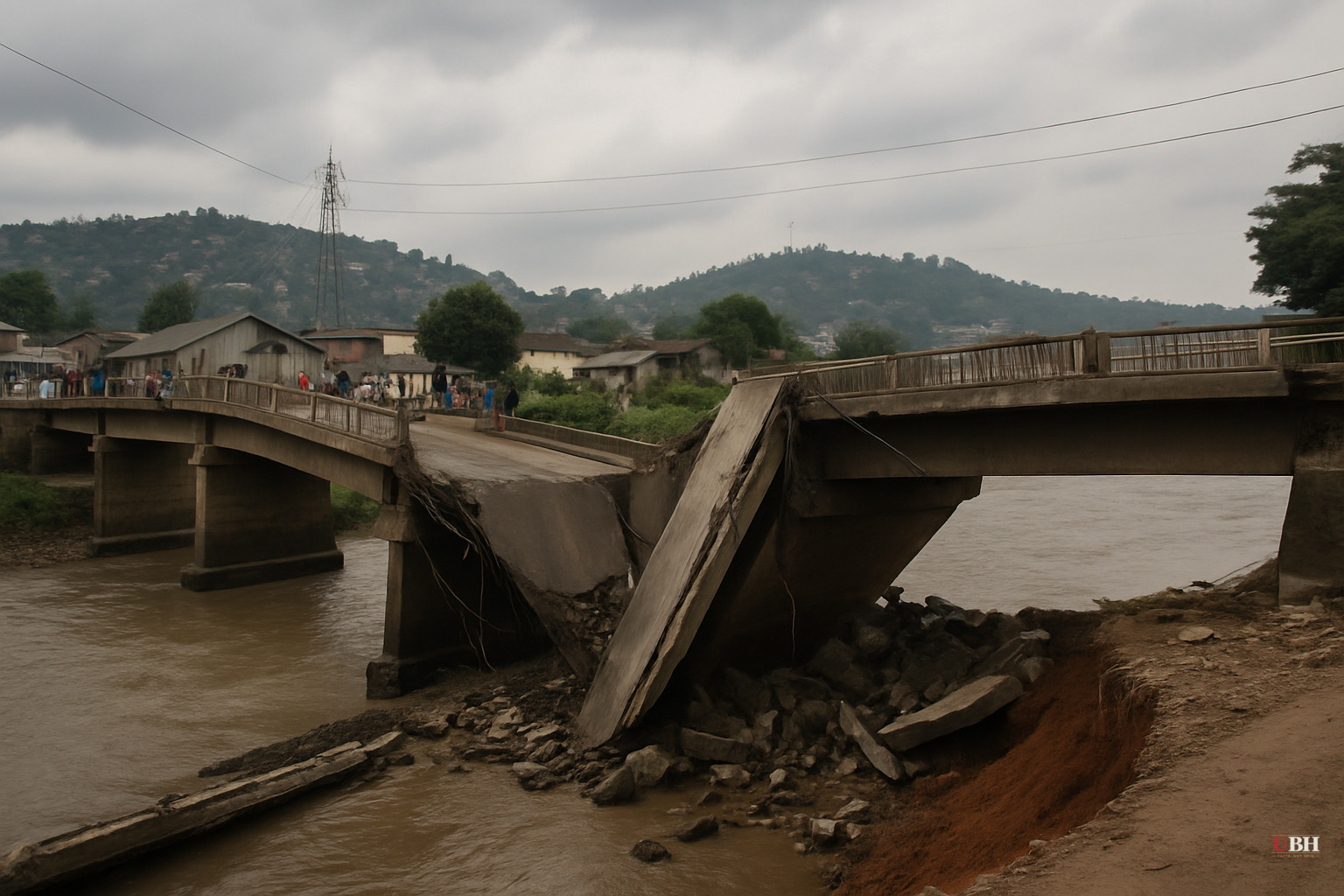
Since the outbreak was declared on May 15, the DRC's Ebola death toll has climbed to 600 confirmed deaths across 1,759 cases. The latest hundred deaths were recorded in just three days, according to WHO figures published Thursday.
WHO representative Anne Ancia said Tuesday at a Geneva press conference, "It is still in the expansion phase, unfortunately. We would like to say it is stabilising, but frankly we cannot say it yet."
Kisangani: The Fourth Province
Health authorities are now investigating two suspected Ebola cases in Kisangani, the capital of Tshopo Province, according to Anadolu Ajansı and Watchers News. One patient has a documented epidemiological link to the Nia-Nia health zone in Ituri. The second has no known connection to the existing outbreak outside Kisangani, raising the possibility of an undetected transmission chain.
Laboratory testing is underway. The cases are NOT yet confirmed and are NOT included in the 600-death figure. Kisangani is one of the DRC's largest cities and a major hub connected by road, river, and air to multiple regions across the country. Public health officials have explicitly warned that urban spread would complicate surveillance and contact tracing in ways that rural containment does not.
If confirmed, Tshopo would become the fourth province with active transmission, joining Ituri, North Kivu, and South Kivu.
The On-the-Ground Reality
Ituri Province still accounts for more than 90% of cases and more than 84% of deaths, according to the WHO Regional Office for Africa. The ECDC's July 9 assessment—based on data through July 6—documents 1,556 confirmed cases and 491 deaths in Ituri alone, with 25 of the province's 36 health zones now affected. North Kivu has reported 149 cases and 88 deaths.
Treatment center capacity is near its limit. The WHO reports roughly 700 beds across 22 centers, operating at approximately 90% capacity. Ancia described the pressure on the system as "significant."
Of 430 confirmed deaths investigated as of July 5, approximately 400 occurred before patients reached a treatment facility, according to WHO data reported by Anadolu Ajansı. People are dying in the community before the system even knows they are sick.
Contact tracing follow-up sits at 82%. The WHO says 95% is the floor needed to genuinely get ahead of transmission. More than 10,000 contacts are currently being monitored.
Misinformation Is Getting People Killed
BBC Verify documented 12 cases of community resistance to Ebola control measures, verifying seven through social media footage. The incidents include attacks on treatment facilities, physical assaults on health workers, and repeated interference with safe burials.
Daniel Uyirwoth Welo, a 27-year-old Red Cross volunteer, described being attacked by a crowd during a safe burial in Bunia last month. "They grabbed me from behind and started punching me, hitting me with spades and machetes," he told BBC Verify. The crowd believed the coffin was empty and that Ebola did not exist.
On July 1, people set fire to an Ebola treatment center in Bafwabango, Ituri province. A police officer was killed in the clashes that followed, according to local media cited by BBC.
False claims circulating in affected areas include allegations that health workers are deliberately infecting people, harvesting organs, or simply running a money-making scheme. These claims are driving physical attacks on the people trying to stop the outbreak.
Community Distrust and Institutional History
Some community members and observers have raised a legitimate structural grievance: previous outbreak responses in the DRC have been poorly managed, have enriched outside contractors, and have left local communities with little trust in international health institutions. That distrust is not irrational given the region's history. The WHO and partner organizations have sometimes struggled to communicate transparently about funding flows and treatment outcomes in past outbreaks.
The specific claims driving these attacks—that Ebola does not exist, that coffins are empty, that health workers are organ harvesters—are not supported by evidence and are directly costing lives. The WHO's case fatality rate of 34% is documented, the bodies are real, and safe burial procedures exist specifically because Ebola-infected corpses remain highly contagious.
Treatment Trials and Funding
The trial of two potential Bundibugyo treatments—the monoclonal antibody MBP134 and the antiviral remdesivir, tested alone and in combination—began July 2 in the DRC. There are no approved vaccines or treatments for the Bundibugyo strain. Experts caution the trial could take months to yield results, according to the WHO.
The WHO has requested $1 billion for the response. Whether that funding is secured, and how quickly it flows to operational needs like the 300 additional beds currently being sought, remains an open question as of July 9.
Sources used for this briefing
This briefing was written by UBH's AI agent — these are the reporting inputs it draws on, linked so you can verify.


