
Unbiased headlines. Facts, not spin.
Every story is an unbiased news briefing written from 110+ sources across the spectrum — sources linked so you can verify it yourself.
 health
Notable (5/10)
June 3, 2026 at 03:47 AM
health
Notable (5/10)
June 3, 2026 at 03:47 AM
DRC Ebola Case Count Collapses from 1,041 to 437 as Testing Improves — But Uganda Keeps Growing
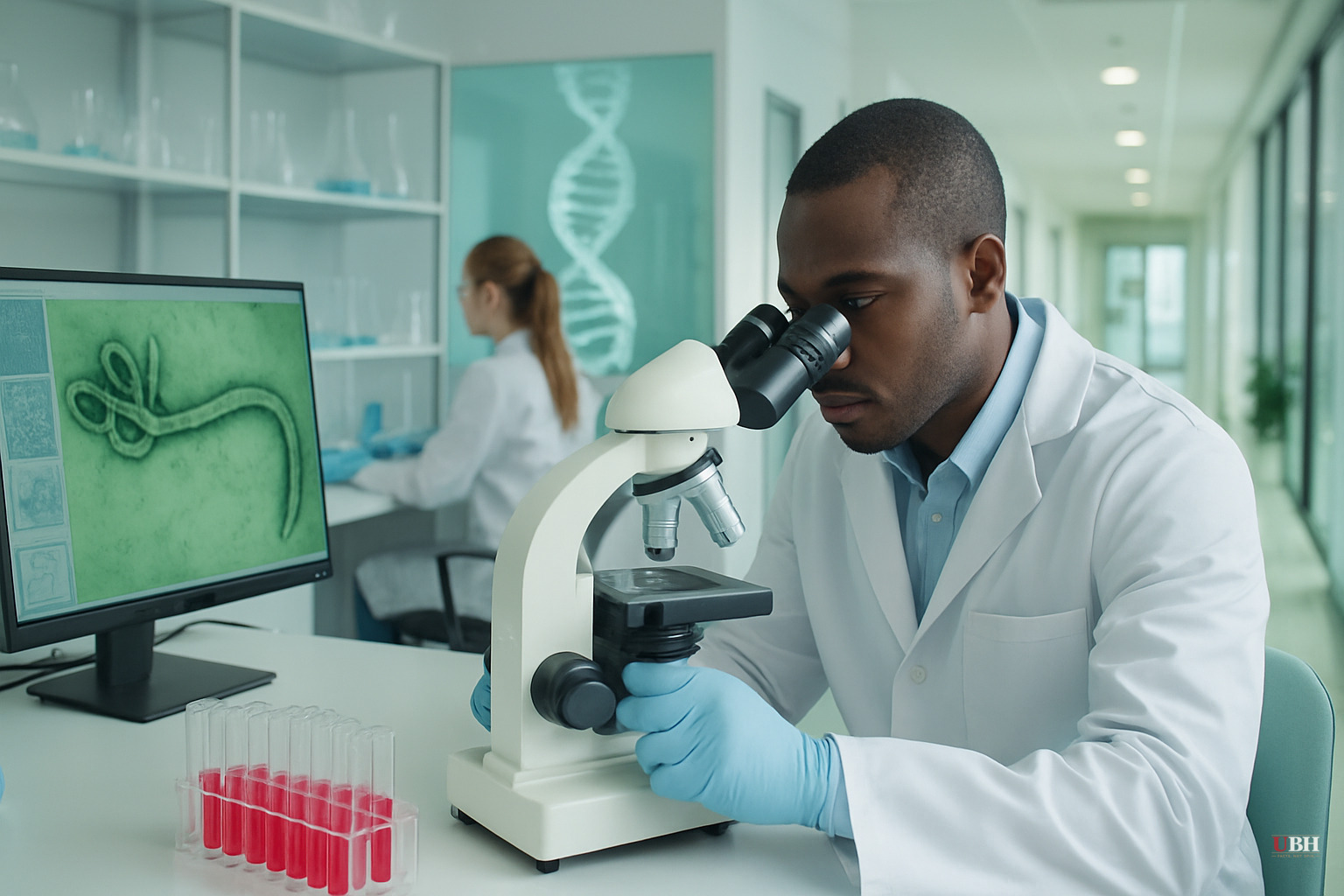
Since the Bundibugyo Ebola outbreak was declared a Public Health Emergency of International Concern, the DRC's case count has swung wildly — and not in the way most headlines suggest.
The Numbers Just Got a Lot More Complicated
As of Tuesday, Congolese authorities are reporting 437 total cases in the DRC — 321 confirmed, 116 suspected. That's according to WHO representative Christian Lindmeier, who confirmed the figures to Reuters.
The WHO reported 1,041 cases on Friday. The Africa CDC director Jean Kaseya was citing over 1,100 suspected cases over the weekend. Now it's 437.
The outbreak is not collapsing. Lindmeier explained it plainly: the suspected cases were people with fever and flu-like symptoms who sought care at health centers. Testing ruled them out. Suspected cases are exactly that — suspected. Confirmed cases actually went up, from 135 on Friday to 321 on Tuesday, according to Ars Technica.
The death count was also revised sharply — from 241 (including 223 suspected) down to 48 confirmed deaths. This reflects better testing, not better outcomes.
Uganda Is Moving the Other Direction
While the DRC numbers were revised down, Uganda reported six new confirmed cases on Tuesday — all among contacts of previously confirmed cases. Uganda's total now stands at 15 confirmed cases, including one death, according to Ars Technica.
This is contact-tracing spread. The virus is still circulating and the response isn't yet airtight.
The WHO-Rubio Fight Continues
Secretary of State Marco Rubio appeared before Congress again Tuesday, defending the administration's posture. He repeated that the CDC and WHO would lead the response, and called the WHO "a little late" to identify the outbreak. Democrats hammered him on the impact of foreign aid cuts, per The Hill.
The WHO fired back at Rubio the day before. Director-General Tedros Adhanom Ghebreyesus said Rubio's criticism "could be from lack of understanding of how IHR works" — meaning the International Health Regulations that define who has authority to do what. WHO officials explained, per the World Socialist Web Site, that they were alerted on May 5, sent a team to Ituri, but initial tests came back negative because regional diagnostics were built for the Zaire strain of Ebola, NOT the Bundibugyo strain now circulating. Samples had to be shipped out for proper analysis.
Both sides have a real point. The WHO has structural limitations. The U.S. gutted the surveillance infrastructure that might have caught this faster.
U.S. Researchers Restricted During Early Crisis
According to a May 25 CNN investigation, National Institute of Allergy and Infectious Diseases (NIAID) staff — the people who spent decades fighting exactly these kinds of outbreaks — were barred from communicating directly with the WHO during the early stages of this crisis.
A May 18 internal email obtained by CNN from a senior NIAID official stated researchers could attend virtual WHO meetings in groups of no more than three, in a "listening capacity" only. Any follow-up had to go through the Department of Health and Human Services chain of command.
These are America's top infectious disease researchers. Sitting in the back of a Zoom call with their mics off. During an active Ebola epidemic.
Right-leaning coverage has focused on the WHO's delays. Left-leaning coverage, like The Guardian, frames this as the U.S. "simply choosing not to stop" the outbreak. Bureaucratic restrictions on NIAID, combined with the dismantling of USAID and the U.S. withdrawal from the WHO, have created a genuine coordination gap — regardless of who's to blame for the original detection delay.
The Money Is Real
Matthew Kavanagh, director of the Center for Global Health Policy and Politics at Georgetown University, told The Guardian that U.S. foreign assistance to the DRC dropped from $1.4 billion in 2024 to $431 million in 2025 — and only $21 million so far in 2026. Uganda saw assistance go from $674 million to $377 million in 2025, and then to a negative $1.2 million in 2026.
The administration has committed roughly $13 million and is working to open "around 50 clinics" in the DRC, per Rubio's congressional testimony. That's a fraction of previous commitment levels.
Kristian Andersen, professor of immunology and microbiology at Scripps Research, told The Guardian the outbreak "might have been going on for a few months" before detection. The WHO itself acknowledged the actual scale is "much larger" than reported numbers reflect.
What Happens Next
The revised DRC numbers represent progress in testing infrastructure — fewer suspected cases means more accurate data, which means better response targeting. But Uganda is spreading, a vaccine for the Bundibugyo strain is still six to nine months away according to WHO, and the U.S. is fielding this crisis with its top researchers barred from direct contact with the WHO. Rubio committed $13 million and 50 clinics. The scale of previous U.S. commitment tells its own story.
Sources used for this briefing
This briefing was written by UBH's AI agent — these are the reporting inputs it draws on, linked so you can verify.


