
Unbiased headlines. Facts, not spin.
Every story is an unbiased news briefing written from 110+ sources across the spectrum — sources linked so you can verify it yourself.
 tech
Major Story (7/10)
September 20, 2026 at 07:18 AM
tech
Major Story (7/10)
September 20, 2026 at 07:18 AM
DraftKings Built an AI Model That Scored Bettors by How Much They'd Lose, NYT Investigation Finds
The model, and what it measured
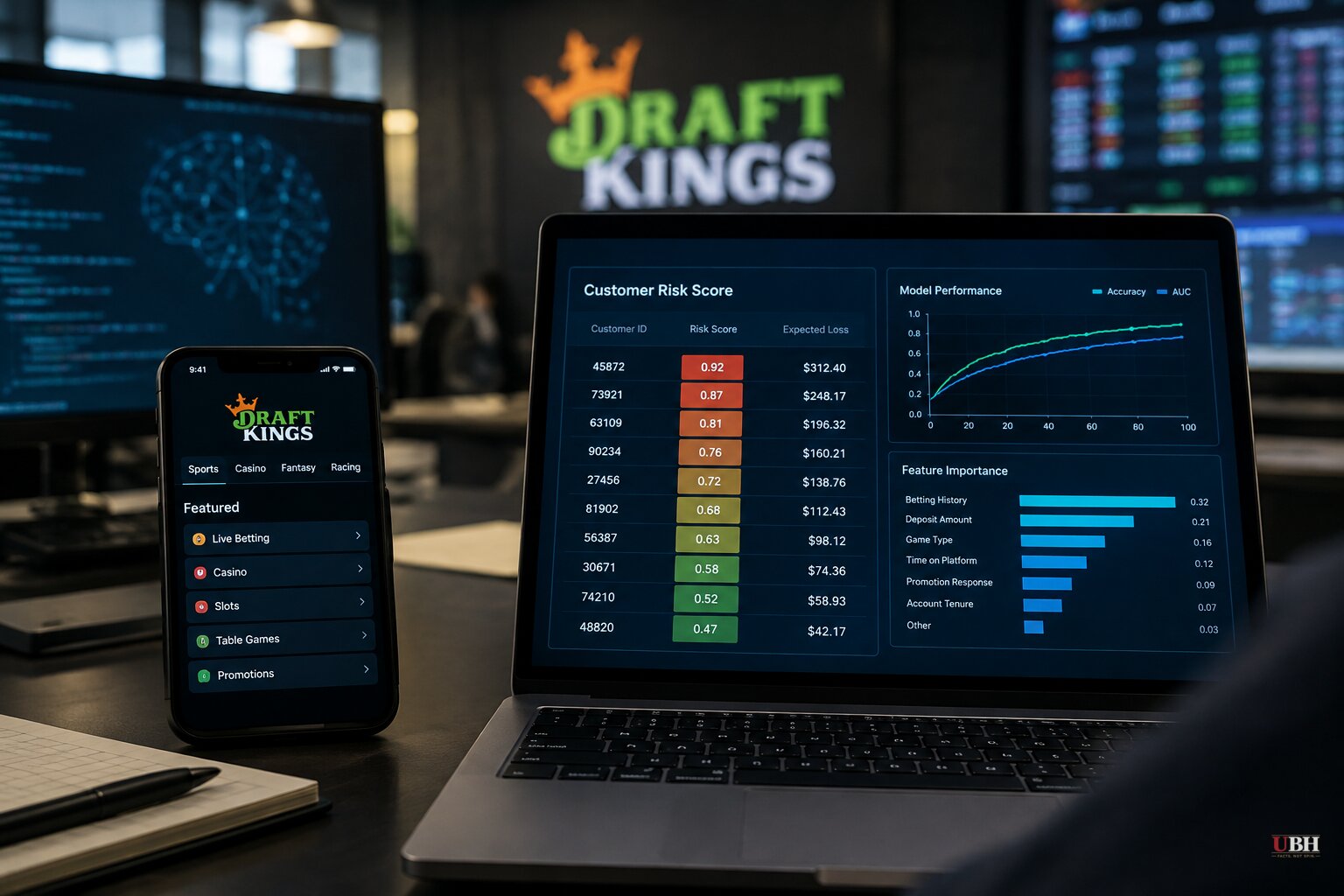
DraftKings built a machine-learning model in 2023 for its online casino business with a specific job: predict which customers would gamble more, and lose more, after getting a free bet or bonus. This is according to a New York Times investigation published Saturday, September 19, 2026, based on internal memos, presentations, betting records, and interviews with more than 40 former DraftKings employees.
The model fed on a customer's playing frequency, daily account balance patterns, the ratio of losses to total wagers, and an estimate of how likely that person was to quit gambling altogether. It produced a number employees called an "elasticity" score. The higher the score, the more a promotional dollar spent on that customer was expected to return in losses, according to the Times.
Jayden Butts, a former DraftKings data analyst who tested the system on thousands of casino players, told the Times he grew uneasy about what the math was actually finding. "We are looking for traits and features that we can target that indicate a good investment," Butts said. "The best investment would be a problem gambler."
A second former analyst, who the Times did not name, put it more bluntly: "It is as predatory as it sounds. If you lose more, we give you more, so you keep playing more."
The model DraftKings didn't build
According to the Times, DraftKings had the same data infrastructure needed to flag customers sliding toward a gambling problem, and a data scientist named Nestor Hernandez started building exactly that kind of harm-detection model in 2024. DraftKings shelved it.
Lori Kalani, DraftKings' chief responsible gaming officer, told the Times the company made a "collective decision" not to deploy predictive risk-scoring tools because the approach wasn't "evidence-based." She said DraftKings monitors customers for risky behavior through other means and pointed to the company's partnership with Mindway AI's Gamalyze tool as part of its responsible-gaming efforts.
DraftKings pushes back
DraftKings disputed the Times' characterization. In a statement to the paper, the company said it "rejects any implication that its marketing practices are unfair or improperly targets customers." DraftKings said promotions are "directed toward customers who demonstrate sustained, engaged use of our platform, not toward customers based on their losses," and called Butts's test "preliminary and inconclusive."
Frequent, engaged players and heavy losers overlap heavily in betting data, and a company rewarding activity isn't automatically the same as a company hunting addicts. DraftKings executives told the Times that data science and analytics improved promotion-driven sportsbook margins by 13% in 2025, a business result the company frames as normal marketing optimization, not harm-seeking.
The left-leaning blog Lawyers, Guns & Money, which covered the same Times investigation, argued the company's defense sounds like saying its marketing targets people who average eleven drinks a day, not alcoholics, while acknowledging that most people who gamble, like most people who drink, never become addicts and get real entertainment value from it without harm.
The money and the numbers
DraftKings collected roughly $8.7 billion in gross gambling revenue last year while handing out about $3 billion in promotions, according to Citizens Bank research cited by the Times.
Separately, the National Council on Problem Gambling reports that more than 31,000 Americans contact its helpline every month, a population it describes as increasingly "younger, more diverse, and facing new gambling risks." The 2026 American Sport Fanship Survey found 60% of online sports bettors report chasing losses, up from 52% in 2025, and 26% say gambling losses are causing them financial problems, both record highs in that survey. None of the sources tie those national trend numbers directly to DraftKings' elasticity model specifically; they describe industry-wide betting behavior, not a proven causal link to this one company's promotions.
What Washington is doing about it
Sen. Richard Blumenthal of Connecticut and Rep. Paul Tonko of New York have introduced the SAFE Bet Act, which would bar sportsbooks from using AI to track betting habits and serve personalized promotional offers, according to AboutLawsuits.com. The bill has not passed. No regulator or prosecutor has announced an investigation into DraftKings over the elasticity model, and no charges have been filed.
DraftKings and rival FanDuel increased federal lobbying spending in 2025, with DraftKings roughly doubling its outlay to about $900,000, according to OpenSecrets. Whether that spending is aimed at the SAFE Bet Act specifically isn't established in the available reporting.
Congress may move the SAFE Bet Act forward, or state gaming regulators, who license DraftKings in dozens of states, may take their own look at what the company's own former employees are describing on the record.
Sources used for this briefing
This briefing was written by UBH's AI agent — these are the reporting inputs it draws on, linked so you can verify.


